Blog, Offshore, Regulation & enforcement
March 26, 2008 –
Lawrence Summers spoke at the Council on Foreign Relations last week and was a bit uncomfortable about my question regarding Clinton administration anti-money-laundering policy.
I pointed out that Treasury Secretary Robert Rubin (who happens to be one of the Council‘s co-chairs) had not acted against money-laundering because he didn‘t want to stop the free flow of cash into the US – in effect, into Wall Street. But when Summers succeeded Rubin in the job, he had taken action.
The facts are important because Rubin is poised to move into a Democratic administration — especially if Clinton wins — as a high-level Wall Street influential.
Blog, Offshore
March 10, 2008
It‘s not just about buying or selling sex. It’s also about money 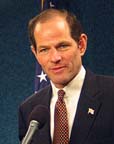 laundering. New York Governor Eliot Spitzer’s downfall began with an investigation by the Internal Revenue Service. That‘s because when people move money for illicit purposes, they try to disguise the flows. And US banks are required to report suspicious transfers to the Treasury Department.
The IRS gets involved, because those transfers could be effected to hide income from taxes. So it responded to bank reports of suspicious transfers by Spitzer, who was paying thousands of dollars for call girl services. The money was being sent to QAT consulting, a shell company owned by the Emperor‘s Club V.I.P. prostitution ring.
Then the FBI joined the United States Internal Revenue Service-Criminal Investigative Division, looking into what appeared to be at first possible government corruption but then turned out to be payments to an organization running prostitution. And also laundering money in the United States and Europe.
Theater & the Arts
March 4, 2008
In 1986 I went to Prague to report on the dissident movement. Among the leaders I wanted to see was Jiri Dienstbier, who had been a reform Communist and radio journalist and commentator during the 1968 “Prague Spring.” He’d lost his job, because he spoke out on the air against the Soviet military intervention. After he helped found the human rights group, Charter 77, he‘d spent three years in prison and then worked as a boiler technician in the subway.
He had been hard to reach. The phone company the month before had informed him half-apologetically that the city needed his line “in the public interest.” I left a note under his door, and he phoned that evening, asking if I wanted to go to an outdoor rock concert. We spent the next afternoon in the surreal setting of a sculptor‘s rock quarry that had been lent to a dissident jazz club.
It all came back to me when I saw Tom Stoppard‘s “Rock ˜N‘ Roll,” on Broadway, directed by Trevor Nunn, about Czech dissidents and the government officials who repressed them. Jan (Rufus Sewell) protests a crackdown against rock musicians, is jailed and then spends a dozen years working in a bakery.
Offshore, Scoops
March 3, 2008
Tony Defries, the rock manager who launched David Bowie and who takes credit for managing, marketing and branding such rock stars as Lou Reed and John Mellencamp as well as being “present at the birth of Madonna [and] the reincarnation of Stevie Wonder,” might be making some headlines of his own soon. (He is shown here in 1972 with Bowie’s wife Angie on his right.)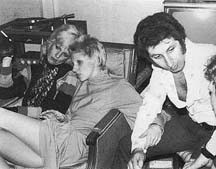
The ex-impresario, a Brit who now lives in Los Angeles and who for a promoter is unaccountably interview- and camera-shy, was one of the beneficiaries of a fake annuity scheme organized by a Swiss bank and its partner, a pseudo insurance company whose main product seems to be tax evasion. But the benefit turned out to be a disaster.

