

By Lucy Komisar
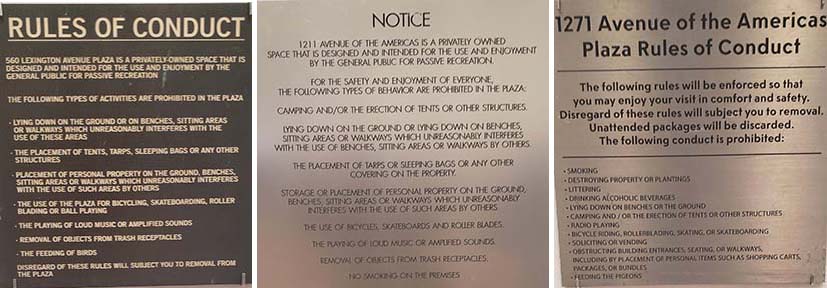
The best exhibit in the Whitney Biennial isn’t even a “found” object; it’s a collection of stolen ones. David L. Johnson’s installation, “Rule: Removed Codes of Conduct Signs,” is a brilliant act of creative defiance. These aren’t gallery relics but placards pilfered from Privately Owned Public Spaces (POPS)—those architectural loopholes born from a 1961 zoning resolution that let developers build skyscrapers in exchange for creating “public” plazas.
The catch? The public isn’t always very welcome. Corporate owners, with their inherent instinct for control, festoon these spaces with repressive lists of prohibitions far stricter than any city park ordinance. Johnson has liberated them, hanging thirty of these “you cannot do this” declarations on the Whitney’s wall like a hall of shame. It’s a perfect, silent scream, a finger in the eye of the corporate malefactors who prioritize order over community.

If that’s the highlight, it’s a subtle but damning indictment of the rest of this Biennial, which is largely dreadful and boring. The curators’ taste for the increasingly weird is on full display. The prime example: a large block of seeded dirt. We’re meant to watch it bloom by August. How original. Art by “the Creator,” I suppose, with the Whitney providing the pots.
But a few pieces did manage to break through the tedium.
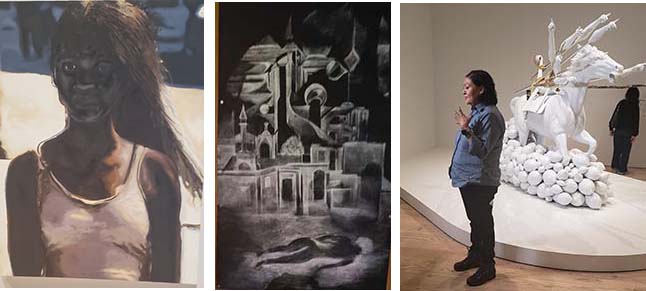
“Continuing Anyway” by Taina Cruz is a revelation—an actual painting of a recognizable person, rendered with real depth and feeling. It is the best painting in the exhibit.
A powerful, if anonymous, piece of political art offers a vision of Palestine from decades past, shown by the father of the artist Ruanne Abou-Rahme. It’s a shame the work goes uncredited.
“She Must be a Matriarch,” an exotic and striking horse figure by Anna Tsouhlarakis, has a feminist theme which the artist explains as a female warrior with a modern collection of the mythical and humorous.
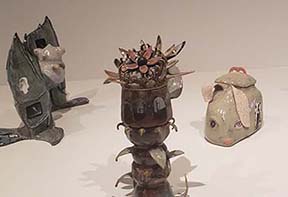
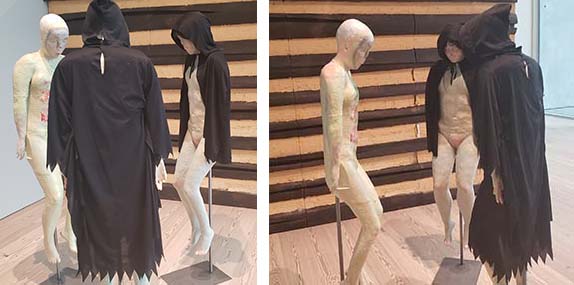
Isabelle Frances McGuire’s installation conjures up the Salem Witch Trials with unsettling effectiveness. The three witches’ bodies, created from medical 3D CT scans, are hauntingly modern. It proves you don’t have to be a traditional sculptor to create compelling forms. And there are charming quirky ceramics by Erin Jane Nelson.
A Detour to the Past: The Calder Circus
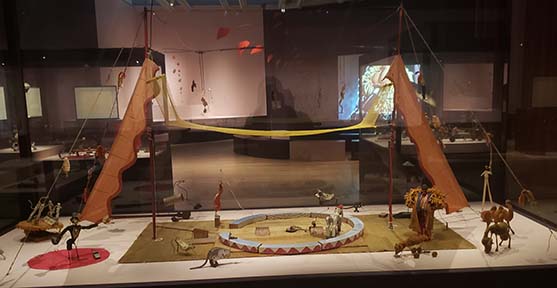
Seeking respite from the Biennial’s conceptual heaviness, I ventured upstairs to the last days of the Calder Circus exhibit. Created a century ago, in 1926, it is pure charm and fun.

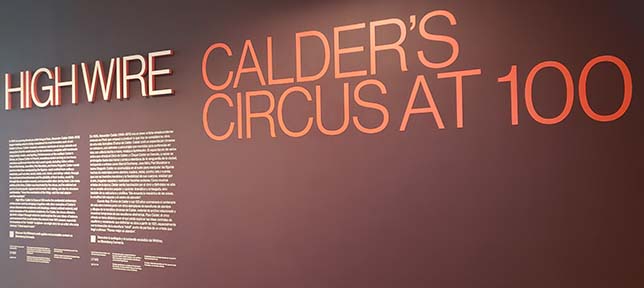
Watching Calder manipulate his tiny wire figures in the accompanying film is to witness a brief, bright spark between the end of World War I and the looming shadow of the Depression and the Nazis. Will there be a Whitney exhibit in 2126 to look back on our era with similar nostalgia? Considering the venality and incompetence of those who rule the West today, I have my doubts.
Whitney Biennial, Whitney Museum of American Art, 99 Gansevoort Street, NYC. Free admission Friday nights & 2nd Sunday. Opened March 8, 2026, closes August 23, 2026.
All photos by Lucy Komisar.
Always fun to see your stuff, Lucy.