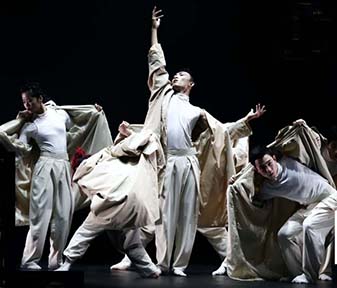
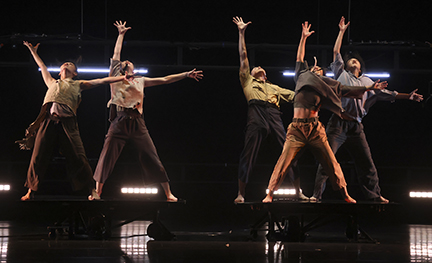
Avignon – In this graceful, inventive piece by choreographer Wang Junjian, Beijing’s Tuyi Dance Theater presents a plane journey—landing, preparation, and takeoff.
The tarmac is “under the clouds” and the dancers sometimes imitate planes, moving at angles, falling and rising as if they were flying.
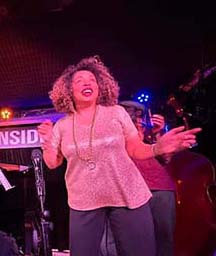
Avignon – The place for jazz cabaret at the Avignon OFF is chez Madame Jazz(e), the French-Gabonese chanteuse Abyale Nan Nguema known as Abyale (say A B Al), whose honeyed voice is seductive as she sings the songs made famous by the jazz divas, Billie Holliday, Ella Fitzgerald, Nina Simone, Sarah Vaughan, Josephine Baker and others. She doesn’t imitate them, she pays homage to them.
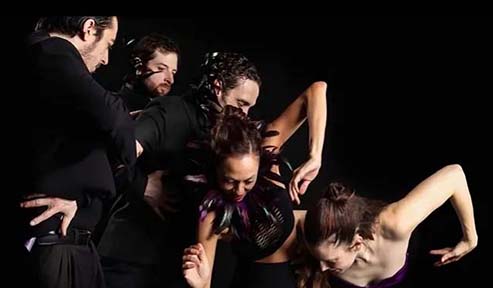
Avignon – I love tango, but I’ve never seen a tango performance like this. French choreographer Ariane Liautaud takes the iconic Argentine tango as a muse, but challenges its limit to couples dancing à deux.
Avignon – Why are people aggressive, why do they hurt others? How does the tension of life make people aggressive when they don’t want to be? That is the theme of a very contemporary and relevant and very smart dance piece by the Belgian company DTS, which uses hip-hop as a means of expression and reflection on contemporary themes.
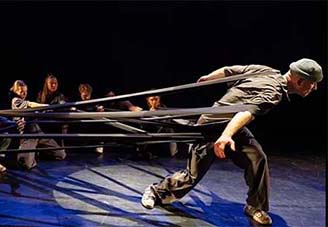
Avignon – Chang Chung-An, founder of Taiwan’s Resident Island Dance Theatre, has with great artistry created a work that expresses the difficulties ordinary people have to survive. They are like machines in a factory, repeating the same routines, existing in a time and space defined by society, but it becomes clear that “society” is industrial corporations.
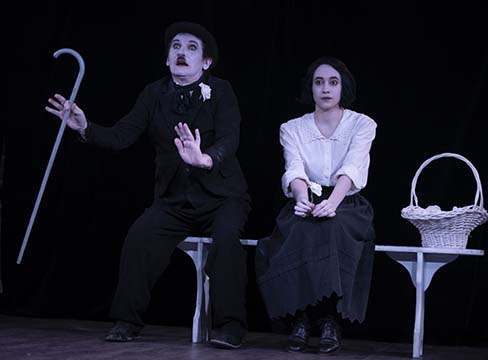
Avignon – Taking off from Charlie Chaplin’s 1931 “City Lights,” this brilliantly scripted and performed mime play takes iconic moments from the film and adds scenes Chaplin would have approved. Directed smartly by Alwina Najem-Meyer, the actors are all excellent, especially Chaplin’s tramp, superbly created by Russian performer Dmitiri Rekatchevski, who was trained by the master, Marcel Marceau, in Paris.
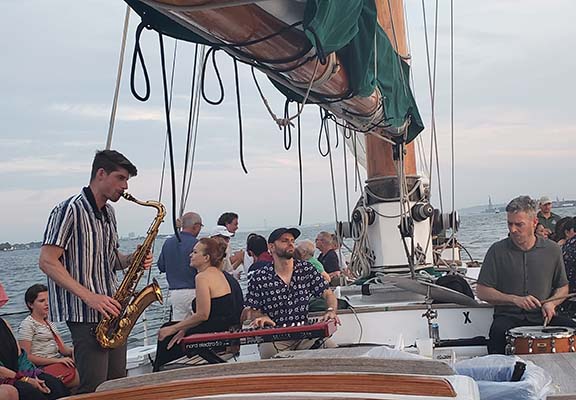
There was some unexpected music on this jazz sail from lower Manhattan to New York Harbor. As the 105-foot sailing yacht Schooner America 2.0 moved close to the Statue of Liberty, passengers were reminded it was donated by the French, and a dozen members of the Paris American club broke into The Marseillaise! Less than a week before Bastille Day, it seemed doubly appropriate.
Avignon – I thought I was going to see a theater piece when I entered La Fabrica, a main stage of the Avignon Theater Festival. It turned out to be as much video as stage play. And very avant garde.
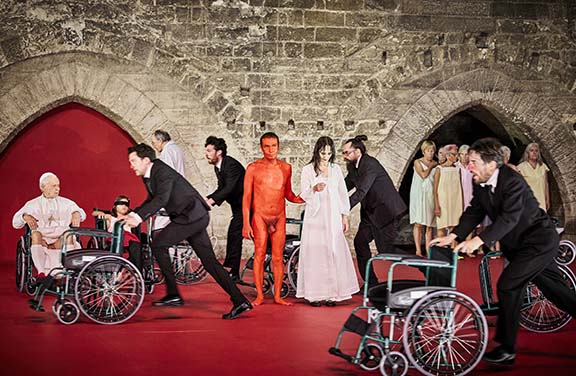
Avignon – The Court of Honor is the interior square of the gorgeous Palace of the Popes in Avignon, residence of nine popes from 1305 to 1429 and the most important gothic palace in Europe. It was a residence, place of worship, fortress and administrative city. The hotel where I was staying had a whiteboard for guests’ comments. One scribbled in fury that “Dämon, the funeral of Bergman,” staged there this month was sacrilege.
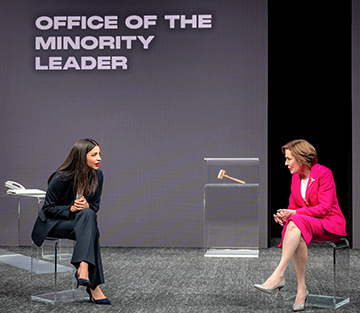
This is a clever pas de deux by Mario Correa of two important Democratic women in Congress disagreeing about the ideals, commitments, beliefs of their party. Or of those Democrats who purport some values. Nancy (Holland Taylor) in a pink suit (which must denote some female tradition), is quite believable as a politician. She did a memorable turn as Texas governor Ann Richards in “Ann.” Ana Villafaña as AOC in a black pants suit is brilliant in her portrayal. If the real AOC was there, nobody could tell the difference. Playwright Correa, who worked in the congressional office of Constance A. Morella, has got the dialogue and differences down perfectly, the acting is fine, and the staging by director Diane Paulus is direct, as it should be.
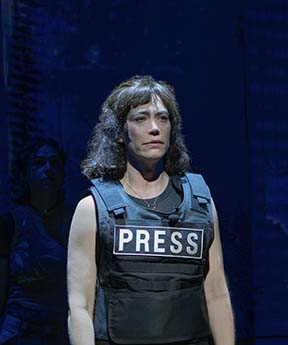
This play about a woman war correspondent (of course, she rejects the first adjective) was written by Alexis Scheer, a young playwright whose Broadway debut was adapting the book for Andrew Lloyd Webber’s clever feminist “Bad Cinderella.” Director Jo Bonney is a prominent creative presence in the theater world, a winner of major theater awards and nominations, including Tony and Drama Desk. So, I expected a lot.
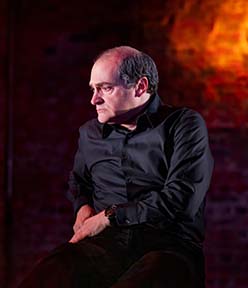
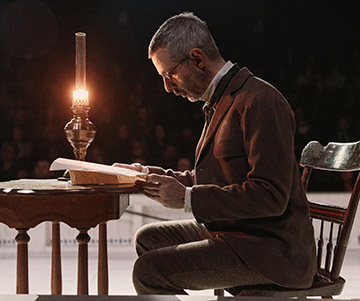
“In the West you have no idea….” says the opening voice of a man telling of the joys of Russian songs, picking mushrooms in the forests, laughter in the baths…” In other ways, “Patriots,” written by British playwright Peter Morgan and directed by Rubert Goold, on Broadway after a successful run in London, is based on Brits and Americans having “no idea” of the story it tells. It makes it possible for Morgan to mix fact and propaganda, even in a careless moment admitting as much. So, to find out what was true, I relied on the biography “Putin” by Philip Short, former correspondent for the BBC in Moscow, and acknowledged as the most important book dealing with the characters and period of the play.
June 2, 2024 – President Frank Wu of Queens College of the public City University of New York (CUNY) celebrated its 100th anniversary commencement May 30th by having New York Police Department troops stationed outside the campus gates. They were placed so that people entering could not see them. He has for a month locked the college to anyone without credentials, “to bar disruption.”
Chekhov’s play was first produced in 1899 by the Moscow Art Theatre, directed by Konstantin Stanislavski. It has gone way downhill to Lincoln Center’s production.
Jeidi Schreck’s adaptation of “Uncle Vanya” directed by Lila Neugebauer is soap opera leavened by slapstick, which ruins the Chekhov play. It evokes a sense of sadness, lives of quiet desperation, but no sense of Russia. The set’s picnic table laden with food and wine, backdrop of birch trees, makes it clear this is about the characters’ own desires (eating and drinking) rather than the land they inhabit.
This play by Ibsen, “En folkefiende,” written in 1882, was perhaps the West’s first environmental political play. Amy Herzog’s smart adaptation over a century later fits America today perfectly. It is about the utter corruption of a society where making money by powerful interests takes easy precedence over the health, even the death, of citizens.
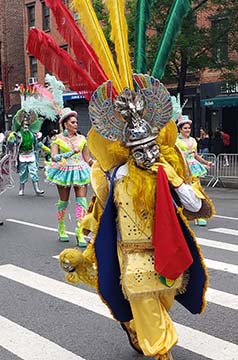
The first Dance Parade in 2007 was a protest, opposing a New York State Supreme Court judgment against the City of New York the year before that upheld the 1926 NYC Cabaret Law, ruling that social dance was not an “expressive activity” and therefore not protected by the constitutional freedom of speech.
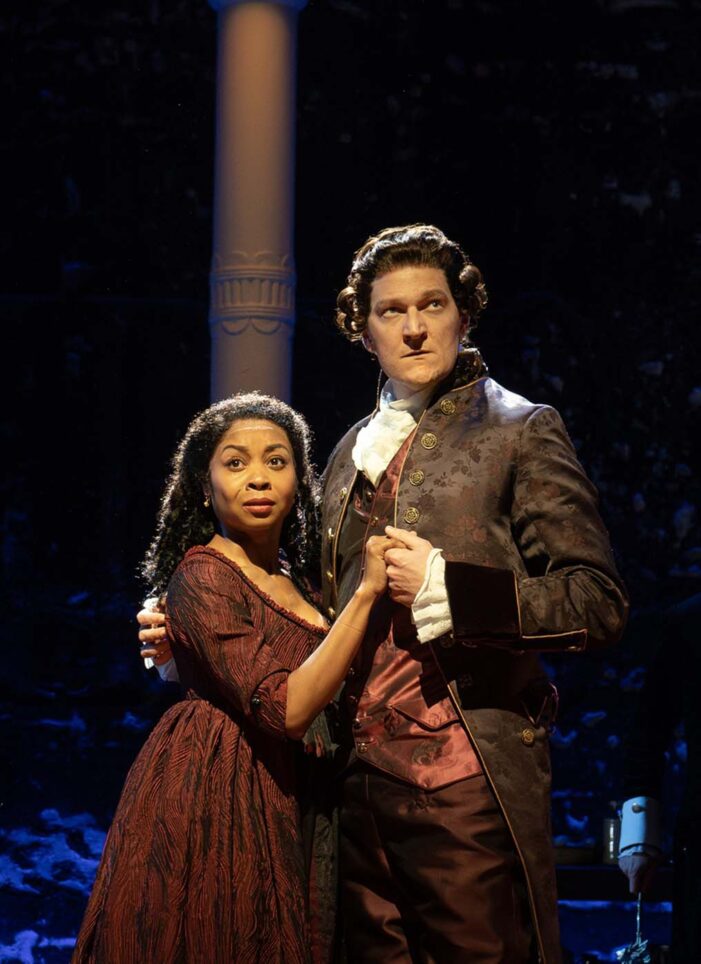
The story of America has always been about the narrative, especially the righteousness of America’s foreign adventures or political leaders’ devotion to the public good. The country’s founding history is central to establishing America’s virtue. So, the narrative about Thomas Jefferson is that he was a heroic American patriot who wrote the Declaration of Independence (drum roll, “all men are created equal”) and served as the third American president.
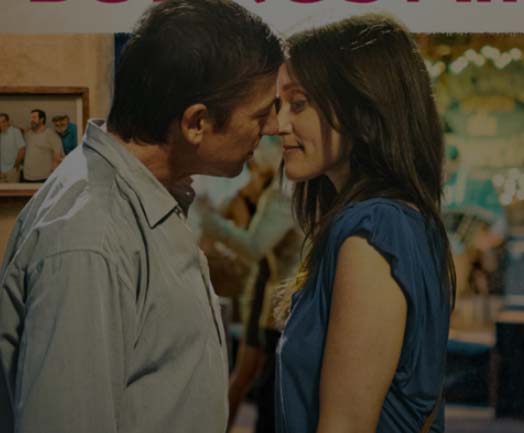
Director Germán Kral’s fine “Adiós Buenos Aires” is a realistic and sensitive look at the lives of working-class Argentines desperately trying to survive and even prosper in the face of a government that does little for their welfare and, to top that, suddenly in 2001 limits withdrawals from their own bank accounts. All true. But the film is not depressing. It’s warm and appealing.
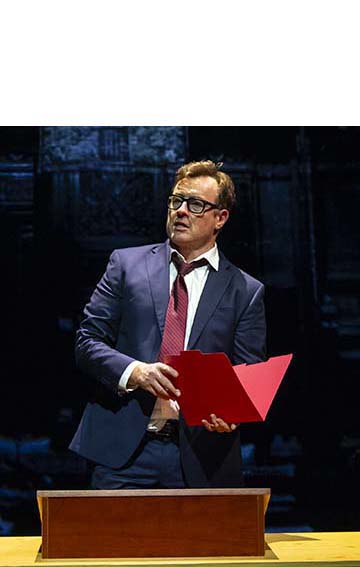
“Corruption” is the most important play in New York this season. In a mesmerizing true crime narrative, it documents the takeover of the UK by sleazy media, bought or cowed political leaders and even top paid-off law enforcement officials. No, this is not fiction.
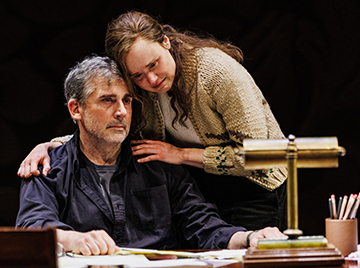
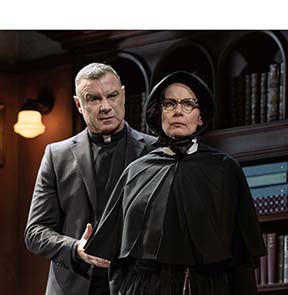
John Patrick Shanley’s play opened in 2004, but is set forty years earlier in 1964. It deals with complex themes of suspicion, faith, and morality surrounding the possibility of child sexual abuse. The issue of pedophilia by Roman Catholic clergy in the U.S. was first publicized in 1985 when a Louisiana priest pleaded guilty to molesting boys. But even though the scandal is not raised in the play, Shanley knows that is in the minds of the audience.
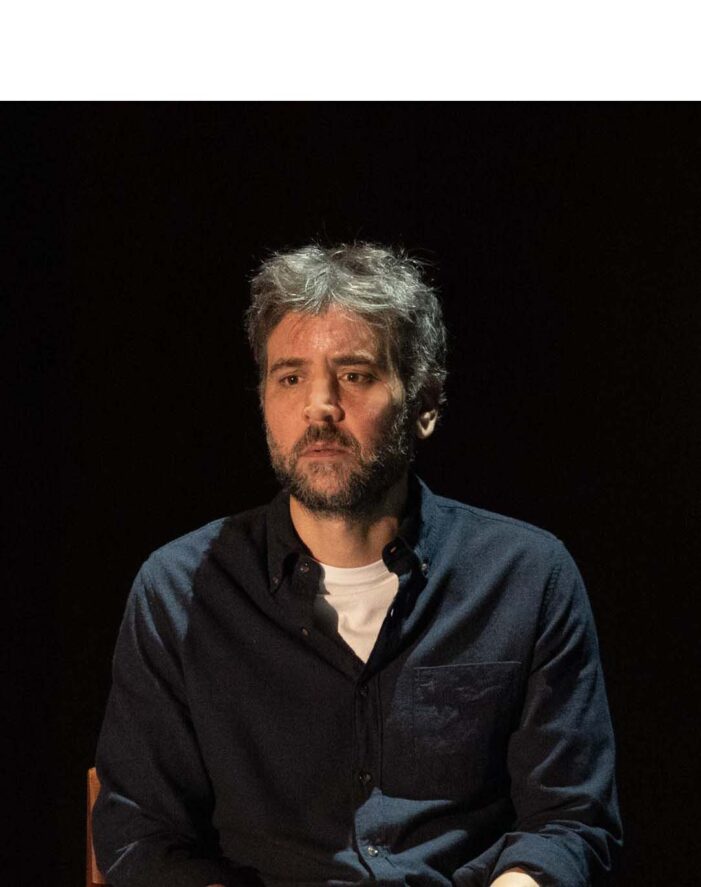
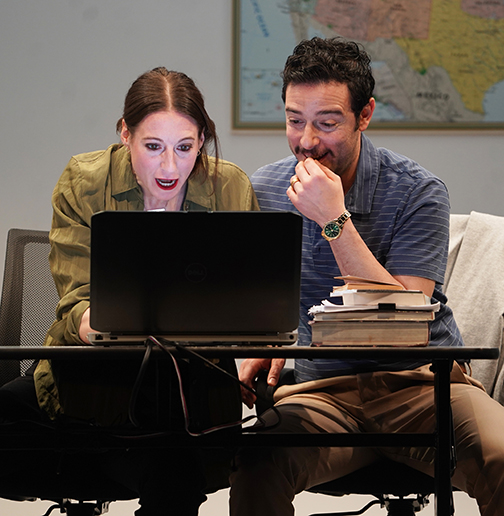
If you don’t have the time to read or listen to every argument about the Israeli-Palestinian question, spend an evening at the Public Theater production of “The Ally” (ie America’s ally, Israel) and you will get it all. In an entertaining and succinct fashion. From the voices of characters who represent the various sides and in-between of the debates. Playwright Itamar Moses has presented a theatrically staged event that could easily have occurred, and parts already have in U.S. spaces, especially universities, where this story takes place. Director Lila Neugebauer allows passion to power the arguments without ever becoming nasty.
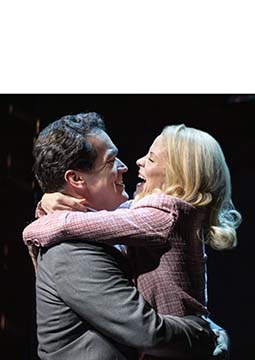
Kelli O’Hara is spectacular in “Days of Wine and Roses.” Sometimes her voice soars so high that you don’t pay attention to the lyrics. It’s a depressing play about two alcoholics, one who recovers and one who doesn’t. But in her operatic soprano, you can listen to the joyous sounds that that give you a lift even as what’s unfolding on stage is a downer. But this is not unusual in the canon of opera. The book is by Craig Lucas and the bracing modern music and lyrics by Adam Guettel.
If I was writing this review as a drama, where I could make things up, I would say “Congratulations to the Deep State (aka CIA & Co), which has moved from propaganda films into propaganda theater. However, Langley guys, you need some theatrical help. Your “Russian Troll Farm” at the Vineyard is the most crude, amateurish, nasty piece of pseudo-theatrical claptrap I have seen reviewing theater since 1998 when I became a member of the Drama Desk.”
“Phantom Parrot’ is an alarming film about a repressive UK law aimed at individuals the UK government doesn’t like because they support victims of repression by countries the UK does like. It was directed by Kate Stonehill and produced by Steven Lake and presented by The Double Exposure film festival in Washington in November.
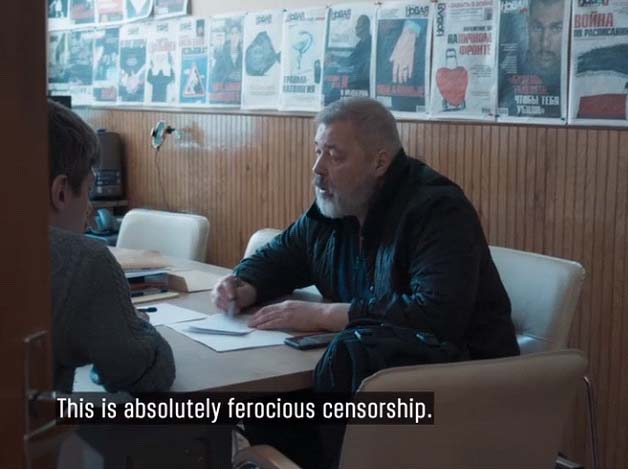
I visited Russia twice, before and after the collapse of Communism and even attempted to learn Russian, not getting much beyond waiter and taxi talk, though I can pick up film and political speakers with the help of subtitles. So as an investigative reporter, not a film critic, to understand this film about a Russian editor who won a Nobel Prize, I sent a screening of this film to world-class Russia expert, Richard Sakwa. He is Emeritus Professor of Russian and European politics at the University of Kent (England). He was also the head of the University’s Politics and International Relations department, has lived and taught in Russia and has published sixteen books on Soviet, Russian and post-communist affairs.