Ever hear of the Cum-Ex scandal? Hint, it’s not about sex, it’s about money. There is so much financial corruption it’s hard to keep the stories straight. Eyes glaze over. And the mainstream media working with western governments generally lets the malefactors off the hook. (“Oh, so complicated!”)
This musical about the iconic painter Vincent Van Gogh at the Edinburgh Fringe brings a new political understanding as you see him at a workers protest.
Music, lyrics and book by Tony Norman, director and choreographer Sarah Dormady.
It’s a 1980s British tabloid story. “The Sun” (a Murdoch rag) sells 5 million copies on cheap paper whose ink comes off on 12 million readers’ hands. It also soils their brains. The foul-mouthed editor brags that he picks governments. And it is the venue for a stunning play by accomplished playwright-actor Henry Naylor. (It got one of the “Fringe First” awards given by “The Scotsman” to the five best plays out of more than 3,000 the first week of the Edinburgh Theater Festival Fringe.)
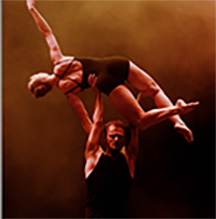
Australian choreographer Lewis Major at the Edinburgh Fringe presents an elegant, fluid, ethereal series of dances. In slow movements, bodies in black twist, bend, dip and turn to sounds that sometimes sound like a xylophone or the high notes of a piano, sometimes contemporary, sometimes classical.
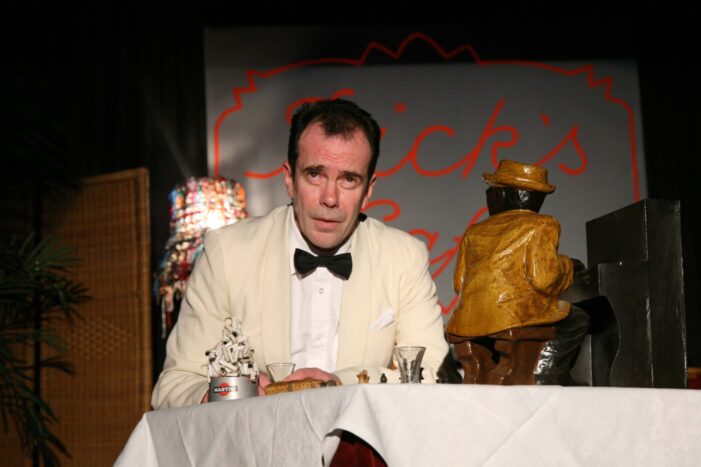
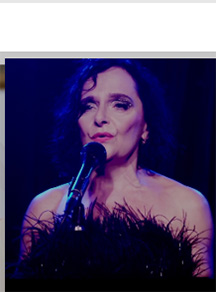
Rick’s Bar (at the Edinburgh Fringe) features a chanteuse in gold gown (Jerry Burns), a fine jazzy voice filling the room with “You must remember this… As time goes by.”
A guy in a white suit murmurs, “Here’s looking at you kid.” He is Rick Blaine (Gavin Mitchell), owner of Rick’s Café. It’s 1941 and we’re in Vichy-occupied Casablanca. (Morocco was controlled by colonial invader France. So, the Nazis did not occupy Casablanca, but were there at the suffrage of their collaborators.)
“I Do” is a clever, too quirky to be really dark, but almost-dark video series by French writer/ director/ actor Nathalie Schmidt who subtly and comically skewers the talent for manipulation that imbues American culture. (And, of course, others, too.) Zoe Bloom (Schmidt) is a French singer who needs a green card and is looking for a husband to get her one. She seeks to get / persuade/ manipulate Americans to marry her but discovers they are just as good, in fact, superlative at the art.
“Call Me Izzy” is a feminist play about a rural Southern woman abused by her husband. But it’s not depressing. Jean Smart is brilliant as Izzy, stifled in a small Louisiana railroad town, her life a struggle between freedom and submission. The play is chilling but also invigorating, because Izzy finds solace and power in her identity as a poet. It is a solo performance, with Smart’s narrative telling the story.
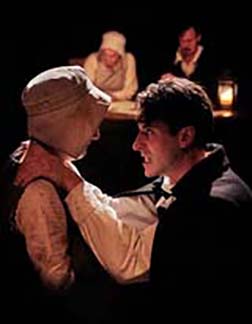
The villains of this play were early conspiracy theorists who used techniques that have never gone out of style: viz the U.S. 1920s Red Scare, the 1950s McCarthy time and of course today when people with “wrong” ideas are jailed or deported. It’s where the phrase “witch hunter” comes from. The Red Rose Chain, a nonprofit theater in Ipswich, England, presented a chilling theatrical recollection of this time at 59E59 Theaters.
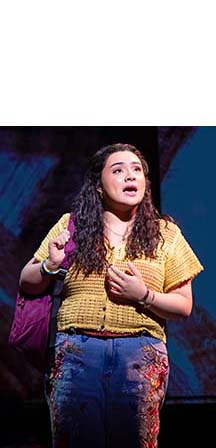
This play is about body image and politics. I’ll take the politics first. A group of Latinas at a dress-making workshop in Los Angeles succeed in a challenge to produce a big turnaround of dresses that a buyer wants because another producer suddenly failed. I like that. I want women to get ahead. And I like Estela (Florencia Cuenca), the feisty factory manager.
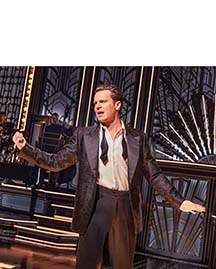
Jonathan Groff starts this jukebox musical about Bobby Darin as himself, saying he will tell Bobby Darin’s story. “I’m Jonathan, I’ll be your Bobby Darrin tonight.” The show indeed shows off the voice and pizzaz of Groff as he recreates Darin. He is every bit as good as a singer and performer.
The best thing about this play is Jasmine Amy Rogers’ star quality debut on Broadway as Betty Boop. The next best is the 17-year-old ingenue Angelica Hale as Trisha, a fanatic Boop fan. Rogers and Hale both have powerful voices and presence. Rogers’ is chirpy in a good way, which goes along with her New York accent.
This musical play by Will Aronson and Hue Park, set in South Korea, is about two robots who are sentient. That is taken for granted and not explained. In fact, they each have very different personalities, akin to real people. The only difference is that instead of food they get electric charges to survive. And they have liked being servants of humans. In fact, the male robot, Oliver (Darren Criss), loved his master, James. Calls him his friend. Claire (Helen J. Shen) had a complicated relationship to her master. If these servants were black slaves, the story would get quite a different reception.
This sci fi play is an allegory of how the U.S. military brainwashes recruits to make them kill even when they don’t want to. How it takes “normal” young men and turns them into killer “monsters.”
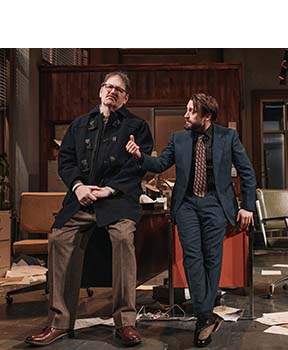
David Mamet’s play, staged on Broadway in 1984, getting a revival with movie star Kieran Culkin, pits a collection of real estate salesman against each other as if they were in an MMA combat. (That is mixed martial arts, for the non-cognoscenti.) A punch here, a kick there, blood on the ground. That is to say that under Patrick Marber’s direction, it is overwrought, overacted and implausible. The office and inhabitants resemble a mental institution more than a tough, competitive real estate sales office. This forty-year old play doesn’t age well.
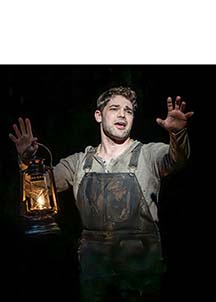
Why would one want to do a play about a man trapped in cave in rural Kentucky in the winter of 1925? A true story. The book is by Tina Landau who also directed and presented it first in 1994 in Philadelphia. This is the Broadway premier.
This is the kind of theater piece I really don’t like except I really liked it! Portentous, pretentious, full of cymbals crashing. Tacky show girls with feather sequins and glitter. Tacky men with buttocks poking out of g-strings. This is Las Vegas! Maybe not.
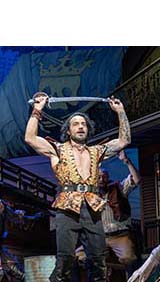
It’s a charmer. A bit silly, but that’s part of the deal. If you’ve never seen a Gilbert and Sullivan operetta, a charming take on British class oppression. Can those words go together? At a time when such subtlety was required. Still works.
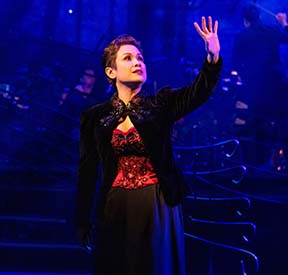
“Sondheim’s Old Friends” is producer Cameron Mackintosh’s love letter to Stephen Sondheim’s greatest shows. Which he had produced. Better than a memorial service. For the rest of us, it’s also a chance to see Lea Salonga, a brilliant actor as well as singer.
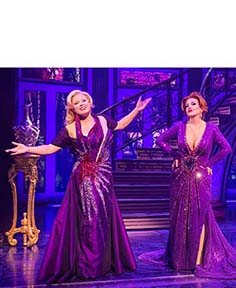
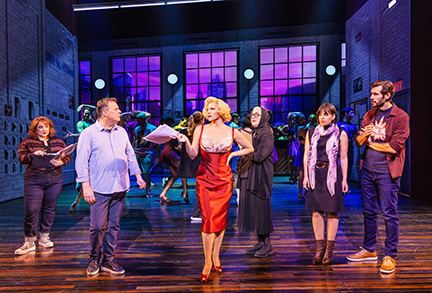
It’s the Marilyn Monroe story, “Bombshell,” no really her story. Though it takes a while to figure that out. (Clues abound.) It starts in typical Broadway musical fashion with dance to jazzy music, with the Marilyn figure Ivy Lynn (Robyn Hurder), doing a “Let Me Be Your Star” number. Seems cliché. Disappointment. But wait!
At a time of book-banning, what could be more timely than a look back at the trial of nearly 100 years ago where earlier yahoos were upset at the 4-letter words in James Joyce’s “Ulysses.” That probably got a lot of people to read, or at least start the book. And it is the basis for an engrossing and very entertaining reenactment by Colin Murphy.
Kimberly Belflower’s takedown of “The Crucible” is clever and sophisticated with a dénouement that will take you by surprise even if the parallel story has been out there all along to be discovered.
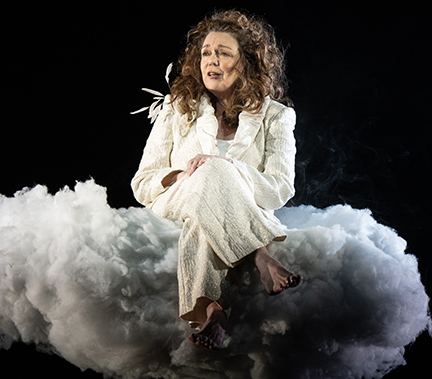
Sarah Snook is brilliant as Dorian Gray and all the other 25 characters in this morality play about the decadent British upper class.
The Oscar Wilde novel, written in 1890, is about a young self-centered fop who doesn’t want to grow old, and, after his portrait is painted by a friend, makes a pact with the devil (as it were), to have his face stay the same while the ravages of time and his excesses are shown on the painting secreted in his childhood playroom.
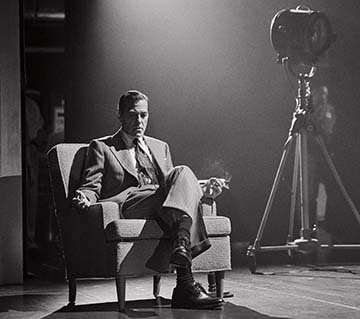
“Good Night, and Good Luck,” the smartly-staged story of how news reporter Edward R. Murrow helped bring down the malicious “junior senator from Wisconsin,” Joseph McCarthy, occurred in the early 1950s but could have been set today.
Written by George Clooney and Grant Heslov, directed by David Cromer, it’s about how a powerful political figure targeted people he charged were communists or sympathizers and destroyed their lives. How the country’s politicians stayed silent. How he was abetted by malevolent media figures and their cowardly supporters. And how citizens were smothered into lethargy by TV’s breads and circuses.
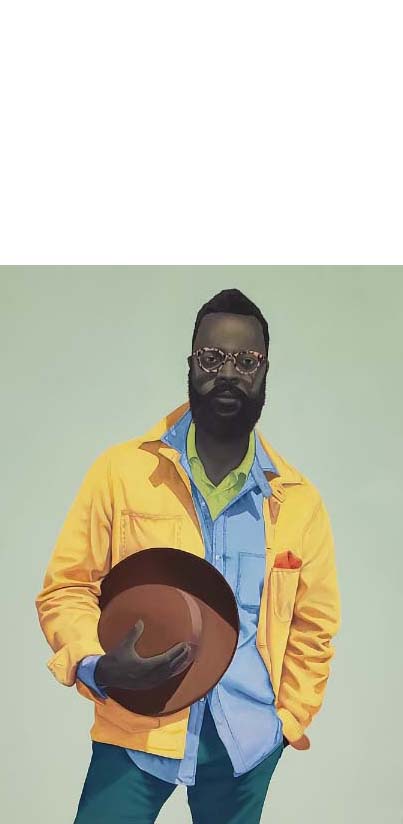
Amy Sherald’s exhibit at the Whitney Museum is a collection of portraits of people who are black but who could be anyone from the nature of the lives they project: a worker, a tractor driver, a lady with a bicycle, an equestrian. And Michele Obama, which is what got Sherald some fame. The faces are flat, the flesh colors are black but cool. Sherald, born 1993 in Columbus, GA, shows what black people would look like sans racism. Workers. Doing sports. Being the smartly dressed wife of a president. (She also has a painting of Breonna Taylor.)
“Glass,” “Kill,” and “What If If Only” are smart Caryl Churchill plays, surreal metaphors of how people live as individuals and in societies. Of course, they are metaphors, and it takes Churchill’s inventiveness and director James MacDonald’s direct realistic portrayals to make them engage you. They were first presented in London at the Royal Court Theatre in 2019.