

By Lucy Komisar
The Mabel Mercer Foundation’s annual Cabaret Convention is always a highlight of the fall season, Under the artistic direction of KT Sullivan, the event honored the legacy of Mabel Mercer, the British-born singer-storyteller who became the toast of New York café society. Mercer’s approach—intimate, narrative-driven, emotionally transparent—was evident throughout the proceedings, even when the material strayed far from her own songbook.
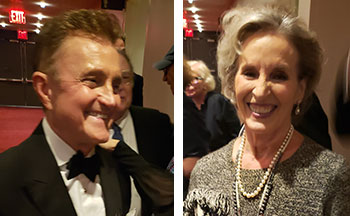
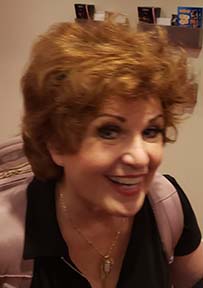
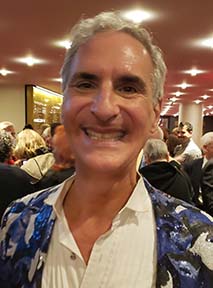
And a treat for the people who go to the event is that the singers come out at intermission and after the show to mix and schmooze with everyone in the big lobby. As you can see from the photos I took.
Night One: The Mercer Songbook
The opening night, “Once in a Blue Moon,” featured songs associated with Mercer herself, introduced by Andrea Marcovicci and Jeff Harnar. Their playful deconstruction of Paul Simon’s “Feeling Groovy” set a tone of irreverent reverence.
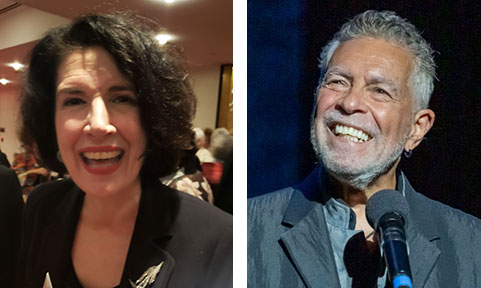
Highlights abounded. Meg Flather brought Broadway-scale comic timing to Alan Jay Lerner’s “Wait Till You’re 65,” while Clint Holmes delivered the evening’s emotional centerpiece with his original song “1944,” recounting his parents’ meeting at a segregated USO performance during World War II. Holmes, the son of a white opera-singer mother and a Black singer father, channeled that personal history into a scorching “It’s All Right With Me.”
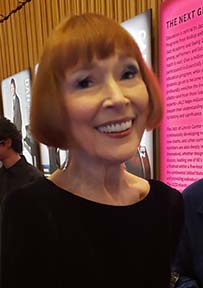
Noël Coward and Cole Porter, those twin pillars of sophistication, received loving treatment. Marissa Mulder’s breathy, playful “Chase Me Charlie” (about a cat, naturally) charmed with Jon Weber at the piano.
Karen Akers, a perennial favorite, brought gravitas to Coward’s “Matelot” before shifting into a rich, elegant French for “Falling Leaves/Feuilles Mortes”—pure Mercer style. Tovah Feldshuh, better known for comic turns, revealed an elegant soprano on Porter’s “Every Time We Say Goodbye,” while Jeff Harnar gave “De Lovely” the full production-number treatment it deserves.
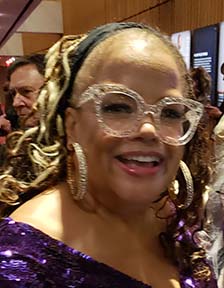
Charles Busch’s baritone transformed Joni Mitchell’s “Both Sides Now” into something you’d never hear on the radio—a story about love and its illusions, the voice itself part of the picture. Marilyn Maye, indefatigable as ever, brought “My Romance” to vivid life, and Amanda McBroom’s smoky “Blame It on My Youth” conjured the room’s ghosts.
Night Two: The Songs of Sammy Davis, Jr.
Natalie Douglas hosted a spirited survey of Sammy Davis, Jr.’s repertoire, opening with a rich-voiced “Begin the Beguine” (Porter again!) and later finding both honey and steel in “Mr. Bojangles.”
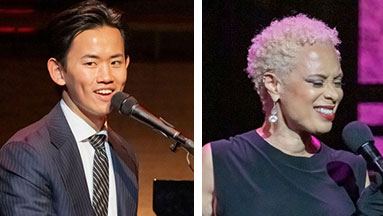
The evening showcased the convention’s astonishing range. Young Reed Harris Butts announced himself with a jazzy baritone on “Birth of the Blues”—one to watch. Eric Comstock, always a favorite, paired piano and voice on a jaunty “Too Close for Comfort.” Darnell White’s “That Old Black Magic” soared, roared, and skatted; he was, indeed, magic.
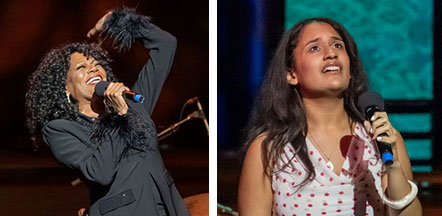
Jonathan Arons sashayed onstage with his trombone for a charming “(Barretta’s Theme) Keep Your Eye on the Sparrow,” while Bryan Eng brought hotel-cabaret elegance to Berlin’s “Cheek to Cheek.” Valarie Pettiford proved why she’s among cabaret’s best with a smashing “Don’t Get Around Much Anymore,” and Jon-Michael Reese set the room on fire with Charles Strouse’s “Night Song.”
The Strouse tribute continued with Barbara Fasano (singing to husband Eric Comstock’s piano) on a fine “Golden Boy,” while Stephanie Pope told a soaring showbiz story in “Once in a Lifetime/Gonna Build a Mountain.” Luz Velazquez needed no amplification to deliver a powerful “What Kind of Fool Am I?”
Young Suri Vu displayed Broadway-quality pipes on Johnny Mercer’s “Something’s Gotta Give,” and Amanda King brought Vegas-style syncopation to “Rhythm of Life.” Klea Blackhurst, blessed with an Ethel Merman voice that needs no microphone, knocked “Talk to the Animals” out of the park.
T. Oliver Reid’s smooth baritone on “I’m Gonna Live Till I Die” and Debbie Wileman’s powerful belt on “The Ballad of Johnny Cool” rounded out a packed evening, with Clint Holmes returning for a smoking West Side Story medley.
Night Three: “Cornucopia of Entertainment”
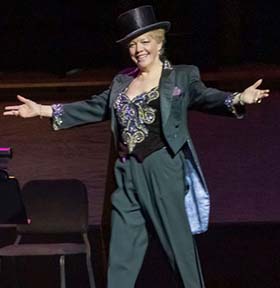
The final night lived up to its name. KT Sullivan, stepping out from her artistic-director role, revealed a comic side I’d never seen—a brilliant, funny, Vaudeville-style “I Happen to Like New York” (Porter, of course) complete with black top hat. It should have been filmed.
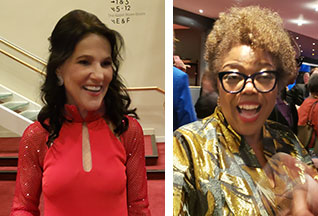
Susan Mack sparkled on a New Orleans jazz-inflected “Let the Good Times Roll,” and Robert Cuccioli’s baritone on “How Little We Know” and “Ain’t That a Kick in the Head” made you want to swing dance. Dawn Padmore, a glorious soprano from Liberia, delivered Sondheim’s “Losing My Mind” with diva authority, while Madeline Joy Travis brought operatic trills to “Will He Like Me?”—Broadway beckons.
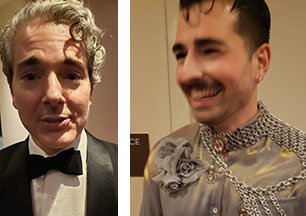
Mafalda Minnozzi offered a breathy Portuguese “The Girl from Ipanema,” and Eric Yves Garcia charmed in elegant French with “C’était Moi,” tinkling piano suggesting he belongs at Bemelmans Bar. Melodie Wolford’s “Smile” shifted from ballad to theater before your eyes. Can M. Yasar, ten years in the U.S. from Turkey, brought a western twang and silver-shirted charisma to “Coming to America.” An immigration theme that would be repeated.
Shana Farr and Craig Rubano’s “With a Song in My Heart” soared elegantly, while Carole J. Bufford’s Dolly Parton tribute “Little Bitty Pissant Country Place” shuffled and honky-tonked with delight.
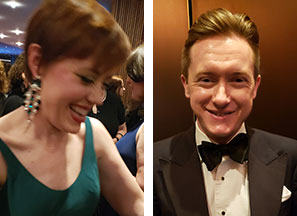
Raissa Katona Bennett and Arbender Robinson offered Irving Berlin’s “Give Me Your Tired, Your Poor”—timely and touching, a clear comment about immigration. Sam Jewison built a stairway to paradise with Gershwin, and Julie Wilson Award winner Heather moved seamlessly from scenic romance to jazz on the same words—a reminder of why we love this music.
Ann Kittredge brought sultry New Orleans jazz to Carole King’s “I Feel the Earth Move,” Celia Berk offered comic political commentary in “Laughing Matters,” and Marta Sanders told a dramatic, operatic story in “Volero” that made you want to cheer.
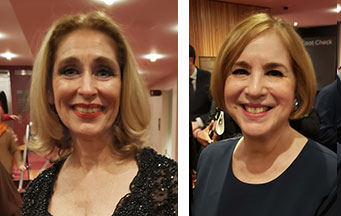
Mark Nadler closed the evening—and the convention—pounding the keys and singing with passion through four songs from Ragtime, a fitting tribute to the immigrant experience that runs through so much of this repertoire.
The Cabaret Convention remains a singular institution: part history lesson, part family reunion, part star-making engine. This year’s edition honored Mabel Mercer’s legacy not just by singing her songs but by embodying her values—storytelling first, sophistication always, and a generosity of spirit that welcomes both legends and newcomers to the same stage. KT Sullivan and her team have done Mercer proud.
The Mabel Mercer Foundation’s Cabaret Convention took place at Rose Hall, Jazz at Lincoln Center, Broadway and 60th Street, NYC, October 13–15, 2026.