

By Lucy Komisar
The Realist Review July 8, 2025
An Introduction
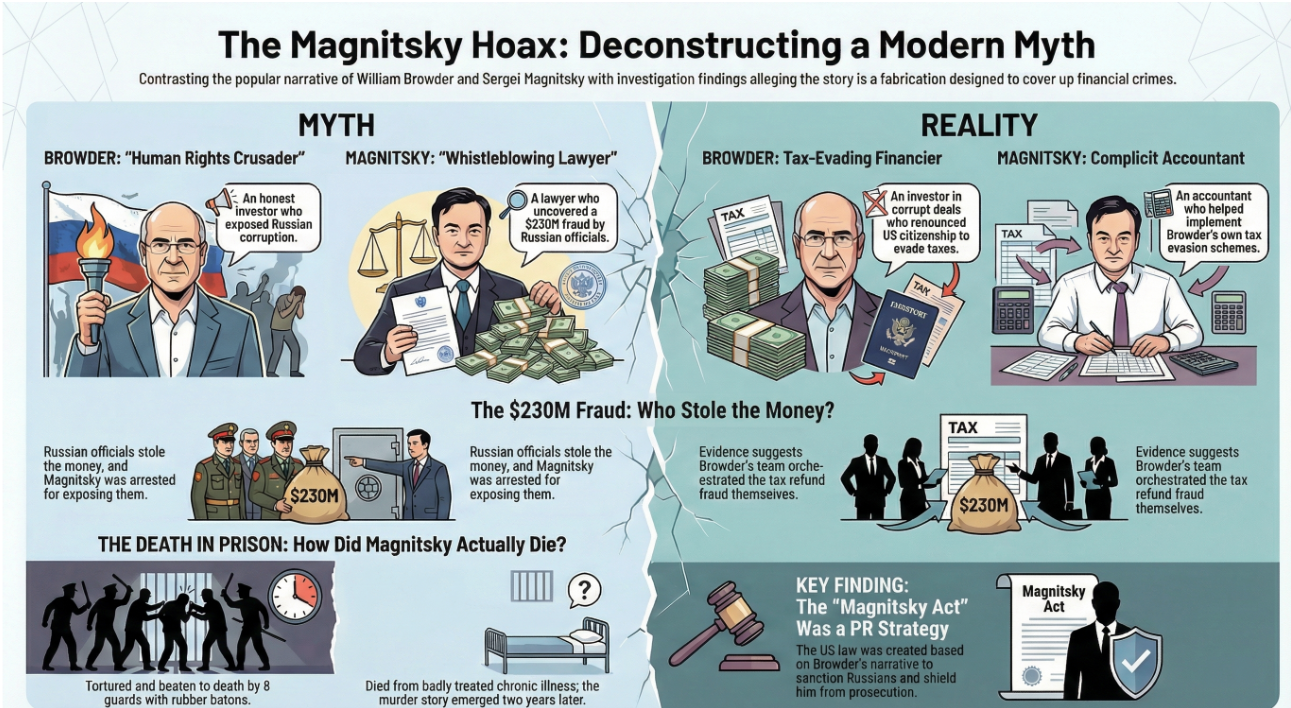
TRR is grateful to the award-winning investigative journalist Lucy Komisar for her groundbreaking two-part series which destroys the 11 myths behind “Sir” William Browder’s tale of Sergei Magnitsky—a man whose death he cynically weaponized in order to shield himself from prosecution and in the process turn himself into a “human rights” crusader.
Browder, a man who disavowed his American citizenship to evade paying taxes, made a fortune in the Wild West Russia of the 1990s. He came under scrutiny there for tax fraud in the mid-2000s. Seeking a way out, he went to Capitol Hill and there, with the help of former Maryland Senator Ben Cardin and the staff of the Helsinki Commission, launched a brilliant PR strategy that resulted in the “Magnitsky Act”—a bill that sanctioned the Russians who allegedly murdered his lawyer Magnitsky (He was not a lawyer, as we will see). These sanctions—initially opposed by President Obama and the Clinton State Department, which knew Browder’s checkered history and was skeptical of his tale— helped kick off Cold War 2.0.
Komisar is the only American journalist to have uncovered the lies at the heart of this sordid tale. But others later came to know the truth but were too frightened by Browder’s money and power. One such reporter who was cowed by Browder and his team of lawyers at Kobre and Kim in Washington, DC is NBC News reporter Ken Dilanian who was threatened with legal action by Browder’s expensive legal team (Komisar and TRR are in possession of a letter sent by the firm to NBC). The threats (or even the mere possibility of legal action—Browder is famously litigious and had his lawyers shut down the filming of an unflattering documentary about him, which I covered for The Nation magazine some years ago) have worked against other US media outlets—but that trick has worked less well in Europe where Browder’s tale has come under the microscope, including by the estimable Der Spiegel in Germany.
But no one has matched Lucy’s encyclopedic grasp of the case. And I suspect no one will.
—James W. Carden
***

Slideshow of this story to see all of it in pictures.
In 2012 an explosive story resulted in a U.S. law which blocked visas and froze the assets of dozens of Russians accused by William Browder, a U.S.-born investment fund manager in London, of having organized or abetted the murder of his lawyer, Sergei Magnitsky, who he said had accused Russian government officials of complicity in the theft of $230 million from the Russian Treasury.
But investigations show Magnitsky was not a lawyer but was instead Browder’s accountant who was linked to the scam. And he hadn’t been murdered—he died of a badly treated illness during a nearly year-long term in prison where he was detained thanks to an investigation into his managing a multi-million-dollar tax evasion scheme for Browder’s companies.
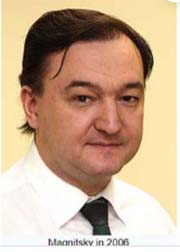
At the time, and despite his later claims, Browder organized no campaign to free him, admittedly having no contact with him or his lawyers.
Browder, as will become clear, is a brilliant conman. He has gotten the Western media, particularly in the U.S. and UK, to tell his story. He has been invited to speak to the U.S. Congress and the European Parliament. And in its way, the Browder hoax set the stage for Russiagate, itself a complex web of disinformation.
Here is Browder’s story, a litany of scams and corruption.
Making money in Yeltsin’s Russia
William Browder, then in his mid-20s (DOB 4/23/64), after studying at Stanford University, left the U.S. for London around 1990, first working for the Boston Consulting Group in Mayfair, then in 1991 for Robert Maxwell’s investment bank focusing on Russia and Eastern Europe. Browder he never mentions the corrupt and Mossad-linked Maxwell (Maxwell’s daughter is none other than the convicted Jeffery Epstein consort Ghislaine Maxwell)—and after Maxwell’s theft of workers’ pensions, he left in 1992, joining the London office of U.S. investment bank Salomon Brothers, in charge of investments in Russia. In those years, Salomon Brothers was taking advantage of the privatization of state companies by Russian President Boris Yeltsin, a project promoted by U.S. government advisors whose goal was to end Russian government control of industry and open opportunities for U.S. investors.
PeterStar
Salomon’s biggest Russian investment banking deal resulting in at least $98 million in stock sales was PeterStar, a St. Petersburg telecom. The first public statement of Salomon’s involvement with PeterStar was in November 1993, when PeterStar issued a press release stating that it has retained Salomon to work on a mobile phone deal in Kazakhstan.
The following month, Browder signed a Joint Venture Agreement between an offshore company called Wireless Technology Corporations Limited and a Kazakh state company to form BECET International. Browder represented the offshore company.
One explanation for Browder’s failure to mention the lucrative PeterStar deal in his memoir Red Notice is that the firm was the subject of numerous corruption allegations in 2004-2008, prompting criminal investigations in Germany, a 7-million euro fine against Commerzbank (headquartered in Frankfurt), and the resignation of Russian Telecommunications Minister Leonid Reiman.
Setting up Hermitage
Browder met Edmond Safra through Maxwell. Safra (a Brazilian of Lebanese heritage) who owned Republic National Bank was a Samuel Bronfman syndicate man. The Bronfmans were among those rare business people who traveled to the USSR. From January 1994 to January 1996, according to journalist, Robert Friedman in New York magazine, the Republic National Bank flew more than 40 billion dollars into Russia to the banks of the Russian oligarchs. So, assuming a commission, he had a lot of cash to invest.
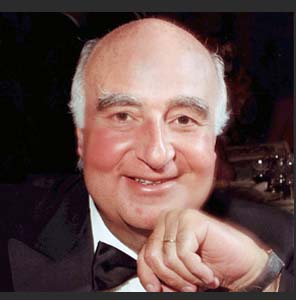
According to Dave Elzas, who worked for Israeli diamond mining tycoon Benjamin Steinmetz, in 1996, Safra created an offshore fund in Guernsey (one of the British offshore Channel Islands), naming it Hermitage after the Monte Carlo hotel the bank owned. He tapped Browder to run an investment firm in Russia for which he and Steinmetz each put in $25 million. Browder would later claim that he founded Hermitage himself and named it after the Russian Museum.
In 1997, Browder traded his American citizenship for a British passport, avoiding U.S. taxes on his investment earnings. (The U.K. doesn’t tax offshore profits.)
The U.S. Treasury listed him as a tax expatriate.
Myth #1, that Sergei Magnitsky was a lawyer. In fact, Magnitsky was an accountant.
Firestone Duncan
Meanwhile Elzas found a Moscow audit firm, Firestone Duncan, owned by a former Ernst & Young employee Konstantin Ponomarev, whose junior partner was an American car paint dealer, Jamison Firestone. (Ponomarev thought the Anglo-Saxon name would attract business.) Ponomarev in 1995 hired Sergei Magnitsky who had been an economics school classmate.
Ponomarev told me by email:
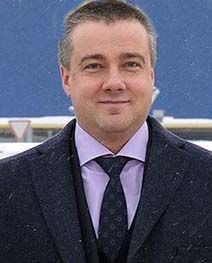
“I had known Sergey Magnitsky since 1988 when we studied in the Russian Economics Academy. In 1994 I recommended him to be hired by Ernst & Young in Moscow where I worked since 1992. In 1995, I (51%) and 3 other partners (49%), including Jamison Firestone (24%), created Firestone Duncan. The same year I hired Sergey work as deputy head of the audit department in my company, Firestone Duncan. The last time I spoke to Sergey was in 2008, several months before his arrest.
In the beginning of 1996 Hermitage Capital became our client.I was personally responsible for this client as they needed tax planning (first) and then implementation of this tax planning in the books of the Russian companies which FD created for Hermitage. I have personally known Bill Browder since 1996, when we developed for him strategy of how to buy Gazprom shares in the local market, which was restricted for foreign investors. In 1996 these restrictions were not legal, but were imposed by Gazprom de-facto.
On December 15, 1996 I was forced by corrupted police officers to transfer all my rights to Mr. Firestone, who was later charged for extortion in Russia for this crime. Since December 15, 1996 I was not involved in the FD’s operations.”
This is that story
According to the Moscow Times, on December 15, 1996, armed men, some them wearing police uniforms, broke into the office of Firestone Duncan. They cut off communications and made the staff lie on the floor. Ponomarev refused to sign a paper liquidating the company. He was driven to a forest and offered a choice: his signature or death. Firestone later claimed that Ponomarev owed money to the company. Police did not immediately investigate the incident.
Ponomarev continued:
In 1997 purchasing of Gazprom shares by foreigners was officially restricted by the Decree of the President of the RF. However, as we all know now Hermitage and FD continued to do this using our old strategy for the next 10 years. They had known this was illegal.
In 2010 after Sergei’s death, I was questioned by Oleg Silchenko on Browder’s tax fraud case. I did not have any legal right not to report to the investigator all I know about wrongdoings of FD and Hermitage and Mr. Browder’s role in them.
In light of the above, can you explain me how can I be “responsible for the death of Sergei Magnitsky, for the subsequent judicial cover-up and for the ongoing and continuing harassment of his mother and widow”. My inclusion in the Sergi Magnitsky’s list is nothing but revenge of Mr. Browder for telling the truth.
This is not justice for Sergei as Bill presents it. This is witness intimidation. When I had known about these sanctions, at first, I thought that my case was so obvious that I need lawyers with high repute in the EU to simply present it to the EU parliament to exclude my name from the list. This is why I went to Debevoise & Plimpton and hired them for my representation in this case. Since Lord Goldsmith was the head of the team of the layers of D&P who worked on my case, I asked that the letter to the EU parliament was signed by him. I do not know if this was done or not. If this was done, it really “adds value to my positions not only in the EU but also in the RF”, doesn’t it?
With regards to the $230m fraud, you are the first one from whom I hear this. I would be glad to find out what else but Mr. Browder’s fantasy is behind these rumors. In addition to the above general comment on the issue, I give answers to your specific questions:
Q: Why have EU parliamentarians suggested you played a role in a $230m fraud and subsequent death of a lawyer in Russian prison?
A: I consider this to be a revenge from Mr. Browder for my witness statements in Russian court against him. I am sure EU MPs did not know my story when voted for the list. Sergei and I never had legal education and were not lawyers. Sergei was an accountant and an auditor.
Q: Were you involved in the alleged case?
A: I was involved in the case as tax advisor of Mr. Browder and general director and major owner of Firestone Duncan. I had nothing to do with Mr. Browder and Hermitage Since December 15, 1996. The $230m tax fraud is not the biggest one Mr. Browder was involved in Russia. I had no business with Mr. Browder since 1997.
Myth #2, that Browder was an honest investor who went after corrupt Russian companies
Browder’s most famous investment was Avisma where he and partners bought into a transfer pricing fraud to cheat minority investors and Russian tax authorities and then Gazprom, where he and partners illegally bought shares though a shell company owned by figurehead Russians.
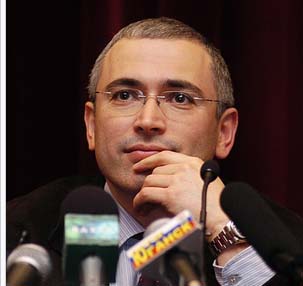
The Avisma story starts when Russian oligarch Mikhail Khodorkovsky’s Bank Menatep and its industry group, Rosprom, bought 60 percent of titanium sponge producer AVISMA (Aviation Special Materials), at a knock-down price via one of the “loans for shares” scams in the mid-1990s, via which Yeltsin made government properties collateral for loans it would never repay. The Avisma titanium was used in Boeing planes. Menatep also bought into an Isle of Man shell company operator, Valmet.
A large portion of AVISMA’s profits were being siphoned-off to the controlling stockholders through a “transfer pricing” scheme run through Valmet. A shell company sold raw material to AVISMA at inflated costs and purchased the finished product at below-market prices. The shell then resold the products on the world market, collecting the difference for the majority, cheating minority shareholders on profits and Russia on taxes.
In the late 1990s, Khodorkovsky decided to sell AVISMA. It had a quarter of the world market for titanium sponge– it now says a third — with claimed $100 million a year in sales and profits of $15 million. But those profits were reduced by transfer-pricing. According to AVISMA records, its cost for ilmenite, the raw material used to make titanium sponge, went from $95 a ton ($10 above market price) in 1996 to an alleged $130 a ton ($55 above market) in 1997.
Browder and partners, American billionaire and Dart Cup heir Kenneth Dart and Andersen Group investors CEO Francis Baker, bought Menatep/Rosprom’s 60 percent of AVISMA in 1997. They paid more than $85 million, with Dart taking the largest part. Browder agreed to buy up to $20 million and Baker $7 million. Their lawyer later said the scheme made the transaction profitable.
When the partners sold AVISMA, new Russian owners discovered the fraud and sued in the Isle of Man. They charged the sale to Dart, Browner and Baker had been “a turnkey proposition,” continuing the skimming that cheated minority shareholders on profits and the Russian government on taxes. With guilt proven in detail by their own documents and phone transcripts, Browder and the other thieves settled.
For details.
Mossack Fonseca
Browder retained the infamous Panama money-laundering firm Mossack Fonseca to build an offshore network. He had incorporated Berkeley Advisors, Inc., a British Virgin Islands (BVI) entity, to hold his shares in Hermitage Capital. He switched to Mossack Fonseca as its registered agent in 1997.
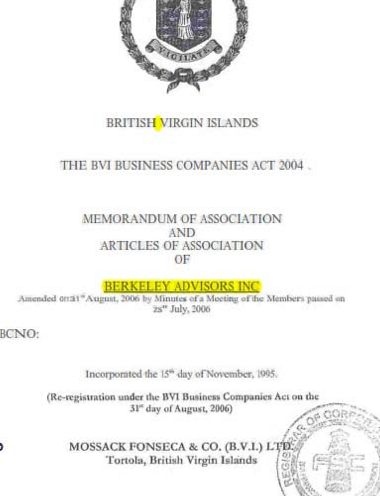
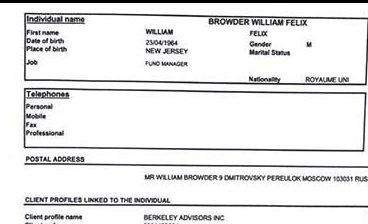
Mossack Fonseca’s Bahamian branch registered the shell company Pepperdine Holdings Limited, the owner of a New Jersey home belonging to the Browder family.
In 2007, he set up Starcliff S.A., to replace Berkeley Advisors as a shareholder of Hermitage Capital Management. Starcliff was registered by Mossack Fonseca (Jersey) as a BVI company. Starcliff is also the controlling party of Hermitage Capital Management (UK) Limited and Hermitage Capital LLP.

Safra and Steinmetz also held their shares through shells set up by Mossack Fonseca. Two of Jamison Firestone’s London properties served as the registered addresses for four Mossack Fonseca vehicles.
Hermitage
Browder’s Hermitage partners were also dicey. Safra in 1998 had moved $4.8 billion of an IMF loan to Russia through his Republic National Bank. It disappeared, never to be recovered. He died in a suspicious fire in his Monaco penthouse in December 1999. Steinmetz sold Browder his shares; he would end up in prison for bribing officials in the West African country of Guinea to get a mining deal. So, Browder would own Hermitage by 2000.
It invested $4.5 billion in Russia, making it for a time the largest foreign investor in the country. Browder’s strategy was to feed western reporters claims of company corruption, see the stock drop, buy it, and make a profit when stocks recovered, as the claims were not proved. (Harvard Business Review )
Evading taxes
Browder didn’t like paying Russian taxes any more than American ones. The Russian region of Kalmykia, majority Buddhist, gave big tax write-offs to companies that hired the disabled. He registered Hermitage subsidiaries in Kalmykia. There were no offices or operations there.
The Hermitage account at Firestone Duncan was assigned to auditor Sergei Magnitsky, a 1993 graduate of the Plekhanov Academy for Finance and Economics in Moscow.
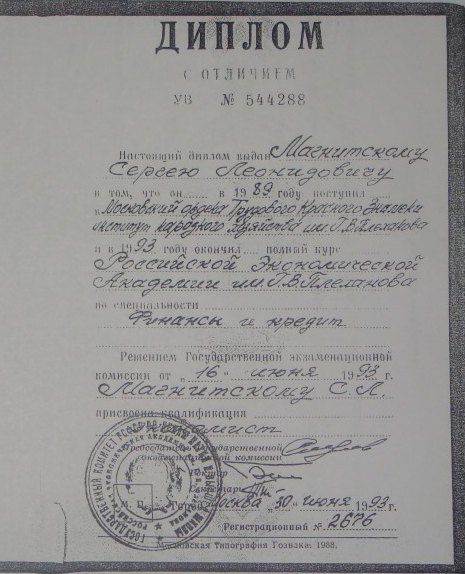
To advance Browder’s tax evasion scheme, Magnitsky went to Kalmykia and found local laborers who in exchange for cash agreed to provide their work documents and swear they were disabled and employed by the Hermitage subsidiaries. Browder claimed tax deductions that saved him about $40 million. But the companies were shells that were used to hold shares and employed no one. The staff of each company consisted of Director General Browder and disabled employees of the analytical department. Sergei Magnitsky acted as Chief Accountant of Dalnaya Step and Saturn working from offices of Firestone Duncan.
The workers later testified on video they worked full time as laborers in jobs such as gardener. In his deposition, Browder said he didn’t remember if his shell companies had employees. And besides, his tax filing was handled by Firestone Duncan. That would have been by Magnitsky. But Browder’s signature is on the returns.
The workers generally got $15 to $30 a month for use of their disability records and employment books, much less than even unskilled laborers received and nowhere near the sum a financial analyst would be paid. Greed may have done the perpetrators in, since tax officials perusing the filings would immediately be suspicious.
Browder said in a deposition that everybody in Russia did it. He provided no evidence since that was not true. Here is Browder on video talking about using handicapped workers in Kalmykia to reduce his taxes:
This video is the interrogation of workers alleged to be employed by Browder’s shells (with English subtitles.)
Russian tax investigators in the early 2000s saw through the scam.
In a 2015 deposition in U.S. federal court, Browder acknowledged, “The Interior Ministry was investigating Hermitage in 2004; closed the case in 2005.”
Q. Who told you that?
A. I got information in 2000- — some recent year.
Q. From whom?
A. I can’t remember where it came from.
Q. So just this amorphous information that it was closed?
A. Yes.
He doesn’t know where he got the information that would save millions in taxes? Or, maybe if you pay somebody off, you don’t broadcast it. But the official later confessed he’d been bribed. So, the Russian feds went after Browder again.
When a $20-million judgment was levied against one of the companies, Hermitage avoided paying it by transferring the company to to VRMG, an Israeli/Moscow security firm run by ex-Mossad agent Yakir Shashoua, who had worked for Safra and HSBC, the Hermitage trustee.
In 2005 Browder flew to London, and when he returned in November, he was refused entry, his visa cancelled. He boasted that Russia called him a threat to national security.
That could have been due to the fact that Russian discovered that from 1997 to 2005 he had illegally amassed at least 200 million shares, a big stake, in Gazprom, Russia’s major energy company, at rates allowed only to Russian nationals, instead of buying ADRs (American Depository Receipts) in London at a higher price. He had done so via Dalnaya Step, a shell company with Russian figurehead owners. Gazprom was one of the targets of his “activist investor” manipulation of share prices. And he had tried to get a seat on the board. The FSB (Federal Security Service) clearly monitored his activities.
Browder’s accomplices on the Gazprom deals were the brothers Dirk, Robert and Daniel Ziff of Ziff Brothers Investments. When the shares were transferred, he bankrupted Dalnaya Step to hide the paper trail. The Russian Prosecutor General asked for U.S. cooperation in looking into the scam, noting that Ziff Brothers Investments was not registered with the U.S. Securities and Exchange Commission as an investment firm and thus could not legally participate in those transactions. The U.S. declined.
Tax evasion case continues
Under pressure from the FSB, the tax evasion case was reopened and transferred to Moscow. But Browder successfully bribed Ministry of Internal Affairs officials.
After Browder lost his visa, his Russian Hermitage associates left for London. Magnitsky, working for Firestone Duncan, remained.
And the investigation into the Hermitage subsidiaries’ tax evasion picked up again.
In October 2006, Magnitsky was called to give testimony about the Kalmykia tax evasion. That testimony is public, filed in U.S. federal court.
In June 2007, tax investigators conducted searches of the Hermitage and Firestone Duncan offices, seizing documents, seals and computers.
Myth #3, that Russian officials committed the tax refund fraud.
No, the evidence points to Browder and Magnitsky.
Tax Refund Fraud
Meanwhile, other crooked companies were cheating the Treasury on what became known as “the tax refund fraud.” According to Andrey Pavlov, a Moscow lawyer who worked on some of the scams, the culprits would set up shell companies that would sue their own real company, claim a contract had been breached and demand X rubles. The real company would pay up, (cash going who knows where), refile tax forms, claim a loss, and get a refund.
His first client was the Renaissance Group. Its involvement is even suggested in Browder’s book, Red Notice.
Browder’s meeting with Renaissance CEO Sagiryan in London occurred only 2 weeks before the $230-million Hermitage scam payout. Browder cut short his Middle East business to come to that meeting on very short notice. Based on Andrey Pavlov, it is quite likely that Renaissance had done the same scam.
At the time this was written, 2015, the U.S. Justice Department had filed Browder’s proxy case against the Russian company Prevezon (more on that later), which also talks about RenCap, which had connections to Renaissance, doing the same tax refund fraud in 2006. This is December 2007, at the end of Hermitage’s fake court cases but before the Treasury payout.
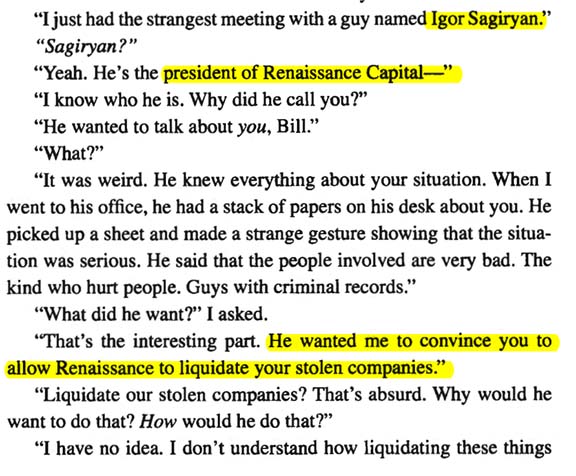
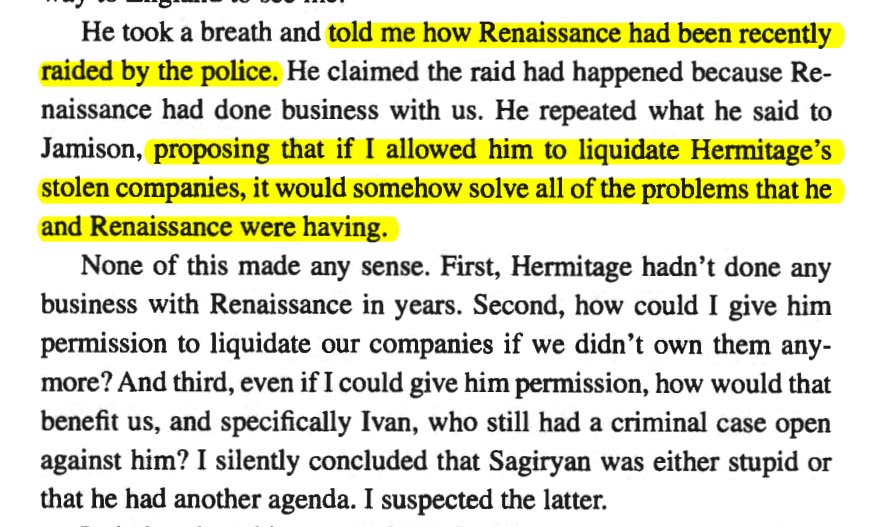
How could Renaissance liquidate “stolen companies”? Why would he ask Browder to let him do that? Browder acts here as if he doesn’t understand that. Then why did he end his Middle East trip for this meeting? It’s clear Sagiryan knew Browder had done the tax refund fraud. Even in retrospect, Browder never comes back to it. Seems a big mistake to put this smoking gun in his book.
Realizing he needed a smokescreen, Browder gave a damning story to British media. “The British arm of a firm that has employed a string of former KGB spies received millions of pounds linked to the death of a prominent lawyer, court papers have revealed. More than £6 million from funds at the centre of a giant fraud which was being investigated by Sergei Magnitsky has allegedly been traced to a UK bank account held by Renaissance Capital, which has offices in London.”
Of course nothing was ever traced. Any more than the Hermitage thievery was traced. Not when you move the cash offshore.
Pavlov told me his second client for the fake lawsuits was not told to him, but the evidence points to Hermitage. Curiously, in July 2007, a power of attorney was provided by Browder’s Cyprus shell company, Glendora, for the “sale” of the Hermitage subsidiary Parfenion to the shell company used in the tax refund scam. Under Russian law, a company can be transferred only by the individual who registered it going to the Companies House or having someone with power of attorney do it. A Glendora employee in a deposition in U.S. federal court confirmed the signature on the document.
The power of attorney was given to Octal Gasanov.
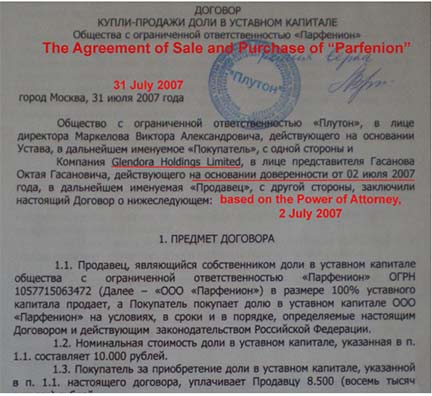
The shell company, represented by Viktor Alexandrovich Markelov, is the buyer. Glendora Holdings Limited, represented by Oktai Gasanovich Gasanov, is the seller. Glendora was Browder’s Cyprus shell company, owner of his Russian shells. In his interrogation, Markelov says Gasanov was his collaborator in the tax refund scheme.
As court orders or decisions on the tax refund fraud were made, envelope cancellations would show that court documents relating to the legal scam were sent to the Hermitage mailbox Magnitsky monitored. This and other stamped envelopes and a post office receipt were filed in the Prevezon case. So Magnitsky and therefore Browder knew all about the fake court cases and took no action to stop them.
Pavlov told me, “In October, the whole Browder team knew about these claims and didn’t appeal the decision [allowing the take-over of his companies] which had been granted.” That October 16 notice said there would be a hearing October 22. Hermitage sent no lawyer to the hearing. Pavlov said, “They did nothing till the money was paid out of the budget [the Russian Treasury]” at the end of December.
All this points to Browder organizing the tax refund fraud along with Magnitsky.
The fraud was effected in December 2007, when Hermitage reported it had to pay $1 billion to settle the claim and demanded a refund of $230 million of taxes paid, which coincidentally was its entire tax bill for the year.
Maybe Hermitage knew about the theft of the companies because Browder had organized it. When Viktor Markelov, the paid manager of the fraud, was arrested and interrogated, he said he had gotten necessary documents from a “Sergei Leonidovich.”
Magnitsky’s full name was Sergei Leonidovich Magnitsky.
Myth #4, that Magnitsky had pointed to Russian investigators as culprits in the tax refund fraud.
No, it was Rimma Starova, a figurehead director of a shell company used in the fraud, who went to the police, after seeing a report in Kommersant about Browder’s illegal stock buys:
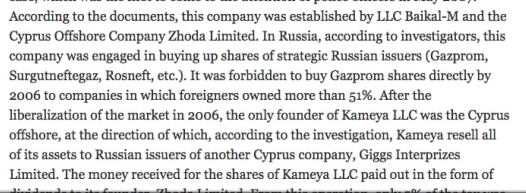
and she pointed to the owners of Hermitage.
Within days of the Kommersant report and Starova’s visit to the police, Browder gave a story to the U.S. media, accusing Russian officials of doing what Starova had claimed Hermitage did. Bloomberg and other media (including the Brits) ran his claims with no evidence and no reference to what Starova said, which would prove to be the way they handled all Browder’s claims and attacks to the present – stenography pretending to be journalism. Part of his story was that when he discovered the fraud, he went out and hired the best “lawyer” he could find, Sergei Magnitsky!
Myth #5, that Russia arrested Magnitsky in late 2008 because he accused Russian officials of involvement of the 2007 tax refund fraud.
No, he was interrogated in 2006, a year earlier, for the Hermitage tax evasion. His 2008 pre-arrest testimonies continued the tax evasion questions and he didn’t accuse anyone.
Tax Evasion investigation continues
Meanwhile, new investigations pressed by the FSB finally led to the case being reopened in 2008. By then, Browder was out of the country and there was no one left to parcel out bribes.
In June and October 2008, Magnitsky was called again to give testimony about the tax evasion. The testimonies are on file in the Prevezon case. He accused no Russian officials of anything. (Browder would later be caught forging an English translation that inserted accusations that didn’t appear in the Russian testimony.)
Then in late 2008, Russian investigators discovered (confirmed by the European Court of Human Rights) that Magnitsky had been preparing to flee abroad and arrested him.
Myth #6, that Browder protested widely about the suffering of Magnitsky in prison.
No. During Magnitsky’s nearly one year in prison Browder never organized a campaign to free him. At the end, Magnitsky told a fellow prisoner his employers had sold him out.
Magnitsky was detained not on charges but for investigation. Until July 25, 2009, Magnitsky was accommodated in a “VIP” prison wing, number 99/1 of “Matrosskaya Tishina”, which is specially intended for “prominent prisoners”. Best known are the famous mafia boss Vyacheslav Ivankov nicknamed “Yaponchik”, the 1991 putschists, the Minister of Atomic Energy Yevgeny Adamov, the FSB colonel Mikhail Trepashkin, the former colonel of the military intelligence service Vladimir Kvachkov, Russia’s most famous contract killer Alexander Solonik and the oligarch Mikhail Khodorkovsky
Magnitsky had some ongoing medical problems, including hepatitis and diabetes. On Aug 14, 2009 he requested medication from relatives. There was no answer but he received the medicine on Sept 4, 2009. He requested a water heater on Jul 26, 2009 and received it July 31, 2009. He asked for a TV and a refrigerator six times, twice for the permission to copy some documents, seven times for repairs in the cell. He applied to get a nail clipper from relatives and the Civil Procedure Code from the prison library. A broken spoon, cup and a torn blanket were replaced and he also got a hair clipper from his relatives. The cell’s windows were repaired in September. What Magnitsky describes in Browder’s post are numerous violations of rules and rights, negligence and other adverse experiences of imprisonment in Russia, but not torture.
Later Browder would say that Magnitsky was tortured every day and filed 450 complaints, but he never published them as they arrived or later. What is presented to the public as “Magnitsky’s Diaries” is a 44-page handwritten document, dated September 20, 2009 (less than two months before his death). Magnitsky lists 25 complaints he filed at Butyrka Prison between 26 July and 18 September 2009. He writes that some of them remained unanswered, some were rejected and some of the complaints were acted upon – albeit belatedly.
He would have been released if Browder had paid back taxes. But he didn’t. Browder admitted in his deposition that during Magnitsky’s imprisonment, he never communicated with him or his lawyers.
Browder is a gifted and keen manager of public communications. But the man so good at getting media attention didn’t get any press mention of Magnitsky’s imprisonment till nine months after his arrest when the Washington Post August 13, 2009, noted at the end of a piece that he had been charged.
In October 2009, 11 months after the arrest, Hermitage Capital posted on YouTube a professionally produced video about the $230-million tax fraud. The arrest of a “lawyer and accountant” is only briefly mentioned at the very end, and nothing about Magnitsky’s alleged exposing of the fraud. Certainly nothing about him being abused in prison.
Browder also did not go to the well-known human rights organizations such as Amnesty International or Human Rights Watch and he did not contact the Russian NGOs with a reputation in the West such as “Memorial” or the Moscow Helsinki Group. Zoya Svetova, a prominent Russian human rights activist wrote in a 2014 article for Khodorkovsky’s site Open Russia, “I knew nothing about Sergei Magnitsky. I didn’t hear from Hermitage Capital either. We also visited Butyrka prison, (…) but we were not asked for help by Magnitsky’s lawyers.”
In prison, Magnitsky met Oleg Lurie, an investigative journalist who was there because a corrupt Duma member had accused him of extortion. Lurie would be exonerated and the prosecutor would apologize. Magnitsky met Lurie in a room where prisoners waited while being sent to court or for other reasons. He told him his employers were working to get him out. Sometime later, Magnitsky told Lurie his employers were selling him out and asking him to sign documents he didn’t want to sign. Lurie testified to this in a deposition filed in the Prevezon case.
Magnitsky’s illness
In prison, old illnesses would flare up, including chronic hepatitis and diabetes, and his treatment would turn out to be dreadful.
Magnitsky’s death
On November 16, 2009, after nearly a year in prison, Magnitsky died. The Russians had no reason to want him dead. Quite the contrary. As Browder’s accountant, he would have been the most important state witness for Russia in cases against the man accused of myriad frauds. And as Magnitsky had come to believe his employers were selling him out, that reality is not far-fetched.
Browder said that December he didn’t know how he died, was he killed or neglected. In fact, the Russian NGO report, and the Cambridge (U.S.) Physicians for Human Rights Report, said Magnitsky died of badly treated disease.
That fits with the Russian coroner’s report that details the failures to take necessary diagnostic measures or prescribe necessary treatment. Not unusual for Russian (or American) prisons. The cause of death was listed as “acute heart failure, which resulted from the ventricular fibrillation against the secondary dysmetabolic cardiomyopathy and the active chronic hepatitis.” It blamed the bad medical care for his death.
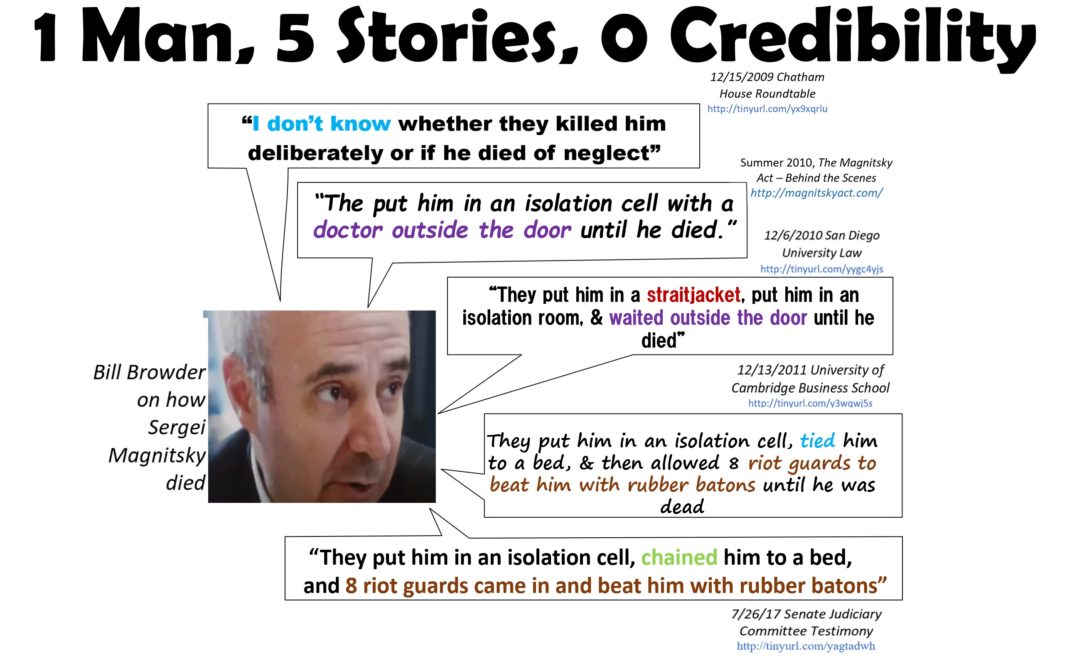
Browder did not reject that till two years later when, starting in December 2011, he invented, with no evidence, the story of thugs beating Magnitsky to death. Because Russia was pressing the tax evasion case in court and he needed to block that.
That story was created in collaboration with Jonathan Winer, former U.S. deputy assistant secretary of state for international law enforcement, was a vice president of the international public relations firm APCO Worldwide, which represented Mikhail Khodorkovsky, (who he must have known was the originator of the Browder and friends’ Avisma thievery), who had been imprisoned for ten years in Russia on charges of tax evasion and other skullduggery.
Myth #7, that Browder always said the Russian had killed Magnitsky
He didn’t explain how he shifted his view for two years after Magnitsky’s death, Browder said he didn’t know how he had died. The coroner’s reports said it was badly treated illness. But as the Russian moved ahead on the tax evasion case against Browder, he changed his story, said that Magnitsky had been murdered. Browder’s post of the Russian coroner’s report had forged sections.
Myth #8, that Magnitsky was murdered by the Russians.
Browder would tell the world that eight Russian guards had entered Magnitsky’s cell and beaten him for 80 minutes with rubber batons until he was dead.
There were several problems with that story. First, that the report of the Public Oversight Commission (POV), the Russian NGO that monitors prisons, prepared a detail report of Magnitsky’s last day, noting his movements, his treatment by doctors and the time of his death. There were not 80 minutes, not even 30 minutes, when guards could have been in his cell beating him.
Second, film maker Andrei Nekrasov measured the cell and found that eight guards could not fit there.
Third, the coroner’s report showed no marks on Magnitsky’s head or body.
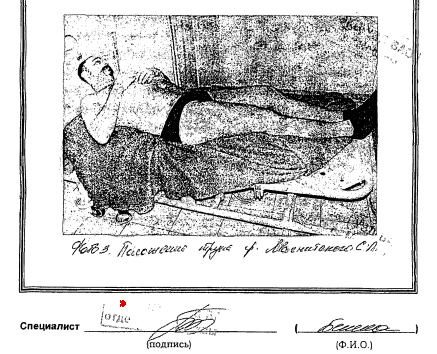
He put out photos of Magnitsky’s bruised wrists and ankles which other sources explained came from him banging on metal bars. None of them life-threatening. But he did not put out photos of Magnitsky’s body showing no marks anywhere on the head or torso. All came from the same coroner’s report.
Browder put out a photo of a death certificate that suggested Magnitsky suffered a “closed cerebral cranial injury.”
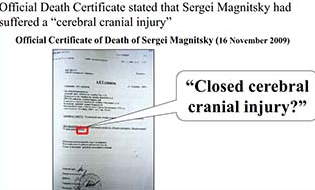
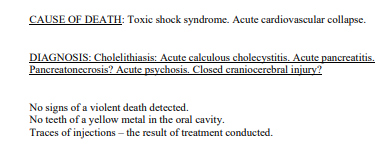
Except that the real report says no sign of violent death detected. And an interview with Magnitsky’s mother revealed he had fallen years before, which is why this injury was closed!
From interview of Magnitsky’s mother
Interrogation of the victim’s mother Magnitskaya N.N. dated 07.05.10:
Question of the investigator to the victim: Did your son Magnitsky S.L. have any diseases, including chronic ones? since childhood?
The victim’s answer: No chronic diseases in Magnitsky S.L. throughout life. In early childhood, when Magnitsky S.L. was no more than three years old, he suffered from chickenpox. In 1993 – I can’t say a more accurate date, at S. Magnitsky’s there was a craniocerebral injury (he slipped on the street and as a result hit his head), after which he had headaches for some time.
So that was the closed cranial injury!
Plus “no signs of violent death detected.” The faked death certificate was another Browder deception!
Then Browder sent out a series of forged documents to “prove” that Russian guards had used batons on Magnitsky.
Magnitsky‘s mother told documentary maker Andrei Nekrasov that the writing on batons appeared to be a mistake and she didn‘t believe he had been beaten but had died from bad medical care.
To promote the beating story, Browder appears to have forged documents that a baton “had been used.”
A comparison by analyst Michael Thau of documents Browder posted on his website appear to show Browder’s forgeries. A genuine document gives permission for use of handcuffs with the handwritten words “special means were” applied. This conforms with the POC report that handcuffs were used during a half hour when Magnitsky seemed psychotic. The header is “Report about the application of handcuffs.”
The second document Browder posts changes those handwritten words to “a rubber baton was” applied, but changes nothing else in the text and keeps the form header “Report about the application of handcuffs.” Other handwritten words appear traced. The Russian prison system does not have a pre-printed form for the use of batons.
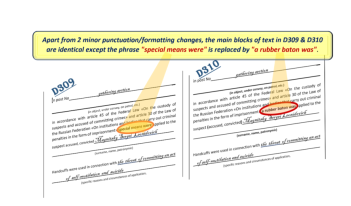
Evidence that D310.pdf linked to on Russian-Untouchables website to show Sergei Magnitsky was beaten with batons is a forgery.
On page 18 of a document titled, Magnitsky Murder & Cover-Up Report linked to on Bill Browder’s Russian-Untouchables website, he repeats his story that Sergei Magnitsky was beaten to death by eight riot guards armed with rubber batons and, for corroboration, links to two untranslated Russian documents:
- D309.pdf, which he calls Report on Use of Handcuffs. and
- D310.pdf, which he calls Report on Use of Rubber Baton.
However, D309 merely says that Magnitsky was placed in handcuffs out of concern that he would harm himself. And D310 repeats exactly the same thing but adds that they were removed after 30 minutes and that a single rubber baton was also used without saying how or who used it.
Links to English translations of D309 and D310.
And, apart from the strange and completely uninformative reference to a rubber baton in D310, this accords exactly with the Moscow Public Oversight Commission Report, which mentions no baton but says that Magnitsky started to behave erratically and was handcuffed for thirty minutes out of concern that he would harm himself.
So, neither D309 or D310 comes anywhere close to confirming Browder’s story that Magnitsky was beaten to death by eight rubber-baton-wielding riot guards. In fact, both explicitly say the opposite, namely, that he was restrained to stop him from causing harm to himself.
But, though D310 goes no way towards corroborating Browder’s account, it does contain the Russian words for “a rubber baton.” And that allowed Browder to falsely make it seem to those who don’t read Russian but might nonetheless be capable of looking the meaning of a few words that D310 does support his story about Magnitsky’s death.
The Russian words for “a rubber baton,” appearing on D310, however, make no sense given what the rest of it says. Moreover, there are other anomalies in D310 which indicate that it’s a forgery constructed from copying parts of D309 and other documents.
List of evidence that D310 is a forgery.
Each entry contains a link providing further details.
First, note that D309 and D310 have exactly the same title. The main blocks of text in D309 and D310 are also identically worded except that the phrase special means were in D309 is replaced by a rubber baton was in D310.
12/14/2019 Evidence that D310.pdf linked to on Russian-Untouchables website to show Sergei Magnitsky was beaten with batons is a forgery. : A … But, while D309 is perfectly coherent, that single reference to a rubber baton in D310 makes no sense at all given the title and the rest of what it says.
Second. Both D310 and D309 refer to the same two Russian laws as governing the application of special means they are used to report. But, these laws do not allow a baton to be used on a prisoner to stop him from harming himself, though they do allow that handcuffs can be used in such cases. So, the written explanation on D310 doesn’t justify the use of the rubber baton it mentions.
Third. The block of virtually identical text that both documents share ends with a comma and is missing a closing parenthesis. The sentence is completed on the next line in D309, but the next line in D310 starts a new sentence, leaving the previous one a fragment. This makes it look like the text on D310 was hastily copied from D309 without the copier noticing its incompleteness….and leaves a line without any specification of what goes in it.
Fourth. Here’s one of many examples of astonishingly similar handwritten text on D309 and D310, making it look like the latter was traced from the former.
In fact:
Every single word of the handwriting on D310 by the person who allegedly filled it out appears to be traced from D309.
Fifth. The initial hand-written part on both forms indicates that each was filled out by O. G. Kuznetsov. [Kuznetsov is a common name and this isn’t the police officer Artem Kuznetsov whom Bill Browder accuses of stealing $230 million from the Russian Treasury. However, Kuznetsov’s signature only appears on D309. Indeed, though D310 contains lines for the signatures of three different [ doesn’t contain any place for the person who actually filled it out to sign.
And, while it’s impossible that a form without any space for the person filling it out to sign instead has a place for the signatures of three other people, turned out to be very useful for Bill Browder who used it on his Russia Untouchables website to make it appear that many men beat Magnitsky.
Sixth. Colonel Tagiev’s signature correctly appears twice on D309. But D310 is missing one of his signatures. Furthermore, his signatures on D309 differ from the one appearing on D310.
Then he appears to have forged a section of the coroner’s report about bruises.
There are four occurrences of the word (illegible) in brackets in the English document on pages 5, 6, 9, and 16.
The Nekrasov film
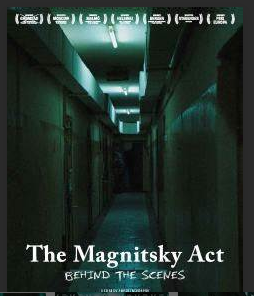
Russian filmmaker Andrei Nekrasov’s “The Magnitsky Act, Behind the Scenes” (2016) is a brilliant take-down of the Browder hoax. Nekrasov, living in Berlin, had done a film critical of Vladimir Putin and started working on this film believing Browder’s story. As he went on, he realized Browder was a fraud. The best scene is when he confronts Browder and Browder throws him out of the interview.
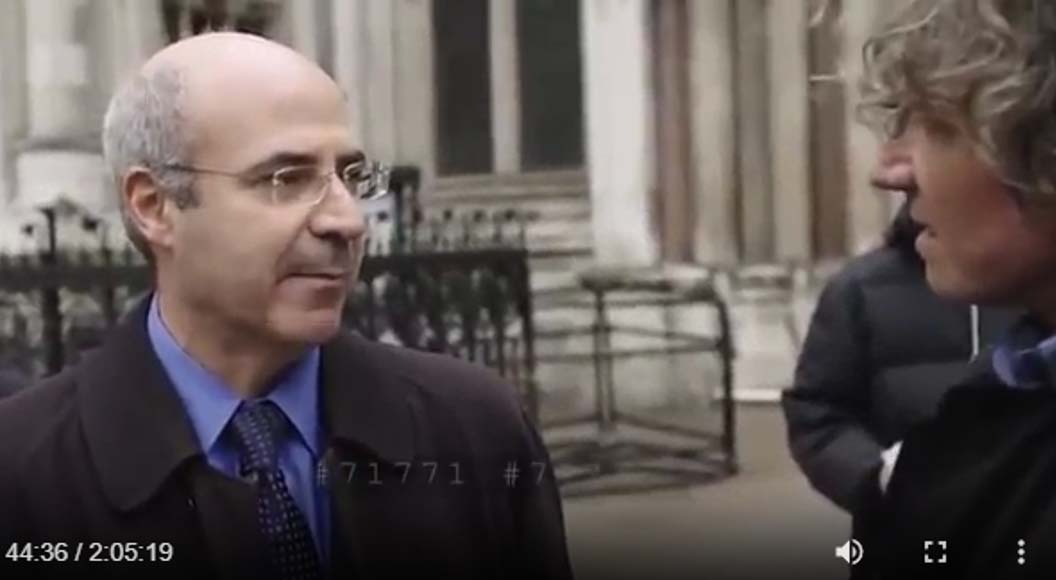
The film was to be shown at the European Parliament, but Browder got his friends to block it at the last minute. It was shown at the Newseum in Washington in 2016 in spite of Browder’s attempts to shut it down. No western media would run it. But you can see it (free) online. Any U.S. reporter, official or member of Congress could see it if the truth mattered to them.
Part II: The Myths Behind the Magnitsky Act
The Realist Review July 10, 2025
Part II exposes the role of Sen. Ben Cardin and US Attorney Preet Bharara in the Magnitsky deception.
The Magnitsky Act claims to punish those responsible for or benefiting from the detention, abuse, or death of Sergei Magnitsky. In fact, the Act provided no evidence that his detention was unjustified (see, for example, The European Human Rights Commission report), that he was abused or killed, or that he uncovered a conspiracy.
Jonathan M. Winer, a State Department aide to Hillary Clinton who later played a critical role in passing on the Steele disinformation dossier around Washington, acknowledges that he authored the Magnitsky Act. The plan was to get a US law on the books that would in effect block the Russian government from using international law enforcement, particularly Interpol, from going after certain individuals of other countries who had cheated on their taxes.
They would be Browder (a UK citizen) and the oligarch Mikhail Khodorkovsky (a Russian), who is also named in the law. Why would the U.S. block other countries from going after non-Americans for tax evasion, especially in view of solid evidence of their corruption?
The Act directs “the President to report to Congress, publish, and update a list of each person who the President determines: (1) is responsible for, or benefitted financially from, the detention, abuse, or death of Sergei Magnitsky, participated in related liability concealment efforts, or was involved in the criminal conspiracy uncovered by Sergei Magnitsky; or (2) is responsible for extrajudicial killings, torture, or other human rights violations committed against individuals seeking to promote human rights or to expose illegal activity carried out by officials of the government of the Russian Federation.”
Khodorkovsky, protected by name by the act, would finance Browder’s Magnitsky campaign with $385K through his offshore Corbière Trust. For him, money well spent to keep the Russian law off his back.
I asked the State Department public relations office for evidence of any of Browder and Winer’s claims, including that Magnitsky testified against anyone and that Magnitsky suffered deliberate medical neglect, with reference to the Public Oversight Commission report (as referenced in Part I of this report published on Tuesday). The reply was essentially, “we are right and we don’t have to tell you anything.” The detention, of course, was legal, as ruled by the European Court of Human Rights.
The U.S. government story would be repeated, but never with any evidence. Mark C. Toner, a deputy State Department spokesperson put out a statement November 13, 2015:
“Six years ago, on November 16, 2009, Russian lawyer Sergey Magnitskiy died in a Moscow prison. An investigation by Russia’s Presidential Human Rights Council found that Magnitskiy had been severely beaten in prison and members of the Council said his death resulted from the beatings and “torture” by police officials.
Sergey Magnitskiy was arrested after uncovering corruption by Russian officials, spent a year in pre-trial detention before his death, and was posthumously convicted for the crimes he himself uncovered.”
In fact, Presidential Human Rights Council President Kirill Karbanov, gave a deposition in the Prevezon case just five days later, Nov 18, 2015, saying that the information for its preliminary report came from William Browder and his lawyers and was later found to be to be untrue. He said:
“The Human Rights Council also discussed those issues with representatives of the United States Department of Justice, as Browder’s representatives started to point out that some traces of the funds stolen from the Russian Treasury were noticed in the United States among the companies related to the Renaissance Group. The United States Department of Justice refused to cooperate with us and failed to provide the requested information. Later Browder’s representatives refused to provide any additional explanations on the issue too.”
So, the State Department knew Karbanov’s position and continued to lie about it.
Browder had already testified that Magnitsky was not a lawyer.
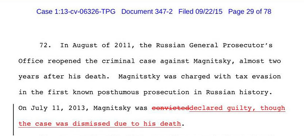
And Magnitsky didn’t investigate or uncover anything. The “conviction” came as a result of Magnitsky’s mother bringing a case to clear his name, something Russia allows relatives of the deceased. So, he was found “guilty,” but the case was dismissed because he was deceased. Even the Justice Department got that right in a Prevezon case filing, though Browder continued to lie about it.
The Magnitsky Act was passed because of a trade deal. Protecting Browder and Khodorkovsky was the trade-off.
Browder got Maryland Democratic Senator Ben Cardin to send a letter to Secretary of State Hillary Clinton in March 2010 urging her to ban visas for 60 people Browder had listed (without evidence) as complicit in Magnitsky’s death. (Remember nine months later in a talk at San Diego Law School Browder said he didn’t know how Magnitsky died.)
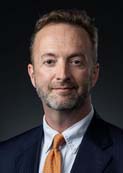
The letter to Secretary Clinton, written (Browder says in his book) by Browder acolyte Kyle Parker, a staffer at the House Foreign Affairs Committee who has subsequently found himself under investigation for acting as an unregistered foreign agent, said, I “urge you to immediately cancel and permanently withdraw the U.S. visa privileges of all those involved in this crime, along with their dependents and family members.” Immediately? No due process, not even for children and grandparents? Cousins?
Attached to the letter was the list of the sixty officials Browder accused, without evidence, of involvement in Magnitsky’s death and a tax fraud against the Treasury. The tax refund fraud Magnitsky, clearly working for Browder, carried out.
But Hillary didn’t buy it. Then Parker arranged for Browder to testify about the Magnitsky case May 6th at the Tom Lantos Human Rights Commission, not an official House body but a pressure group set up in the name of a former congressman from Hungary.
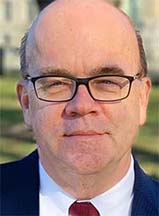
At the Lantos Commission hearing, Rep. Jim McGovern (D-MA) asked for no evidence. He said he would introduce legislation, put the 60 names Browder cited in it, move it to committee and make a formal recommendation from Congress, then pass it on the floor. In July 2019, almost a decade later, I saw McGovern when he spoke at the Council on Foreign Relations. I asked if he would send me evidence backing the claim that Magnitsky was tortured and killed. He agreed and introduced me to an aide. The aide referred me to Kimberly Stanton, director of the Lantos Commission, who refused in an email to provide any information and said evidence against targeted people is not required. Attempts to get evidence from McGovern’s office got no response.
Browder hired lobbyist and noted Washington, DC socialite Juleanna Glover-Weiss, who had been Vice President Dick Cheney’s press secretary and then Attorney General John Ashcroft‘s senior policy adviser. She went with Ashcroft when he left government to run the Washington office of his law firm, the Ashcroft Group. She got Browder a meeting with Sen. John McCain who agreed to sponsor the Magnitsky Act.
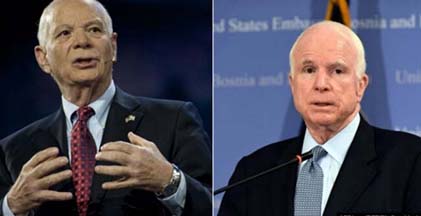
On September 29, 2010, Senators Ben Cardin, John McCain, Roger Wicker and Joe Lieberman introduced the bill in the Senate. Anyone involved in the false arrest, torture or death of Sergei Magnitsky, or the crimes he uncovered, would be publicly named, banned from entering the United States, and have their US assets frozen. Remember again that a few months later, Browder would tell the San Diego law school he didn’t know how Magnitsky died.
President Obama didn’t want the Magnitsky Act.
Here is how it got passed:
The Jackson-Vanick amendment put in place in the mid-1970s imposed trade restrictions on the Soviet Union to punish it for not allowing Soviet Jews to emigrate. (Nobody could emigrate, not just Jews—and as the first Jewish secretary of state, Henry Kissinger, who was against Jackson-Vanick, pointed out, it backfired. The rate rate of Jewish migration from the USSR decreased after the amendment was passed. ) But eventually 1.5 million Jews were allowed to leave the country.
Thirty-seven years later, the Soviet Union no longer existed, and everybody could emigrate, but Jackson-Vanik remained on the books. It blocked American corporations from enjoying the same trade benefits with Russia as the world’s other WTO members.
The American business community said Jackson-Vanik had to go, and the Obama administration agreed. So did John Kerry, then serving as chairman of the Senate Foreign Relations Committee. They needed an act of Congress. But Kerry opposed the Magnitsky Act which he considered untoward interference (or shall we say meddling?) in Russian politics and had delayed bringing it to a vote in committee.
Browder got Senator Joe Lieberman, conservative Democrat from Connecticut, to agree to block the repeal of Jackson-Vanik unless the administration stopped blocking his Magnitsky Act. Lieberman and the other cosponsors of the Magnitsky Act sent a letter to Montana Democratic Senator Max Baucus, chairman of the Senate Finance Committee. The letter said, “In the absence of the passage of the Magnitsky legislation, we will strongly oppose the lifting of Jackson-Vanik.”
So, Kerry abandoned his opposition to the Magnitsky Act. The two bills were combined. First the bill would be brought up at the Senate Foreign Relations Committee to pass Magnitsky, then it would go before the Finance Committee to repeal Jackson-Vanik, and then, it would go before the full Senate for a vote.
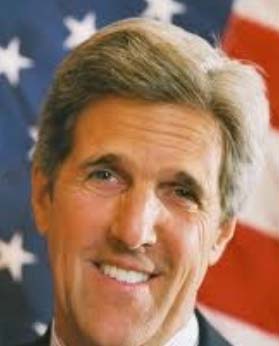
Kerry called for a meeting of the Senate Foreign Relations Committee in June 2012, with the purpose of approving the Magnitsky Act. At the hearing, Kerry said that America was not a perfect country, and that the people in that room should be “very mindful of the need for the United States not to always be pointing fingers and lecturing and to be somewhat introspective as we think about these things.” (Such nuance would obviously not be allowed today.)
He was “worried about the unintended consequences of requiring that kind of detailed reporting that implicates a broader range of intelligence.” He didn’t have to worry. Reporting? Intelligence? Actual evidence would never be required! The U.S. was setting up a kangaroo court and calling it a human rights tribunal.
The bill passed the House 365 to 43 on November 16, 2012. Voting “No” were 37 Democrats and 6 Republicans. Among them Maxine Waters and Ron Paul.
Kyle Parker told Browder, “There are a number of senators who are insisting on keeping Magnitsky global instead of Russia-only.” One was Cardin, the longtime Browder acolyte, but also Carl Levin (D-MI) – a political giant who spent many years fighting, holding hearings, about offshore tax evasion and must have known very well that Browder was a poster child for offshore tax-evading crooks. And Jon Kyl, Republican from Arizona. Browder wanted Russia only, because the purpose of the law was to attack Russia, not to promote global human rights. Cardin withdrew his objection, and the bill was Russia only.
The final count on December 6, 2012 was 92-4. Levin and three other Democrats – Bernie Sanders and Jack Reed and Sheldon Whitehouse, both of Rhode Island – were the only Senators to vote against it. Sanders later supported an expansion of the act. It was signed by Obama a week later.
Now Browder could barrel ahead, using the Magnitsky Act to block Russia’s attempt to get him to pay what was by then $100 million in back taxes. And also to prevent going after him for the tax refund fraud.
***
Now we return to the 11 Magnitsky Myths…
Myth #9, that the Magnitsky Act was aimed at people responsible for or who benefited from the detention, abuse, or death of Magnitsky.
The Magnitsky Act claimed it aimed to punish those responsible for or benefiting from the detention, abuse, or death of Sergei Magnitsky, who participated in concealment efforts, or was involved in the criminal conspiracy he uncovered or was responsible for killings, torture, or other human rights violations committed against individuals seeking to promote human rights.
The European Court of Human Right found the detention was legitimate, because there was solid evidence against Magnitsky and he was a flight risk.
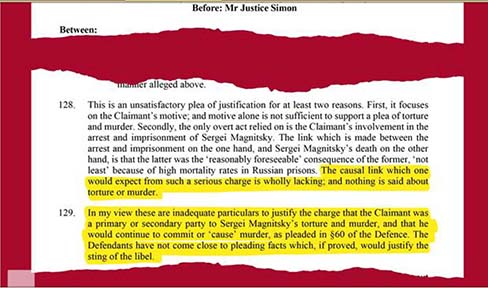
The closest a law court came to looking at Browder’s claims was in London, where one of the targets, Pavel Karpov, sued Browder for defamation. The judge rejected Browder’s statements linking Karpov to Magnitsky’s murder. However, he dismissed the case on jurisdictional grounds, because Karpov lived in Russia and did not have a reputation to protect in the UK. But he said that if Browder continued to tell untruths about the man, he could revisit the ruling.
The true aim of the Magnitsky Act was to protect William Browder and Michael Khodorkovsky from Russian law for tax evasion. And to paint Russia as a “human rights” violator. And it worked very well indeed. Members of Congress didn’t care to examine the facts. They just bought the story Browder and Kyle Parker dreamt up.
Myth #10, that the U.S. Attorney for the Southern District of New York, Preet Bharara, brought a case against Prevezon in 2013, because he believed Browder’s story about the stolen $230 million.
The Prevezon case
Bharara’s SDNY never proved that case—indeed, the judge laughed at its bank transfer drawings, and it had to settle.
Browder got Bharara, now a liberal podcaster, to sign on to his proxy lawsuit against Prevezon, a Russian investment company, to promote his story about the tax refund scam.
A major part of it was that the $230 million stolen from the Russian Treasury had been moved by the culprit through bank accounts and that, after a long line of transfers, a fraction of it ended up in accounts owned by Prevezon, a Russian firm owned by a man whose father happened to be a Russian railroad official. So, the Justice Department sued Prevezon. It was a way to validate Browder’s story.
Bharara filed the case against Browder’s target, Denis Katsyv, owner of a real estate holding company, accused first of getting the $230M tax refund fraud, then (when somebody checked!) amended to receiving $1.9M. (How could you make that mistake? Because you wrote what Browder told you instead of finding out the facts.)
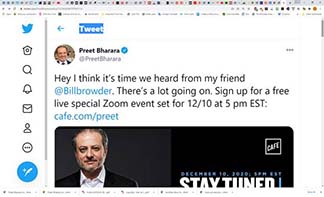
In his podcast, Bharara said, “Browder and his lawyer Sergei Magnitsky discovered Russian government corrupt and fraud to to tune of hundreds of millions of dollars.” Bharara has access to US federal court documents of the DOJ case against Prevezon in which there is no such claim. Plus information that says Magnitsky was an accountant not a lawyer. How can Bharara continue to lie so egregiously?
DOJ’s chief investigator Todd Hyman admitted in his interrogation by Prevezon lawyer John Moscow that he had NO witnesses. Except Browder, of course.
Bharara would later invite Browder on a podcast and introduce him as his friend. Is that how a government attorney introduces a person who got him to promote a lawsuit in the name of the U.S. government?
But the government had no proof. When the U.S. attorney provided his “evidence,” a chart indicating where the money went, Judge William H. Pauley III said that might be good modern art, but don’t show it to a jury! A diagram you create is not evidence of bank transfers.
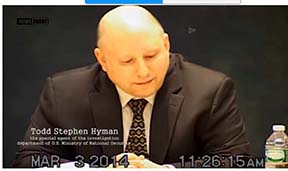
When a Prevezon lawyer asked government witness Todd S. Hyman if he had checked with any of the banks, the reply was that they were overseas. The lawyer (John Moscow, for nearly 30 years responsible for cases involving international bank fraud for New York District Attorney Robert Morgenthau) inquired with dry wit, “Does your phone go long distance?”
What did Hyman witness? He observed the documents he was provided, by Browder, of course. Were there witness to the transactions? NO. Did the U.S. interview any competent witnesses? NO. Here is his deposition. Was the U.S. Justice Department serious?
The Milazzo Report (Anthony Milazzo, FTI consulting, formerly with KPMG), filed for Prevezon in the case but never cited by mainstream media destroyed the government’s case. Milazzo said definitive evidence proved the bank transfers cited were not tied back to the Russian Treasury. And that the claim was not supported by documents supplied.
Targeted by the Justice Department with a clear political agenda, with pockets not as deep as Washington’s and aiming to end legal costs, Prevezon – admitting no guilt – settled for $6 million in exchange for unfreezing bank accounts in Europe. The DOJ, with no evidence to pursue the case, agreed.
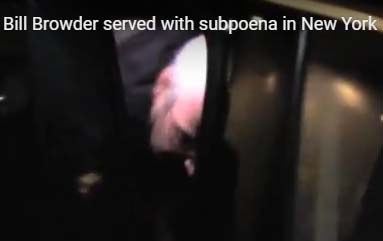
Ironically, the court filings in that case became a valuable depository of documents that would show Browder’s corruption going back more than a decade. It was the only time he was forced to answer questions under oath in the U.S., and he had attempted to evade subpoenas, even jumping out of a car and racing away from a process server. See the video.
How media mislead the American people
The pre-trial hearings were not covered by mainstream or alternative media. I was one of the handful of reporters there, the others from a few legal websites. (U.S. media had not covered the Khodorkovsky trial either.)
Later, when MSNBC reporter Ken Dilanian proved that Browder was a fraud, including that his translations of Magnitsky’s alleged accusations of Russian investigators were fake, and was about to go public with his report, Browder’s lawyers Kobre and Kim threatened NBC with a lawsuit and the deep-pocketed network caved, killed the story.
In November 2019, two years after I wrote the first exposé of Browder and his Magnitsky hoax, a major western publication, the German newspaper Der Spiegel, ran an investigation by Benjamin Bidder, a reporter who had been posted to Russia for seven years. He exposed Browder as a fraud and his Magnitsky story as a fake.
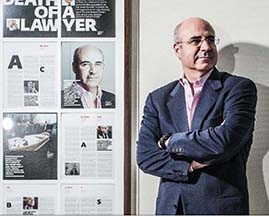
His story was ignored by Western media. Browder protested to the German Press Council, which upheld the story, saying the reporting was based on fact, Browder’s position was not proved, and there could be no objection to Bidder’s examination of events leading to Magnitsky death.
Still nothing in the mainstream American press, which kept repeating Browder’s “unproved” lies. During this time, Browder was a frequent and honored guest on MSNBC’s Morning Joe and other outlets.
Follow up to the Magnitsky Act
In 2017, four years after the initial list but only weeks after I ran a story quoting Andrey Pavlov about the tax refund fraud, he was put on the Magnitsky list. It was to prevent him from traveling to the U.S., where he often went to see clients, so he could not talk to other reporters or members of Congress.
In July, 2018 at the Helsinki Summit, Putin asked Trump to allow Russian prosecutors to travel to the U.S. to question Browder about his tax evasion. In exchange, the U.S. could question any Russian about the 2016 elections.
The U.S. declined.
U.S. Senator Chuck Schumer introduced on 7/19/2018 a resolution to block any investigation into the Magnitsky affair and prevent Putin from questioning any Americans including Browder (who of course was then a British citizen, not American). Sen. McCain led the Republicans to support the resolution, and the Senate voted 98-0 for the bill.
Under MLATs, mutual legal assistance treaties, countries can assist each other in criminal investigations. Why would Congress refuse to cooperate in investigations by other countries into crimes involving citizens of those other countries? It made MLAT a political dead letter. Same for Interpol, the allegedly non-political International Criminal Police Organization that facilitates worldwide police cooperation and crime control. Acting on the interests of the U.S. Congress, Interpol would refuse Russia’s request for a red notice that would require Browder’s arrest. So, to help one politically useful tax fraudster, the U.S. damaged two international tools to fight global crime.
Myth #11, that European bankers laundered tax refund fraud
Browder accused in court a dozen or more banks around the world of laundering the $230M tax fraud refund. No charge of his ever included evidence.
One of Browder’s tactics was to file complaints with numerous European governments that claimed people or companies he said were complicit in laundering loot of the tax refund fraud. He would announce the charge, the country would investigate, he would announce the investigation, and nothing would happen because there was no evidence. There was never any case he brought that went anywhere.
But the claims hurt the people who were targeted. Browder filed a criminal complaint charging that Swedbank handled $176 million connected to the death of Sergei Magnitsky. Swedbank fired its CEO, Birgitte Bonnesen, who ran Swedbank’s Estonia branch. The charge was never proved. (See Milazzo report for lack of any documented bank transfers in Browder’s cases.)
Browder charged that Danske Bank had laundered $8 billion via its Estonia branch for very rich individuals in Russia, Moldova and Azerbaijan. This was upping his usual $230 million claim. As the result of the Browder complaint, Estonian authorities ordered Danske Bank, a Danish institution, to close its Estonian branch. (“Danske Bank to Shut Estonia Branch,” The Wall Street Journal, Feb. 19.)

Money-laundering was never proved, and aside from wasting investigators’ time, Browder’s fake charges had a tragic outcome, the suicide of Aivar Rehe, chief executive officer of Danske Bank in Estonia.
The investigations in all banks that were Browder targets were closed for lack of evidence. In 2020, the Swiss shuttered a case based on Browder’s invented charges that money from the $230-million tax refund fraud had ended up there.
Recap of the Myths
How do you deal with a fake story which has deluded the America government, the Congress, the media and and other western countries for over a decade—indeed, one that has helped to set off a new Cold War?
Let’s start with Browder’s 11 Myths, all proved to be fake with documentation that can’t be refuted.
- That Magnitsky was a lawyer hired by Browder in 2008 to deal with the tax refund fraud of 2007. No, he was an accountant working for Browder since 1995. His testimonies in Russia list him as an auditor. See #8.
- That Browder was an honest investor who went after corrupt Russian companies…. No, Browder’s most famous investment was Avisma where he and partners bought into a transfer pricing fraud to cheat minority investors and Russian tax authorities and then Gazprom, where he and partners illegally bought shares though a shell company owned by figurehead Russians. And he engaged in massive tax evasion by his Hermitage subsidiaries.
- That Russian officials did the tax refund fraud and that Russian investigators searched offices of Hermitage and Firestone Duncan to get documents and stamps to take over Browder’s Hermitage company. No, they were looking for evidence of tax evasion. In Russia, you can’t take over companies with documents and stamps, the person who set up the company needs to visit the Company House or provide someone with a power of attorney. (In what country can someone with filched documents and stamps take over a company?)
- That Magnitsky pointed to Russian officials as culprits in tax refund fraud. His pre arrest testimonies in June and October 2008 accuse nobody. Rimma Starova went to police about the matter in April 2008.
- That Russia arrested Magnitsky in late 2008 because he accused Russian officials of involvement of the 2007 tax refund fraud. No, he was interrogated in 2006, a year earlier, for the Hermitage tax evasion. Plus, there is nothing in his 2008 testimonies accusing anyone.
- That Browder protested widely about the suffering of Magnitsky in prison. No. During Magnitsky’s nearly one year in prison Browder did not organize a campaign to free him. At the end, Magnitsky told a fellow prisoner his employers had sold him out.
- That Browder immediately said the Russian had killed Magnitsky. No. For two years after Magnitsky’s death, Browder said he didn’t know how he had died. The coroner’s reports said it was badly treated illness. But as the Russian moved ahead on the tax evasion case against Browder, he changed his story, said that Magnitsky had been murdered. Examination of Browder’s posted Russian coroner’s report showed he forged sections.
- That Magnitsky was murdered by the Russians. First it was necessary to persuade the world through the press that Magnitsky had been murdered. Some of the “proofs” were easily faked.
- That the Magnitsky Act was aimed at anyone responsible for or who benefitted from the detention, abuse, or death of Sergei Magnitsky, participated in concealment efforts, or was involved in the criminal conspiracy he uncovered or was responsible for killings, torture, or other human rights violations committed against individuals seeking to promote human rights.” But the Act provided no evidence that his detention was unjustified (see European Human Rights Commission), that he was abused or killed, or that he uncovered a conspiracy.
- That U.S. Attorney Preet Bharara brought the case against Prevezon because he believed Browder’s fake $230 million story. The Justice Department never proved that case, as the judge laughed at its bank transfer drawings and it had to settle.
- That Browder made the same “you laundered the $230mil from the tax refund fraud” charges against a dozen or more banks around the world. No charge ever included evidence and the result was a lot of wasted investigators’ time, the firing of one CEO and the tragic suicide of another.
A final Browder fantasy: Magnitsky calls him on his cell phone in the middle of being beaten by prison guards…
We must leave aside the question of whether Simon & Schuster has fact-checkers for the moment.
Here is an excerpt from Browder’s Red Notice, p 276-7:
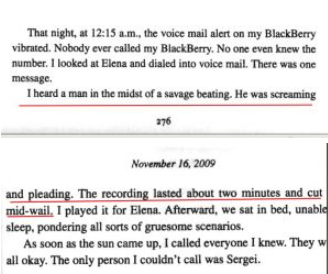
“That night, at 12:15 a.m., the voice mail alert on my BlackBerry vibrated. Nobody ever called my BlackBerry. No one even knew the number. I looked at Elena and dialed into voice mail.…I heard a man in the midst of a savage beating. He was screaming and pleading. The recording lasted about two minutes and cut mid-wail.”
Please use your brain. Was Magnitsky, who Browder says was tortured in prison, allowed to have a cell phone? Really? They sure can’t have them in US prisons. Did he never call during the terrible tortures Browder says happened for many months? Browder doesn’t say so. So, is this the first time that Magnitsky during the alleged one-hour beating by government thugs finally called Browder?
How did that happen? Imagine Magnitsky, handcuffed based on the bruises found on his wrists, being beaten by, Browder says, seven (or maybe 8) riot guards. Magnitsky: “Hey guys, I have to make a phone call. Can we take a break?” Thug leader: “OK, you have five minutes. Guys, take a smoke.” Magnitsky with great dexterity pulls out his phone and dials Browder. No answer. Just voice mail. He doesn’t say, “Hey Bill, they are beating me! Do something!” Instead, he just screams. And pleads. (No details provided.) He hangs up. Thugs resume beating.
Did Browder call the number back? Apparently not. At least he doesn’t say. The alleged Magnitsky “screaming and pleading” was recorded. Did Browder post this important “evidence”? No, he didn’t. [Simon & Schuster editors did not respond to queries about this.]
I have been a journalist since 1962 when I went to Mississippi and became editor of the civil rights weekly, The Mississippi Free Press. Even after 60 years in journalism, the corruption and incompetence of the U.S. media on the Browder story disturbs me. I don’t expect much from the government, which has no interest in truth.
But why do serious journalists and editors not deal honestly with this story?
It would take as many as these pages to show the hundreds of news and opinion stories (I’ve saved many) that repeat Browder’s story as stenographers, never asking for evidence.
It’s a shameful chapter in the history of the American media.
GREAT LUCY!
Pingback: When prominent media figures concerned about “disinformation” mean bloggers, Russians, Chinese, never mainstream U.S. press : The Komisar Scoop
In a related story, and even worse, I’m sure you know the story of Martin Armstrong, who spent a decade in prison on trumped up charges, where they continuously rolled the 18-mo limit on contempt. Why? Because he refused to turn over his model to the Feds after he accurately predicted the collapse of the Ruble, which is why he refused to invest with the Browder gang in Russia. Search his site for other details related to case.