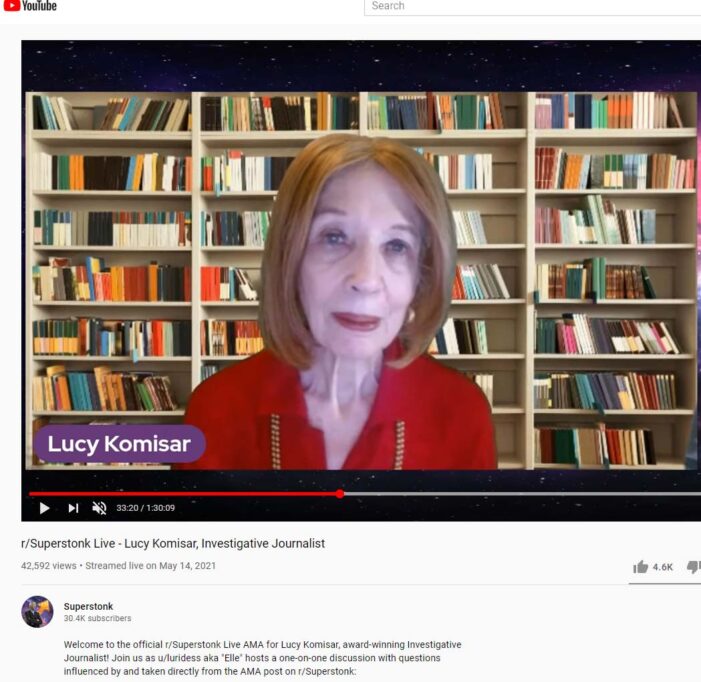
March 4, 2023 – Catherine Austin Fitts writes: “As soon as I learned Lucy had published a new investigation, I immediately asked her to join me on the Solari Report.”
” Lucy found a disturbing pattern. Americans buy an insurance policy. And then quietly, the company starts to move or lower the quality of its assets in a manner that impacts or threatens the value of our policy. Policyholders have no burglar alarm to warn there fundamental change in the deal – or the price at which the deal was made – and we need to pay attention.”
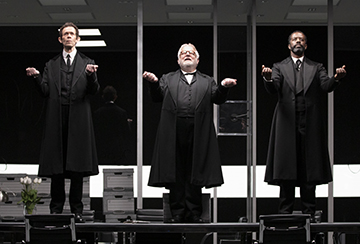
“The Lehman Trilogy” by Stefano Massini appears to be a love song to American capitalism, though if you look carefully, you will see some tarnishings and even betrayals. It starts with Henry Lehman (Simon Russell Beale), a German-Jewish immigrant, arriving in Montgomery, Alabama in 1844, nervous in his best black suit and coat.
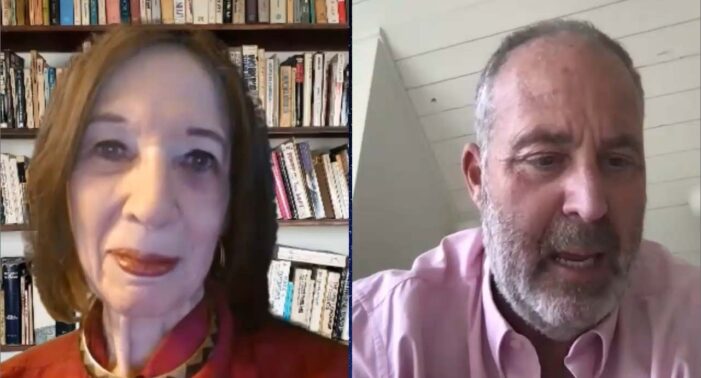
Sept 27, 2021 – Former hedge fund CEO Marc Cohodes discusses in this one-hour interview Overstock’s charges that Cohodes and associates faked reports to drive down the price of Overstock they were shorting, Overstock’s case against Goldman Sachs that it (and Merrill Lynch) used naked shorting to drive down its price, Cohodes’ testimony in that case about Goldman creating shares out of options trades, and why he thinks the Citadel empire should be broken up.
Aug 18, 2021- Democratic Party insider Robert Shapiro, an economist who was a top advisor to the campaign of Bill Clinton, served as his undersecretary of commerce, and then advised the Democratic nominees after him, breaks with establishment economics to target the corruption of naked short selling.
The American Prospect, June 22, 2021 – In the aftermath of the GameStop run-up in January, retail investors found telltale signs of a common yet egregious trading fraud by major brokers and hedge funds. What happened around GameStop can be explained only by massive counterfeiting of shares.
May 20, 2021 – My interview on youtube tells through three dramatic stories how corrupt brokers, hedge funds and their accomplices in government and the media steal from stock market investors. This article includes some of text.
The American Prospect, Feb 25, 2021 – At the House Financial Services Committee hearing last week on the GameStop debacle, there was an elephant in the room: naked short selling. A decade ago, a Biden confidant tried to stop it. Now there’s another chance.
Feb 1, 2021 – How to understand the GameStop Robinhood stock spike. It says a lot more about the corruption of the stock-trading system than you have read about in corporate media.
Dec 14, 2019 – Democrats refusing to cross a picket line in a labor dispute with French multinational Sodexo should also know that the food service company is a documented thief, stealing from universities, schools, hospitals, even the military. I exposed that in 2009.
Consortium News, Nov 21, 2019 – Part of the ongoing U.S. demonization of the Nicolas Maduro government of Venezuela is to accuse it of corruption. In 2017, for example, U.S. prosecutors charged five former Venezuelan officials under the Foreign Corrupt Practices Act (FCPA) with soliciting bribes in exchange for helping vendors win favorable treatment from state oil company PdVSA from 2011 to 2015. (Hugo Chávez was president 2006 to 2013, and Maduro became president in 2013.)
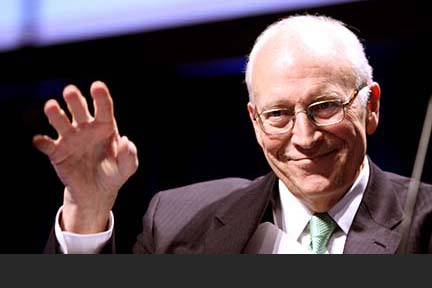
However, there‘s another example of PdVSA bribery that the U.S. never felt compelled to pursue. It is the alleged and never investigated Halliburton bribery of Venezuelan oil company officials in the late 1990s when Halliburton was run by Dick Cheney, who would leave it to become vice-president under George W. Bush.
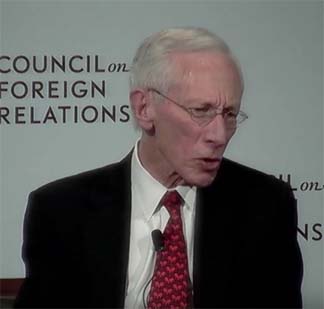
Feb 2, 2016 – At the Council on Foreign Relations yesterday, I pointed out to Stanley Fischer, Vice Chairman, Board of Governors of the Federal Reserve, that the current low unemployment rate he cited in his talk doesn‘t mean what it did when workers had good manufacturing jobs – when now the employed are often working for the minimum wage and need government aid. Shouldn’t the Fed put out those numbers? He avoided answering the question.
Jan 15, 2015 – Anne Applebaum wrote an article about Putin’s Russia in the Dec. 18, 2014 issue of the New York Review of Books that was filled with distortions. When I saw NYRB editor Robert Silvers at a Dissent magazine party in New York Dec. 5th, I told him my opinion. He said to send him my comments. But then he declined to print those comments and said that he would run this editorial statement:
Lucy Komisar has written to us that she has a statement to make about the article by Anne Applebaum in our December 18, 2014 issue. This statement is available on her website, The Komisar Scoop. ” The Editors.
Oct 15, 2012 – If you have followed the stories here showing strong evidence that IDT, the Newark-based telecom, bribed officials of the Haitian phone company, Teleco, you will be interested in today’s SEC filing by IDT. It says that the SEC and the Justice Department are still investigating charges made in 2004 by former IDT employee D. Michael Jewett that the company had paid off Haitian officials in connection with (ie. to get) a contract to supply long distance service between the U.S. and Haiti. That would have violated the FCPA, the Foreign Corrupt Practices Act. At the time, IDT was run by James Courter, the former Republican congressman from New Jersey.
100Reporters, March 19, 2012 – One could be forgiven for thinking that the New York State Legislature was a criminal enterprise. It had its mafioso style assemblyman, Democrat Tony Seminerio, telling a prospective “client” that he would “bury” him unless he paid off.
It had entrepreneurs like Democratic Senator Pedro Espada Jr., who set up a community health operation and, prosecutors say, looted it for millions.
It even had a comical nickel-and-dime guy, Democratic Assemblyman Brian McLaughlin, who sent one of his staffers driving on the New York Thruway with his E-ZPass so that McLaughlin could fake time in Albany and collect per diem payments.
New York State has rules against some of those practices, but rarely were they enforced against legislators who were collecting huge sums of cash from companies that wanted laws passed or state contracts awarded.
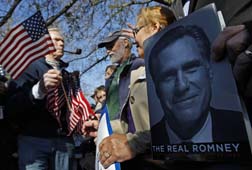
100Reporters, Jan 19, 2012 — Mitt Romney, who makes his hands-on business experience a talking point in his campaign for the Republican presidential nomination, was a member of the board of directors and audit committee of a global company when it paid millions of dollars to settle charges of extracting kickbacks that cheated clients.
The company is Marriott International and the accusers were hotel owners who had hired Marriott to manage their properties under the Marriott name.
In recent weeks, Romney has come under fire for his role at Bain Capital. But his actions as an independent director at Marriott in the late 1990s and again just two years ago open another window on the candidate‘s record in business and leadership qualities.
Jan 24, 2011 – The lawsuit filed by a former employee against the Newark-based global telecom IDT is over. J. Michael Jewett, who was an IDT executive, claimed in 2004 that he was fired for opposing bribes to Haitian officials. Lawyers for both sides agreed to drop the complaint and counterclaims in an accord filed with the U.S. District Court in Newark on January 13th. This has not been reported before now.
IDT spokesman Bill Ulrey said, We have no comment…as usual. Thank you. Jewett’s attorney William Perniciaro also declined to discuss the matter. When both sides don‘t talk about an agreement to dismiss a case, that normally means a confidential settlement has been reached.
The American Interest, Jan-Feb 2011 (online Dec 9, 2010)
Corporate secrecy, which involves hiding the identities of company owners from tax and other legal authorities, is itself no secret. It is well known that offshore banking centers such as Switzerland, Liechtenstein and the Cayman Islands have for many years enabled fraudsters all over the world to carry out scams, launder illicit profits, stash stolen loot and hide money from tax authorities.
What most people do not know, however, is that there is a vast and growing American offshore. Foreign crooks prize states such as Nevada, Wyoming and especially Delaware for state laws that don‘t require them to list owners or even company officials when a new company is formed. Corporate interests and the Obama administration are blocking congressional efforts to change that.
Sept 24, 2010 – Last Saturday, Barron’s ran my story in which IDT CEO Howard Jonas admitted for the first time a suspect deal with then Haitian President Jean-Bertrand Aristide that involved sending payments due Haiti to a law firm in the Turks and Caicos. Jonas told me the company had gotten a lawyer’s ethics letter clearing the deal. But he wouldn’t provide it.
A day before the story was to run, Barron’s got a call from a lawyer of the firm representing IDT in a lawsuit by former IDT executive D. Michael Jewett, who says the company fired him for objecting to the offshore deal. He promised to provide the ethics letter. It was the end of day, Friday. The magazine noted that promise when it published the next day.
Days later, the lawyer called to say he couldn’t provide the letter because it was sealed. Hard to believe: there is no sealing order for the letter in the case docket.
Scoop summary: Howard Jonas, CEO of U.S. telecom IDT, in an interview with Lucy Komisar, acknowledges for the first time that then Haiti President Jean-Bertrand Aristide in 2003 met with an IDT official during discussions about a contract to pay Haiti Teleco for calls from U.S. customers. That contract included agreement for IDT to send payments to a shell company in the offshore Turks and Caicos Islands. Jonas said IDT got an ethics letter from a law firm clearing the deal, but the lawyer said in a memo filed with the court, published here for the first time, that he simply told IDT to do due diligence. IDT signed the contract the next day.
A former IDT official, who objected to the deal, was fired and is suing the company; trial is set for Nov 9th. The Justice Department and Securities and Exchange Commission are investigating violation of the Foreign Corrupt Practices Act. Jonas’s revelations are likely to have a major impact in the trial and investigations.
The global food services company Sodexo, which I exposed last year for exacting rebates from suppliers and charging clients full price, has agreed to a $20 million settlement with NY Attorney General for that illicit practice.
The American Interest, July-Aug 2010 (online May 18, 2010) –
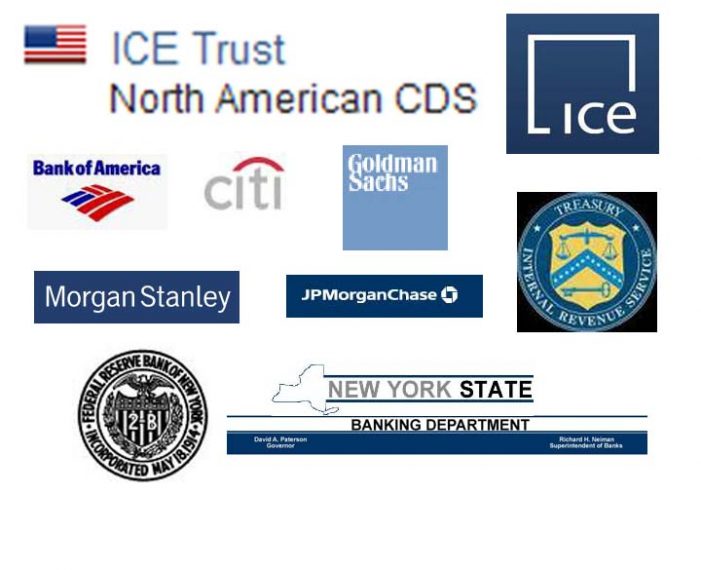
As I write this, the U.S. Senate is debating a major financial reform bill in which the credit default swap, a kind of derivative, plays a significant part. An amendment to that bill, proposed by Senators Carl Levin (D-MI) and Jeff Merkley (D-OR), would ban banks from proprietary trading. There are a lot of high-rolling bankers who do not want that amendment to pass, because it will mess up their plans to repatriate foreign profits into the United States, untaxed, by trading in derivatives on their own accounts. The clearinghouse ICE Trust U.S. forms a central part of these plans.
What is ICE Trust U.S., and who owns it? ICE US Holding Co., which was established in 2008 as the parent of ICE Trust U.S., is located in the Cayman Islands. Yet none of the owners of ICE US Holding Co. are based in the Caymans. Among the owners of the Cayman‘s company are Citigroup, Goldman Sachs, J.P. Morgan, Merrill Lynch and Morgan Stanley, which are headquartered in New York. Bank of America, which now owns Merrill Lynch, is based in Charlotte, North Carolina.
When the devastating earthquake hit Haiti in January, IDT, the New Jersey-based global phone company, moved fast to help.
It announced it was setting up calling stations at hotels and other sites so Haitians could use its Internet calling-service to reach family and friends around the world. It cut rates on its U.S. prepaid calling-card to 2 cents a minute to Haiti (at least for 12 days), donated 4,000 $2-prepaid calling-cards to Haitian community groups in New York and Florida, and said it would give some proceeds from prepaid calls to Haitian Red Cross relief.
Such a warm, fuzzy response from a U.S. corporation often wins plaudits, though, of course, IDT has a business interest in the impoverished island. In 2005, in its latest publicly available figures, the company reported $4 million in profits from $17 million in revenues for routing calls there.
One year ago, a group of financial institutions quietly launched ICE Trust, a new and theoretically safer way to trade derivatives, a key element of the financial crisis. As lawmakers debate reform, banks at the center of the storm are remaking the market”and stand to profit.
As the financial crisis exploded with full force in 2008, it was obvious that something was gravely wrong with the huge, unregulated market for derivatives.
Lehman Brothers had $738 billion of these contracts”which are based on the value of some other asset, such as a stock or a bond or a hog belly”on its books when it failed on September 14, 2008.
Lehman certainly wasn‘t alone. Over the next few months, insurer AIG reported as much as $53.5 billion of derivatives losses”losses that were linked to nearly one third of its $182.5 billion federal
The global bank HSBC may be running offshore accounts for central banks. According to a U.S. Senate investigation, an HSBC subsidiary in London called HSBC Equator Bank had a sister bank in the Bahamas.
According to an internal e-mail, the bank told HSBC USA it had been providing offshore accounts to central banks for 20 years, because the banks wanted to avoid Mareva injunctions, legally enforceable orders to freeze funds.
Back in 2004, when Chris Christie was the U.S. Attorney for New Jersey, his office first heard allegations that IDT Corporation, a Newark, N.J.-based global telecommunications company, was involved in a case of international bribery. No federal criminal case was ever brought against IDT, in contrast to several successful federal prosecutions in similar cases elsewhere. The company is run by James Courter, a former Republican congressman from New Jersey.
Fast forward to the present, and Christie is now the Republican candidate for the governor of New Jersey. And, an examination of campaign finance records shows, Christie has thus far racked up $26,800 in campaign contributions – earning him a total of $80,400 including state matching funds ” from 27 individuals who could have a direct interest in the IDT case.