Articles I wrote this month about the resignation of IDT CEO James Courter as John McCain‘s finance co-chair provoked supporters of former Haiti President Jean-Bertrand Aristide to noisy denials and personal attacks.
I wrote that Courter had resigned after I reported that the Federal Communications Commission had fined IDT $1.3 million for failing to file its contract with Haiti.
Why would IDT fail to file the contract? Maybe because it shows that in this Aristide-administration deal, payments were below the legal 23 cents a minute set by the FCC (money that would have gone to Haiti) and that IDT payments were ordered sent to a shell company account in the Turks & Caicos instead of to a government account in Haiti.
It sounded like the plot of an action thriller. A U.S. Senate subcommittee held hearings Thursday on how UBS/Switzerland, the world’s largest private bank, and LGT (Liechtenstein Global Trust), owned by the royal family of that micro-tax-haven state, organised complex tax evasion schemes for U.S. clients, and used spy-type tactics to avoid being detected.
LGT bankers allegedly used code names and public phones instead of making calls that could be traced. UBS agents carried encrypted laptops and business cards that didn’t mention they were in the wealth management division. According to testimony and records, both banks took care to disguise their activities because moving and hiding the money of tax evaders and other criminals is very lucrative, bringing hundreds of millions of dollars in profits.
Condé-Nast Portfolio, July 16, 2008 – Code names, secretive European royalty, encrypted computers. A spy novel? Nope. Nope. It’s how two European banks helped rich Americans duck the taxman, a Senate probe found.
The Newport regatta has always drawn America’s moneyed class, and the Art Basel show in Miami is hot on the nouveau riche circuit”making both glitzy venues ideal for financial giants to prospect for new clients.
But UBS, one of the world’s largest banks, had another goal in mind when it shelled out money for the UBS Regatta Cup in Newport or the Art Basel Art Fair in Miami, or performances in major U.S. cities by the UBS Vervier Orchestra.
Jim Courter, one of Senator John McCain’s top fundraisers, has resigned from the McCain campaign just days after Lucy Komisar reported on portfolio.com that Courter’s company had been fined by regulators.
The Federal Communications Commission last week levied a fine of $1.3 million against IDT, a New Jersey telecommunications company headed by Courter, for failing to disclose its 2003-04 long-distance phone agreements with Haiti.
The FCC hits James Courter’s IDT with a $1.3M fine for a cloudy deal in Haiti.
IDT, the New Jersey telecommunications outfit run by one of John McCain’s top fundraisers, Jim Courter, was fined $1.3 million by the Federal Communications Commission for failing to file a contract for telephone service to Haiti in 2004.
Courter, a former New Jersey Republican congressman, is one of 20 McCain national finance co-chairs, and joined the campaign in February 2007. He’s a Trailblazer for McCain, meaning he raised at least $100,000. The IDT PAC has contributed $84,850 in 2008.
IDT‘s work with Haiti has been put under scrutiny since a former employee, Michael Jewett, then IDT’s manager for the Caribbean, sued the company. His suit claims he was fired when he balked at negotiating a scheme that routed a portion of the company’s long distance revenue from Haiti calls to a shell company, Mount Salem in the Turks & Caicos, which he was told was owned by then-president Jean-Bertrand Aristide.
As Sen. Barack Obama prepares to accept the Democratic presidential nomination next month, Thurgood on Broadway takes audiences back to this earlier iconic and groundbreaking figure in U.S. civil rights history.
Playwright George Stevens, Jr., director Leonard Foglia, and actor Laurence Fishburne bring life to the musings of Thurgood Marshall, the first black member of the U.S. Supreme Court.
He had fears and doubts, but braved life-threatening encounters with Southern racists as he dedicated himself to overturning the legal structures of segregation in the United States.
Moving back through time, he recalls incidents that seared his conscience.
I never thought I‘d hear those words, certainly not at the Council on Foreign Relations. Gov. Bill Richardson of New Mexico spoke at a Council lunch today. The subject was immigration. Before the talk, several people, including this reporter, stopped at the speaker’s table to chat. I was standing there when Maurice Tempelsman approached Richardson. The Governor greeted him and said, “Where‘s Mobutu!”
Well, that was a conversation stopper! Tempelsman, a very very rich man, and a generous donor, frequently gets a place of honor at the Council head table, though not today. Nobody raises the question of how he got his money.
The Adding Machine (1923) and Top Girls (1983) are separated by 60 years, but both used stylised techniques to portray workers as willing slaves of capitalism. That system has destroyed them, but they haven’t the consciousness to know it. And they absorb attitudes that are racist and sexist.
Both productions are currently on stage in New York. The earlier work, written by U.S. playwright Elmer Rice, has been turned into a chamber opera by Jason Loewith and Joshua Schmidt, and given a stunning, haunting production at an off-Broadway house. The British playwright Caryl Churchill’s Top Girls, in a Broadway revival by James MacDonald, features compelling performances by major stage actors.
On this 40th anniversary of 1968, the year that for the United States was the apogee of opposition to the war in Vietnam, two new Off Broadway plays explore divergent ways that U.S. citizens protested — and ponder the best way to contest a senseless war.
The Conscientious Objector by Michael Murphy describes the personal and political conflict faced by civil rights icon Martin Luther King Jr. over his decision to speak out publicly against the war.
Something You Did by Willy Holtzman examines the decision of a stand-in for Kathy Boudin, a member of the Weather Underground, to bring the war home by participating in a violent action that left a bystander dead.
Since the 1950s, views in the United States have changed a lot about whether marriage is good for women — or at least about the nature of its serious disadvantages.
Four Broadway plays spanning those decades show one prominent downside: marriage as a smoldering cauldron of unfulfilled sexual desire or betrayal.
The U.S. works are about small-town Middle America: the Midwest, Mississippi, Oklahoma. They are William Inge’s Come Back, Little Sheba, Tennessee Williams’ Cat on a Hot Tin Roof, and Tracy Letts’ August: Osage County. The British revival is Harold Pinter’s The Homecoming, about working class London.
It’s not surprising that ethics — or more precisely, a lack thereof — has taken centre stage during this New York theatre season. Playwrights have trained their sights on the morally challenged West, hoping perhaps to get theatregoers to muse on the connections between public and private evil.
Broadway dissects corporate ethics in The Farnsworth Invention, political wrongdoing in November and personal morals in The Seafarer.
Anyone who has watched television would be fascinated by the story of its creation by Philo Farnsworth, a genius inventor who grew up in Idaho in the 1920s — and of its theft by David Sarnoff, the President of NBC.
Lawrence Summers spoke at the Council on Foreign Relations last week and was a bit uncomfortable about my question regarding Clinton administration anti-money-laundering policy.
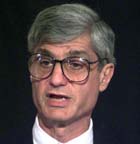
I pointed out that Treasury Secretary Robert Rubin (who happens to be one of the Council‘s co-chairs) had not acted against money-laundering because he didn‘t want to stop the free flow of cash into the US – in effect, into Wall Street. But when Summers succeeded Rubin in the job, he had taken action.
The facts are important because Rubin is poised to move into a Democratic administration — especially if Clinton wins — as a high-level Wall Street influential.
It‘s not just about buying or selling sex. It’s also about money laundering. New York Governor Eliot Spitzer’s downfall began with an investigation by the Internal Revenue Service. That‘s because when people move money for illicit purposes, they try to disguise the flows. And US banks are required to report suspicious transfers to the Treasury Department.
The IRS gets involved, because those transfers could be effected to hide income from taxes. So it responded to bank reports of suspicious transfers by Spitzer, who was paying thousands of dollars for call girl services. The money was being sent to QAT consulting, a shell company owned by the Emperor‘s Club V.I.P. prostitution ring.
Then the FBI joined the United States Internal Revenue Service-Criminal Investigative Division, looking into what appeared to be at first possible government corruption but then turned out to be payments to an organization running prostitution. And also laundering money in the United States and Europe.
In 1986 I went to Prague to report on the dissident movement. Among the leaders I wanted to see was Jiri Dienstbier, who had been a reform Communist and radio journalist and commentator during the 1968 “Prague Spring.” He’d lost his job, because he spoke out on the air against the Soviet military intervention. After he helped found the human rights group, Charter 77, he‘d spent three years in prison and then worked as a boiler technician in the subway.
He had been hard to reach. The phone company the month before had informed him half-apologetically that the city needed his line “in the public interest.” I left a note under his door, and he phoned that evening, asking if I wanted to go to an outdoor rock concert. We spent the next afternoon in the surreal setting of a sculptor‘s rock quarry that had been lent to a dissident jazz club.
It all came back to me when I saw Tom Stoppard‘s “Rock ˜N‘ Roll,” on Broadway, directed by Trevor Nunn, about Czech dissidents and the government officials who repressed them. Jan (Rufus Sewell) protests a crackdown against rock musicians, is jailed and then spends a dozen years working in a bakery.
Tony Defries, the rock manager who launched David Bowie and who takes credit for managing, marketing and branding such rock stars as Lou Reed and John Mellencamp as well as being “present at the birth of Madonna [and] the reincarnation of Stevie Wonder,” might be making some headlines of his own soon. (He is shown here in 1972 with Bowie’s wife Angie on his right.)
The ex-impresario, a Brit who now lives in Los Angeles and who for a promoter is unaccountably interview- and camera-shy, was one of the beneficiaries of a fake annuity scheme organized by a Swiss bank and its partner, a pseudo insurance company whose main product seems to be tax evasion. But the benefit turned out to be a disaster.
Twenty years ago, on a campaign trip in rural Pakistan in October 1987, Benazir Bhutto told me of her concern about the long-term effect of Afghan refugees who had set up safe houses, stored munitions and created networks in her country.
We talked for an hour in an interview I videotaped. It was the day after I traveled with her on a political procession in Sailkot, in the Punjab, northern Pakistan, where she was mobbed by supporters.
She was prescient about the impact of the Islamic Afghanis who had arrived in Pakistan during the war with the Soviet-supported government.
She said a long-term domestic fallout would be that even if Afghanistan today is solved and guaranteed by both superpowers, what about the future? Because the network has been created.
As the 1994 genocide in Rwanda slips into the dark hole of history, the U.S. playwright J.T. Rogers’ The Overwhelming reminds one how it happened and how both the moral, the complicit and the cynical in the West were present in the killing fields.
In Rogers’ fictional story, a U.S. family visits Rwanda in 1994. Jack, a professor, accompanied by wife Linda and son Geoffrey, is researching a book about grassroots activists and comes to interview his old college roommate, Joseph, a Tutsi who runs a children’s AIDS clinic. But Joseph has disappeared.
I chatted for a few minutes with Italian President Giorgio Napolitano after he spoke this morning at a Council on Foreign Relations breakfast. He agreed that there is a problem posed by offshore financial centers and pointed to concern in Europe reflected in a recent joint letter on the subject by the UK, France and Germany.
Napolitano is an extraordinary man who served nearly 40 years in the Italian parliament and was a leader of the Italian Communist Party, the PCI, helping to move it out of the Stalinist camp to social democracy.
Richard Gardner, US ambassador to Italy 1977 to 81, who presided over the meeting, told me that he had tried to persuade Henry Kissinger that Napolitano was a social democrat. Gardner said that Kissinger never could grasp that.
There is irony in the recent announcement by Peru’s President Alan GarcÃa that he would publish the names of 1,800 freed terrorists, so that people might recognise and report them if they were participating in anti-state conspiracies. His list includes people imprisoned on false charges or never convicted or sentenced.
One name that is not on the list is that of Alan GarcÃa. However, according to a declassified U.S. government document, GarcÃa, during his first administration from 1985-1990, gave instructions to terror squads organised by his political party to assassinate suspected leftists. Victims included trade unionists and other civil society leaders.
This writer discovered the document, and it was declassified at her request. It is posted following the full article.
Plays show western complicity in Nigeria and Rwanda violence.
Dec 1, 2007
Murderous conflicts in Africa are dramatized in two American plays off-Broadway that vividly call up the clashes in the oil region of Nigeria and the Rwanda genocide of over a decade ago. In both cases playwrights show inter-communal violence heightened by western interests‘ actions or neglect.
The one-man “Tings dey happen” by Dan Hoyle is most successful in presenting the characters of the Niger Delta, from militants demanding their share of oil wealth to the self-serving American ambassador and expatriates. “The Overwhelming,” by J.T. Rogers, also uses the “American visitor” device, though the personal stories seem trivial in the context of events.
When there’s a financial crisis tied to lack of transparency, follow the culprits offshore. Evidence comes out now that this is true about the subprime debacle.
Reuters reports that a German bank is implementing accounting changes including consolidation of an offshore conduit whose soured investments triggered a government-led rescue. The offshore operation was set up to invest in subprime mortgages.
Pam Martens in Counterpunch points out that, Citigroup, is discovered to have stashed away over $80 billion of Byzantine securities off its balance sheet in secretive Cayman Islands vehicles with an impenetrable curtain around them.
Among those securities count subprimes. Citigroup has $55 billion of subprime exposure and in November said it would write down up to $11 billion in subprime losses. Goldman Sachs said that won’t be all, that the bank may have to write off $15 billion.
New York stages are filled with strong women asserting themselves forcefully in musicals and classic comedy — forms that speak to the popular culture.
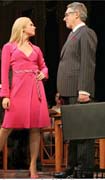
Five current hit plays that depict strong women are Legally Blonde, Avenue Q, Xanadu, George Bernard Shaw’s classic, Pygmalion and Curtains.
Let’s start with the young college girls in Legally Blonde, a stage remake of a popular 2001 film that was part of the post-feminist girl power movement, when young women were fighting a men are what matter backlash that threatened their chances for career and independence.
Learning of General Pervez Musharraf‘s declaration of emergency rule (martial law) in Pakistan, I can‘t help but recall the gushing introduction of the general made by Citigroup honcho and Democratic financial eminence grise Robert Rubin when the dictator, who came to power in a military coup, spoke at the Sept 25, 2006 meeting of the Council on Foreign Relations.
Rubin urged the audience to “understand a great deal more than those in our country tend to know about Pakistan, the Muslim world, the meaning of democracy in the context of countries very different from our own.”
Oct 23, 2007 – In the continuing saga of the Frigates of Taiwan, involving about $1 billion in bribes and kickbacks paid by the French company Thomson to win a bid on the sale of six war frigates to Taiwan in the early 90s, I asked French Finance Minister Christine Lagarde, at the Council on Foreign Relations yesterday, if she would continue the cover-up on a corruption case that could be the largest (known) in French history.
Madame Lagarde wasn’t sufficiently aware of the case that has been exhaustively reported by French print and broadcast media for more than a decade.
Click above to see a 6-minute video of Prof. Stiglitz, Nobel Laureate, former Chief Economist of the World Bank, former head of the Council of Economic Advisors to President Clinton. He explains what is wrong with tax havens.


 Code names, secretive European royalty, encrypted computers. A spy novel? Nope. Nope. It’s how two European banks helped rich Americans duck the taxman, a Senate probe found.
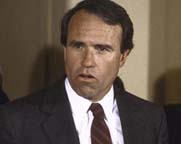
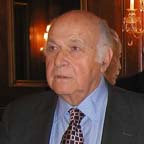 I was standing there when Maurice Tempelsman approached Richardson. The Governor greeted him and said, “Where‘s Mobutu!”

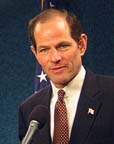 laundering. New York Governor Eliot Spitzer’s downfall began with an investigation by the Internal Revenue Service. That‘s because when people move money for illicit purposes, they try to disguise the flows. And US banks are required to report suspicious transfers to the Treasury Department.



 after he spoke this morning at a Council on Foreign Relations breakfast. He agreed that there is a problem posed by offshore financial centers and pointed to concern in Europe reflected in a recent joint letter on the subject by the UK, France and Germany.
 However, according to a declassified U.S. government document, GarcÃa, during his first administration from 1985-1990, gave instructions to terror squads organised by his political party to assassinate suspected leftists. Victims included trade unionists and other civil society leaders.
 Murderous conflicts in Africa are dramatized in two American plays off-Broadway that vividly call up the clashes in the oil region of Nigeria and the Rwanda genocide of over a decade ago. In both cases playwrights show inter-communal violence heightened by western interests‘ actions or neglect.