Gordon Brown and Barack Obama are both promising to crack down on the use of offshore tax havens. But putting those tough words into practice is another matter.
One of the world’s biggest private wealth management groups circulates funds via offices in the Cayman Islands, claiming they take major investment decisions ” when the main work is apparently carried out in London.
With offices in London and across the globe, Swiss-based Julius Baer banking group invests over $300 billion ( £208 billion) in assets on behalf of institutions and wealthy individuals. Profits in 2007 were more than $1.1 billion.
In London, one of its units was known as Julius Baer Investors or Julius Baer Investment Management (JBIM) until a management buyout in 2007. It was renamed Augustus Asset Managers, is based in Bevis Marks in the City, and is still 10% owned by Julius Baer.
From London, Augustus controls assets of $12 billion but claims its profits are generated elsewhere, offshore at a Cayman Islands Baer subsidiary called Baer Select Management.
Why? Simple, really. “If you would generate all the income in London, you would pay much more taxes,” acknowledged Max Obrist, a Cayman Islands executive of Julius Baer.
TV interview about the Allen Stanford case and the Sodexo kickbacks revealed by whistleblowers Jay and John Carciero on Conversations with Harold Channer, Oct 29, 2009, MNN – Channel 34, New York. You Tube. One hour. And more.
Arthur Miller’s play about corporate corruption never goes out of fashion. As a theater device, he focused on a small factory owned by one man, but you can take this as a representation of what went on and what goes on when anything goes in business. Profits trump morals. The victims are all of us, which is what the title means. Simon McBurney’s production is smooth and riveting, with a cast that acts with the fluidity of an ensemble.
The financial crisis has the U.S. swirling with charges about the immoral greed of some corporate executives who recklessly bet their companies’ futures to line their own pockets. The popular fix for this international calamity stops at the nation’s borders: decouple top-line salaries and bonuses from stock prices and institute more transparency and regulation.
However, last month, the Vatican, in a groundbreaking statement, linked the financial crisis to a much deeper problem largely ignored in discussions of the crisis here. It underlined the need to consider carefully the hidden but crucial role of the offshore financial system in light of the emergence of the global financial crisis.
The Vatican now gets it, but U.S. corporations don’t. The U.S.-based multinationals that signed on to yet another ethics pledge included General Electric, The Hartford, Pepsi, Wal-Mart, Accenture, Dell, and United Airlines. Their ethics, according to their pledge, does not include rejecting the use of the offshore system to evade regulation as well as taxes.
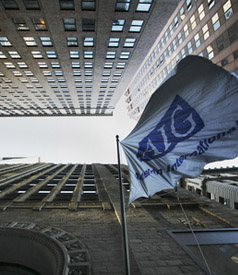
American International Group (AIG) operated a captive insurance scam that involved fraudulent use of offshore tax havens. Currently, the U.S. government has invested over $40 billion in AIG, with the U.S. getting nearly 80 percent of its stock.
This puts the U.S. in a unique position to investigate the internal operations of a giant corporation with a reputation for using the offshore system for tax evasion.
U.S. authorities could begin their investigations with a look into a very curious practice that was revealed 15 years ago in a case that was never exposed by the mainstream press and which insurance insiders say is endemic.
AIG would keep a portion of a client’s inflated insurance premium and send the rest to the client’s offshore reinsurance company. AIG would earn a higher commission. The client would write off the entire amount as a business expense and enjoy the extra cash offshore, tax free.
This story tells how notorious fraudster Victor Posner made an AIG deal to stash reinsurance profits in Bermuda.
At a time in the U.S. when most films seem made for retarded 13-year-olds, this revival of David Mamet’s 1988 Speed the Plow directed by Neil Pepe, is right on target. It’s a satire on Hollywood moguls on the make for money and success, which they see strewn along the paths of titillating sex and violence. Hey, how else to get a lunch table at the town’s favored watering hole?
Then a sweet, wide-eyed naive young woman who is working at the studio as a temp is called in to do some secretarial tasks. She ends up challenging Bobby to make a film that matters. Why should it all be garbage? she insists.
It might seem odd at first to compare them, but “Beast”, a brutal, surreal black comedy about the Iraq war, has something in common with “The Files”, a stunning, sardonic docudrama about the repression of cultural freedom by the Polish communist secret police.
They are theatres of the absurd, though in the Poles‘ case, the tales they tell are very literally true. Both plays, staged off-Broadway in New York, are attacks on criminal acts of governments.
For decades, playwrights writing realistically about the black experience in the United States could not get their works produced, black directors didn’t get jobs, and even the most successful performers were confined to roles as servants in plays about whites.
First produced in 1975, The First Breeze of Summer by Leslie Lee was one of the early U.S. theatre works about black life.
Broken dreams lie behind the grit of the elderly woman at the centre of this play about the tribulations of being black and female in the U.S. South. Gremmar — as her grandsons call her — raised three children by different fathers, none a husband, each offering a hope that was dashed on the rocks of racial prejudice or the sexual double standard.
The scene is 1977 in Lagos, Nigeria. Film projections show people racing frantically to escape the thousand troops who have surrounded and invaded Kalakuta, the communal living space and recording studio of musician-songwriter, Fela Anikulapo Kuti.
In a handful of years, Fela had become a worldwide music phenomenon and trenchant political critic of the regime.
How could the songs of one man be deemed such a political threat that the president, Gen. Olusegun Obasanjo, seeks to destroy him so brutally?
FELA!, a stunning U.S. musical theatre piece premiering in New York, tells the story using Fela’s own radical lyrics set to the Afrobeat he created out of jazz, African rhythms, funk and reggae. The play is a stirring musical indictment of decades of misrule by Nigeria’s thuggish military dictators
From alleged kickbacks to Aristide to a company that’s tanking.
Jim Courter, the former New Jersey Republican Congressman who quit as a McCain national finance co-chair after IDT, the global telecommunications company he heads, was fined $1.3 million by the Federal Communications Commission, now has much bigger problems. IDT announced Friday that Courter will quit the company. IDT‘s filing with the SEC the same day shows the company in a free fall. Its stock is tanking, and the New York Stock Exchange has threatened to delist it.
The FCC fine imposed for IDT‘s failure to file its contract with Haiti was first reported by the author in July. The contract revealed that IDT was sending Haiti fees to a Turks & Caicos shell company instead of to a Haiti Teleco account. A whistleblower charged kickbacks.
The company said Courter would leave as CEO when his contract expires next October. In the meantime, his 2009 salary will be paid entirely in stock, which he cannot cash in till his departure. That could mean paltry pickings. IDT stock has fallen to 69 cents from more than $24 in 2004 and $1.93 in June.
IDT could be in for some more trouble with the FCC if a new administration decides to enforce its regulations. According to FCC responses to Freedom of Information Act requests, IDT has never filed its contracts with any of the 140 major international carriers to which it claims to supply service. This violation could bring fines of $7,000 a day for each case, but the agency has given the company a pass on obeying its rules.
Michael Glassner, in charge of Republican Vice-Presidential candidate Sarah Palin‘s campaign operations, was till April 18th a vice-president of IDT, the New Jersey-based telecom fined $1.3 million by the FCC in July for failing to file its Haiti contract.
The contract, effective in 2004, revealed payments to an offshore shell company in the Turks & Caicos which sent only part of the fees to Haiti‘s phone company. The case is under investigation by the Justice Department and the Securities and Exchange Commission. A former IDT insider, Michael Jewett, who managed the company’s Caribbean region, says the missing money represented kickbacks to former Haiti President Jean-Bertrand Aristide.
The suave hero is racing over moors, pursued by a small bi-plane, while on a hill to the side, a familiar figure watches. It is Alfred Hitchcock, who regularly shows up in his mystery thrillers. Except this isn‘t cinema, it‘s theater, and old Alfie is a tiny Indonesian-style shadow puppet. It‘s a scene from Maria Aitken‘s enormously clever production of Patrick Barlow‘s parody of Hitchcocks “The 39 Steps.” You‘ve never seen anything like it.
It is 1935, just the right year for a film noir spy drama actually made by Hitchcock in that pre-war time and centered around a devilish villain whose accent becomes more Germanic as his malevolent plot is revealed.
In a year when race is an undercurrent in America‘s presidential election, it is fitting that the smash musical of the Broadway season is “South Pacific,” a play first presented nearly 60 years ago on the theme of intolerance.
Based on Tales of the South Pacific by James A. Michener, who served in the region during World War II, the play turns on the anti-Polynesian prejudice of the heroine, young Navy nurse Nellie Forbush (a vibrant Kelli O‘Hara), who is posted to a war-time island base of the U.S. Navy.
While “South Pacific” has been celebrated around the world for its joyous, clever, entertaining musical numbers, and director Bartlett Sher‘s staging is exhilarating, it‘s worth looking at how the show presents its message.
Madame Lyubov Andreievna Ranevskaya returns to Russia from Paris, where her finances have been exhausted by the extravagance of her lover and life style. She is devoted to the family estate, especially the cherry orchard, and wants to save it from a threatening debt.
Fast forward about a century from Anton Chekhov to American playwright A.R. Gurney. With the help of a smooth, light-hearted production by director Mark Lamos, Gurney weaves the Chekhov story into “Buffalo Gal,” an often wry tale of Amanda (Susan Sullivan), who is drawn to her childhood home but has to deal with economic realities.
Edwina, played by de’Adre Aziza, has her eye on the Youth (Daniel Breaker).
She informs him, And after we marry and you’ve got a job in the corporate sector, you’ll buy me a sprawling two-story house fulla African sculptures from tribes we know nothing about, kente cloth couch covers, and Malcolm X commemorative plates lining the walls of our airy, peach-coloured breakfast nook?
Who says leftists don’t have a sense of humour? Welcome to Passing Strange, a witty, inventive satire on Broadway about growing up, rebellious, bourgeois and black in Los Angeles and leaving before 20 to explore the radical corners of Europe.
Articles I wrote this month about the resignation of IDT CEO James Courter as John McCain‘s finance co-chair provoked supporters of former Haiti President Jean-Bertrand Aristide to noisy denials and personal attacks.
I wrote that Courter had resigned after I reported that the Federal Communications Commission had fined IDT $1.3 million for failing to file its contract with Haiti.
Why would IDT fail to file the contract? Maybe because it shows that in this Aristide-administration deal, payments were below the legal 23 cents a minute set by the FCC (money that would have gone to Haiti) and that IDT payments were ordered sent to a shell company account in the Turks & Caicos instead of to a government account in Haiti.
It sounded like the plot of an action thriller. A U.S. Senate subcommittee held hearings Thursday on how UBS/Switzerland, the world’s largest private bank, and LGT (Liechtenstein Global Trust), owned by the royal family of that micro-tax-haven state, organised complex tax evasion schemes for U.S. clients, and used spy-type tactics to avoid being detected.
LGT bankers allegedly used code names and public phones instead of making calls that could be traced. UBS agents carried encrypted laptops and business cards that didn’t mention they were in the wealth management division. According to testimony and records, both banks took care to disguise their activities because moving and hiding the money of tax evaders and other criminals is very lucrative, bringing hundreds of millions of dollars in profits.
Condé-Nast Portfolio, July 16, 2008 – Code names, secretive European royalty, encrypted computers. A spy novel? Nope. Nope. It’s how two European banks helped rich Americans duck the taxman, a Senate probe found.
The Newport regatta has always drawn America’s moneyed class, and the Art Basel show in Miami is hot on the nouveau riche circuit”making both glitzy venues ideal for financial giants to prospect for new clients.
But UBS, one of the world’s largest banks, had another goal in mind when it shelled out money for the UBS Regatta Cup in Newport or the Art Basel Art Fair in Miami, or performances in major U.S. cities by the UBS Vervier Orchestra.
Jim Courter, one of Senator John McCain’s top fundraisers, has resigned from the McCain campaign just days after Lucy Komisar reported on portfolio.com that Courter’s company had been fined by regulators.
The Federal Communications Commission last week levied a fine of $1.3 million against IDT, a New Jersey telecommunications company headed by Courter, for failing to disclose its 2003-04 long-distance phone agreements with Haiti.
The FCC hits James Courter’s IDT with a $1.3M fine for a cloudy deal in Haiti.
IDT, the New Jersey telecommunications outfit run by one of John McCain’s top fundraisers, Jim Courter, was fined $1.3 million by the Federal Communications Commission for failing to file a contract for telephone service to Haiti in 2004.
Courter, a former New Jersey Republican congressman, is one of 20 McCain national finance co-chairs, and joined the campaign in February 2007. He’s a Trailblazer for McCain, meaning he raised at least $100,000. The IDT PAC has contributed $84,850 in 2008.
IDT‘s work with Haiti has been put under scrutiny since a former employee, Michael Jewett, then IDT’s manager for the Caribbean, sued the company. His suit claims he was fired when he balked at negotiating a scheme that routed a portion of the company’s long distance revenue from Haiti calls to a shell company, Mount Salem in the Turks & Caicos, which he was told was owned by then-president Jean-Bertrand Aristide.
As Sen. Barack Obama prepares to accept the Democratic presidential nomination next month, Thurgood on Broadway takes audiences back to this earlier iconic and groundbreaking figure in U.S. civil rights history.
Playwright George Stevens, Jr., director Leonard Foglia, and actor Laurence Fishburne bring life to the musings of Thurgood Marshall, the first black member of the U.S. Supreme Court.
He had fears and doubts, but braved life-threatening encounters with Southern racists as he dedicated himself to overturning the legal structures of segregation in the United States.
Moving back through time, he recalls incidents that seared his conscience.
I never thought I‘d hear those words, certainly not at the Council on Foreign Relations. Gov. Bill Richardson of New Mexico spoke at a Council lunch today. The subject was immigration. Before the talk, several people, including this reporter, stopped at the speaker’s table to chat. I was standing there when Maurice Tempelsman approached Richardson. The Governor greeted him and said, “Where‘s Mobutu!”
Well, that was a conversation stopper! Tempelsman, a very very rich man, and a generous donor, frequently gets a place of honor at the Council head table, though not today. Nobody raises the question of how he got his money.
The Adding Machine (1923) and Top Girls (1983) are separated by 60 years, but both used stylised techniques to portray workers as willing slaves of capitalism. That system has destroyed them, but they haven’t the consciousness to know it. And they absorb attitudes that are racist and sexist.
Both productions are currently on stage in New York. The earlier work, written by U.S. playwright Elmer Rice, has been turned into a chamber opera by Jason Loewith and Joshua Schmidt, and given a stunning, haunting production at an off-Broadway house. The British playwright Caryl Churchill’s Top Girls, in a Broadway revival by James MacDonald, features compelling performances by major stage actors.
On this 40th anniversary of 1968, the year that for the United States was the apogee of opposition to the war in Vietnam, two new Off Broadway plays explore divergent ways that U.S. citizens protested — and ponder the best way to contest a senseless war.
The Conscientious Objector by Michael Murphy describes the personal and political conflict faced by civil rights icon Martin Luther King Jr. over his decision to speak out publicly against the war.
Something You Did by Willy Holtzman examines the decision of a stand-in for Kathy Boudin, a member of the Weather Underground, to bring the war home by participating in a violent action that left a bystander dead.




 The suave hero is racing over moors, pursued by a small bi-plane, while on a hill to the side, a familiar figure watches. It is Alfred Hitchcock, who regularly shows up in his mystery thrillers. Except this isn‘t cinema, it‘s theater, and old Alfie is a tiny Indonesian-style shadow puppet. It‘s a scene from Maria Aitken‘s enormously clever production of Patrick Barlow‘s parody of Hitchcocks “The 39 Steps.” You‘ve never seen anything like it.
 from Paris, where her finances have been exhausted by the extravagance of her lover and life style. She is devoted to the family estate, especially the cherry orchard, and wants to save it from a threatening debt.
  Code names, secretive European royalty, encrypted computers. A spy novel? Nope. Nope. It’s how two European banks helped rich Americans duck the taxman, a Senate probe found.
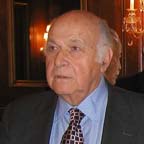 I was standing there when Maurice Tempelsman approached Richardson. The Governor greeted him and said, “Where‘s Mobutu!”