Corporate Abuses, Major Past Articles, Offshore, Scoops
CorpWatch, Dec 29, 2005
Two U.S. lawsuits charge that former Haitian President Jean-Bertrand Aristide and his associates accepted hundreds of thousands of dollars in kickbacks from politically connected U.S. telecom companies.
Lawsuits filed this Fall challenge the former priest‘s image of political purity and raise claims that both he and U.S. corporate executives scammed illegal profits off the hemisphere‘s poorest population.
In one suit, a fired executive charged his former employer, the U.S. telecom IDT (Newark, NJ), with corruption, defamation, and intimidation under the New Jersey anti-racketeering law. In the second, the government of Haiti contends that IDT, Fusion (New York, NY) and several other North American telecoms violated the federal RICO anti-racketeering statute. Both suits allege that Aristide, now in exile in South Africa, and his associates, took kickbacks.
Corporate Abuses, Major Past Articles, Offshore, Scoops
Haiti Democracy Project, Nov 10, 2005
Add former Haitian president Jean-Bertrand Aristide to the long list of corrupt and repressive officials who have used Western banks and companies and offshore tax havens to plunder their countries and launder the stolen money.
Aristide and his associates looted government coffers, wrote checks to front companies for nonexistent purchases, padded invoices to get kickbacks from vendors, secretly owned companies that cheated Haiti of taxes, and laundered the money they stole through shell companies and secret bank accounts set up in the United States and the offshore tax havens of Turks and Caicos and the British Virgin Islands.
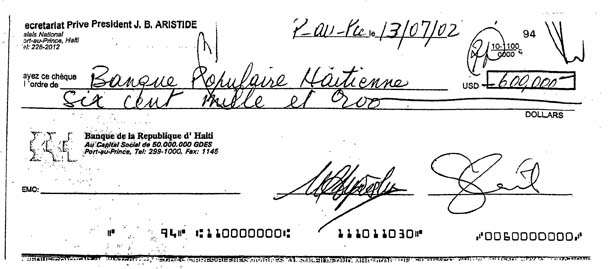
Nearly $20 million has been documented as stolen between 2001, when Aristide took office as president for the second time, and 2004, when he fled or was forced out of the country according to varying accounts.
Travel
In Key West you can have it all — a gorgeous beach town with thrilling water sports — scuba, parasailing, jetskis — and an annual event that draws top writers to talk and schmooze with aficionados from around the country.
Art/Dance, Travel
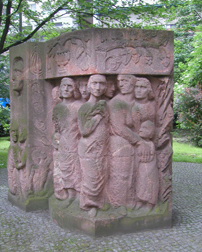
Protest at Rosenstrasse by non-Jewish women saved their Jewish husbands and sons —
In a small park just off Karl Liebnechtstrasse in former East Berlin stands an extraordinary group of reddish pink sculptures called Block der Frauen, the block of women. German sculptor Ingeborg Hunzinger, an artistic refugee from the Nazis, chiseled them to commemorate an extraordinary event that occurred at that site in February 1943.
The Nazis had rounded up some 2500 Jewish men and boys, the husbands and sons of non-Jewish women, and imprisoned them at Rosenstrasse 2-4, the Jewish Community Center to gather them for deportation to death. The women found out where the men had been taken and converged there. From 600 the protests grew to 6,000. The guards pointed machine guns at them and threatened to open fire. The women held their ground.
After a week, propagandist Joseph Goebbels, who indicated in his diary that he was worried about the protest‘s public relations impact in Germany and abroad, ordered that the Jews with Aryan spouses or parents be released. And then the event seemed to vanish from history.
Why didn‘t we know about this? Why is it still generally believed that no one could challenge the Nazis and live?
Travel, Wine
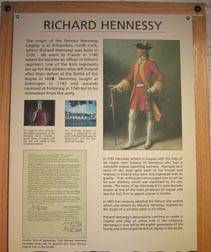
Why a French cognac is called Hennessy By Lucy Komisar Ever wonder how a French cognac got a name like Hennessy? Or why a French Bordeaux is called Lynch-Bages? Lynch? Does Ireland, the country of beer and ale imbibers, have a connection to fine wine? I found the answers on a trip that took me […]
Travel
There‘s a bit of magic and fantasy in a day along the Mosel River, stopping at villages of half-timbered houses, trying wines from local vineyards, visiting centuries-old castles, and seeing stunning examples of a turn-of-the-last-century style called Art Nouveau.
We picked up the river route in Traben-Trarbach, between Trier (famous for Roman ruins) and Koblenz, arriving in the evening at the Jugendstilhotel Bellevue. Jugendstil means Modern Style as it was called in England, or Art Nouveau as the French named it. The hotel is not only charming and comfortable, but an architectural gem.
Art Nouveau developed as a rejection of turn-of-the-19th-to-20th-century upheaval and industrialization. Artists adopted shapes of nature; flowers with slim leaves and long-stalks were popular. Women were depicted with long flowing garments and hair. Elements of Modern Style are seen in the lithographs of Toulouse-Lautrec and in some Paris metro entrances.
Travel
London, glorious London. I know we Americans (or some of our ancestors) fought them in the 1700s, but they are still our best friends, aren‘t they? For theater, art, and experience, London is like leaving home to visit cousins. (Leaving the colonies to cross the Pond, as the Brits would say.) What I find wonderful about London is the easy fusion of the traditional and the modern. Traditional, by the way, sometimes goes back a thousand years!
Start with the traditional. To get a good grasp of the gory Royals, there‘s no place better than the Tower of London, founded by William the Conqueror in 1066-7 and enlarged and changed by royal houses that followed. The best way to see it is with a guided tour by one of the Beefeaters, those fellows who look like the picture on the gin bottle and take you around the Tower grounds explaining, with delicious, malicious enjoyment, the dreadful incarceration and murder of Anne Boleyn, two child princes, and other enemies of whoever was running the state. It‘s a bit like having your own personal version of a Shakespeare play.
Be sure to get there by the last tour at 3:30 pm; I‘ve done it both ways, and I‘ve learned that you miss too much wandering around without a guide. You can also see the crown jewels at the Tower. It gives you an idea of what the royals were fighting for! And what the republican Oliver Cromwell was fighting against.
Travel
A boutique hotel for tourists, a modern one for business travelers By Lucy Komisar I was walking along the rue de Rivoli in Paris and noticed a banner on the huge stone H´tel de Ville, the city hall. It announced an exhibit, “Du Refuge au Pi¨ge (From Refuge to Trap), The Jews in the […]
Travel
Weimar and its surroundings represent the best and the worst of the German character and history. On the square is the neoclassical German National Theater, with a statue of poet Johann Goethe (who founded the theater) and his contemporary, dramatist Friedrich Schiller. They were part of the “Sturm und Drang” (storm and stress movement, which advocated a celebration of nature and emotion. On the day I visited, a group of theatrical activists in red and white robes were performing alongside the statue, handing passers-by advice cards labeled “Secret Agent: freedom training.” Considering what we would soon see, it was an appropriate idea.
Travel
How would you like to spend a few nights in an art museum? Not possible? How about a hotel room that‘s as exciting and original as anything you‘re likely to see in a gallery? You have never experienced anything like the stunning, stylized, avant garde and traditionally elegant one-of-a-kind new “fashion rooms” receiving guests at the luxury Royal Windsor Hotel Grand Place in Brussels. They are 10 veritable works of art by important Brussels fashion designers and they‘ve been open for less than a year.
Brussels is a center of grand couture, although its designers are less recognized – perhaps because of snobbery – than their Paris cousins. The idea for the rooms started with a Belgian designer who mused at a cocktail party that the hotel ought to be a showcase for Belgian design. Claude Dufour, Director Sales & Marketing, originated the concept of the fashion rooms. It fit with the Warwick group‘s resolve to make their hotels individualistic and distinctive.
Travel
Sitting on the “Bar Canale” terrace for breakfast, gazing at the 17th century Church of Santa Maria della Salute across the Grand Canal, I could imagine the lazy mornings of the Venice nobles who once owned the Bauer Il Palazzo. They might have finished their coffees and walked the five minutes to the Palace of the Doges, where government business was carried out.
They or their servants might have stepped into a gondola to travel quickly to the Rialto, the market at the site of the famous bridge. That might have happened in the 18th century, when the Palazzo was built.
Art/Dance, Travel

The citizens of Buenos Aires are called “porteños,” people of the port. Perhaps this connection to the rest of the world contributes to their sophistication. “BA” is a city of grand, classical-style buildings, elegant neighborhoods, scruffy crowded “barrios,” pedestrian malls and even a kitchy tourist waterfront along the RÃo de la Plata, the Platt River. Like other great cities, it‘s a center of contemporary art. Much of that reflects its turbulent political history.
Argentina has come a long way since the period of repression of 1976-1973, the time of the military’s dirty war against the left. The government has granted the “Mothers of the Plaza de Mayo” concession booths at the square opposite the Presidential Palace, and they are mentioned in official guides. The café-bookstore is a tourist attraction! In this vibrant city, politics and culture mix with a Latin passion.
Art/Dance, Travel
The most riotous time I had in Italy was at Michelangelo‘s David 500th birthday party. Well, not exactly a party, an exhibit at the Academy Gallery (Galleria dell‘Accademia) in Florence. Hmm? Isn‘t David just a piece of white marble, beautiful, yes, but riotous?
I‘m talking about Robert Morris‘ “The Birthday Boy,” an hysterical send-up of two leftwing art historians, each in a separate video talking about “The David.” The American Morris did them in 2003-4. His satire has the art critics (played by actors), typically veering into discussions of international politics, feminism, all the hot-button issues. Or didn‘t you think an art historian discussing “The David” could bring in an attack on George Bush?
Travel
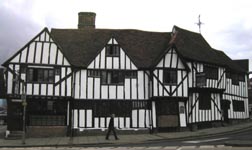
Given a choice between a hotel that‘s spiffy modern and one that‘s historic, I‘ll take the historic place every time. And when that history goes back 700 years, staying in a hotel becomes just as exciting as going out to see the sights. I discovered that in Colchester, where I found the oldest inn located in the oldest recorded town in Britain.
I was going to a conference at the University of Essex, just outside Colchester, which is an hour‘s drive or train ride northeast of London. So I did some boning up on local history. I found that Cunobelin, King of the Britons, had lived here from 5 AD. Then the Romans invaded. The gritty Brits fought back! Queen Boudica burned the town and the Roman Temple to the ground in 60 AD.
Travel
Seeing how both halfs lived –
We were descending a into 300-foot-deep Welsh coal mine, hard hats firmly in place, watches and anything else with batteries removed because the law requires it to prevent a spark that could set off flammable methane gas.
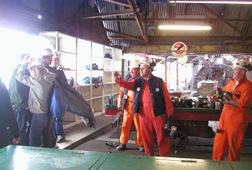 Our guide, a former miner, grinned and joked. We laughed nervously. If you want a memorable experience, visiting “The Big Pit,” an hour‘s drive north of Cardiff, is high on the agenda!
Major Past Articles, Offshore, Scoops
May 31, 2005
In the space of four or five years, Halliburton, the international oil services and construction conglomerate that is under attack for overcharging and underperforming in Iraq, has gone from reporting 70 or 80 offshore subsidiaries in its annual SEC filing to just two, both in the Cayman Islands. Offshore networks had become a central part of Halliburton’s management and financial strategy. When current United States Vice President Dick Cheney was CEO of Halliburton from 1995 to 2000, the company’s offshore subsidiaries increased from nine to 44. By the year 2001, that had nearly doubled. Now most of them have gone missing!
Scoops
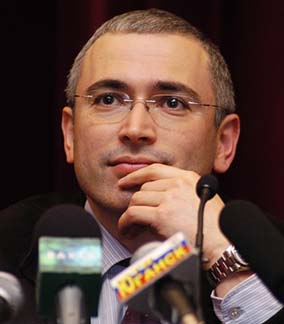
In mid-May a Moscow court will issue a verdict in the trial of Mikhail Khodorkovsky, the figure behind Yukos Oil, who was once known as Russia’s richest man. Khodorkovsky, who a few years ago was worth more than $15 billion, is on trial for fraud and tax evasion, much of it made possible through the use of offshore shell companies.
Khodorkovsky has been in prison since 2003, when he was charged with embezzlement and for rigging a privatization auction of the petrochemical company, Apatit. Some critics argue that Khodorkovsky is being held up as a symbol of Russia’s ruling class of exorbitantly wealthy businessmen, and that his trial is politically motivated. Senator John McCain – in a recent statement before the Senate – likened the charges against the young oligarch to the overthrow of a government saying, a creeping coup against the forces of democracy and market capitalism in Russia is threatening the foundation of the U.S.-Russia relationship.
Offshore, Scoops
CorpWatch, May 10, 2005
In mid-May a Moscow court will issue a verdict in the trial of Mikhail Khodorkovsky, the figure behind Yukos Oil, who was once known as Russia’s richest man. Khodorkovsky, who a few years ago was worth more than $15 billion, is on trial for fraud and tax evasion, much of it made possible through the use of offshore shell companies.
Khodorkovsky has been in prison since 2003, when he was charged with embezzlement and for rigging a privatization auction of the petrochemical company, Apatit. Some critics argue that Khodorkovsky is being held up as a symbol of Russia’s ruling class of exorbitantly wealthy businessmen, and that his trial is politically motivated.
But Western corporations and, by extension, the Western media may in fact be equally motivated to obscure the facts and make Khodorkovsky into a capitalist martyr.
Corporate Abuses, Scoops, Tax Evasion
Pacific News Service – April 12, 2005
A new global movement is tracking the increasing number of offshore tax shelters and pressuring governments to make multinationals pay up.
As Americans fret over their personal income taxes, there is a movement afoot to reduce the tax burden on ordinary people by getting corporations and wealthy individuals to pay their fair share.
Last month, the Tax Justice Network (www.taxjustice.net/) issued a report based on publicly available statistics from the Bank of International Settlements and Merrill Lynch, the investment company. The data showed the following:
–Approximately $11.5 trillion of assets are held offshore by high net-worth individuals, or about a third of the total global GDP, the value of goods and services, which in 2003 was $36.2 trillion.
–The annual income that these assets might be expected to earn amounts to $860 billion annually.
–The tax not paid as a result of these funds being held offshore would exceed $255 billion a year.
Offshore, Scoops
CorpWatch, April 4, 2005
In December of 2004, there was a horrific fire in a Buenos Aires disco called the Cromagnon Republic. Three rock fans shot off flares that set fire to the ceiling and engulfed the overcrowded discotheque in flames and smoke. In the rush to get out, 200 people were killed and 700 injured, most from trampling and smoke inhalation. The main entrance had been wired shut, and some of the emergency exits were locked, blocking escape.
In the days that followed, thousands of the victims’ parents and friends marched in the streets and demanded justice. A judge started proceedings for manslaughter and froze $20 million belonging to the owner, Omar Chaban. However, investigators soon discovered that Chaban appeared in no official disco documents; he was just the administrator. The legal owners of the property and the disco company were offshore shell corporations registered in the tax haven of Uruguay, the neighboring country. The listed owner of the enterprise was a Uruguayan straw man in his 70s who had no money.
Travel
It‘s a shimmering sunny morning in the Caribbean, a night‘s voyage out of Antigua, and we‘re lounging on the Lido deck of the elegant Sea Cloud II. First Mate Hendrik Carlsson is explaining how to set sails and navigate a square rigger. Tall ships have square sales and are therefore called square riggers. We‘ve been given diagrams and lists of the 24 sails so we can follow the drill as agile crewmen sprint up high poles. The real sailors among the guests and even neophytes love it!
Offshore, Scoops
Dissent Magazine, Spring 2005
The debate about cutting taxes for corporations and the wealthy is a false one. The issue is not whether transnational corporations and the very rich benefit from tax cuts, but that many of them walk away from all taxes. A General Accounting Office report found that between 1996 and 2000, 61 percent of all U.S. companies paid zero federal taxes. They accomplish this primarily through profit laundering, a phrase that ought to be on the lips of every social critic.
Travel
London has so many moods, so many façades, it could be dozens of different cities. I had recently stayed in the West End theater district and in trendy Kensington. Now I turned to investigate places that appealed to two very different kinds of visitors: business people and intellectuals.
For the first, I chose the Hilton at Green Park, a favorite for business travelers, and Threadneedles‘ Bonds Restaurant in the City of London financial center. For the second, I headed for Bloomsbury, site of the British Museum and the University of London, stomping grounds of the famed Bloomsbury literary group, where the Thistle Bloomsbury and the Imperial Hotel offer very different atmospheres.
Travel
How do you know you‘ve picked a trendy hotel? In San Juan, it‘s where the new governor of Puerto Rico, AnÃbal Acevedo Vilá, chooses to have his inauguration party! Just my good luck to arrive there on that festive day. Loud speakers drew me to a nearby park where the political movers and shakers of the island had gathered for the swearing-in.
Then people headed for the tall white Caribe Hilton a short walk away. They had picked my hotel!
Corporate Abuses, Offshore, Scoops
AlterNet, March 17, 2005.
Maurice Hank Greenberg, one of the world‘s richest men, and head of AIG, one of the world‘s largest financial companies, was forced to resign this week as prosecutors closed in on him and the company.
Given his economic and political power, the fall of Maurice Hank Greenberg, the 59th richest man in America and CEO of the American International Group (AIG), the world’s second-largest financial conglomerate (after Citigroup), is stunning.

