How would you like to spend a few nights in an art museum? Not possible? How about a hotel room that‘s as exciting and original as anything you‘re likely to see in a gallery? You have never experienced anything like the stunning, stylized, avant garde and traditionally elegant one-of-a-kind new “fashion rooms” receiving guests at the luxury Royal Windsor Hotel Grand Place in Brussels. They are 10 veritable works of art by important Brussels fashion designers and they‘ve been open for less than a year.
Brussels is a center of grand couture, although its designers are less recognized – perhaps because of snobbery – than their Paris cousins. The idea for the rooms started with a Belgian designer who mused at a cocktail party that the hotel ought to be a showcase for Belgian design. Claude Dufour, Director Sales & Marketing, originated the concept of the fashion rooms. It fit with the Warwick group‘s resolve to make their hotels individualistic and distinctive.
Sitting on the “Bar Canale” terrace for breakfast, gazing at the 17th century Church of Santa Maria della Salute across the Grand Canal, I could imagine the lazy mornings of the Venice nobles who once owned the Bauer Il Palazzo. They might have finished their coffees and walked the five minutes to the Palace of the Doges, where government business was carried out.
They or their servants might have stepped into a gondola to travel quickly to the Rialto, the market at the site of the famous bridge. That might have happened in the 18th century, when the Palazzo was built.
The citizens of Buenos Aires are called “porteños,” people of the port. Perhaps this connection to the rest of the world contributes to their sophistication. “BA” is a city of grand, classical-style buildings, elegant neighborhoods, scruffy crowded “barrios,” pedestrian malls and even a kitchy tourist waterfront along the RÃo de la Plata, the Platt River. Like other great cities, it‘s a center of contemporary art. Much of that reflects its turbulent political history.
The most riotous time I had in Italy was at Michelangelo‘s David 500th birthday party. Well, not exactly a party, an exhibit at the Academy Gallery (Galleria dell‘Accademia) in Florence. Hmm? Isn‘t David just a piece of white marble, beautiful, yes, but riotous?
I‘m talking about Robert Morris‘ “The Birthday Boy,” an hysterical send-up of two leftwing art historians, each in a separate video talking about “The David.” The American Morris did them in 2003-4. His satire has the art critics (played by actors), typically veering into discussions of international politics, feminism, all the hot-button issues. Or didn‘t you think an art historian discussing “The David” could bring in an attack on George Bush?
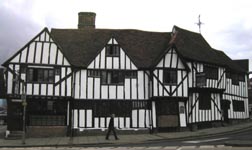
Given a choice between a hotel that‘s spiffy modern and one that‘s historic, I‘ll take the historic place every time. And when that history goes back 700 years, staying in a hotel becomes just as exciting as going out to see the sights. I discovered that in Colchester, where I found the oldest inn located in the oldest recorded town in Britain.
I was going to a conference at the University of Essex, just outside Colchester, which is an hour‘s drive or train ride northeast of London. So I did some boning up on local history. I found that Cunobelin, King of the Britons, had lived here from 5 AD. Then the Romans invaded. The gritty Brits fought back! Queen Boudica burned the town and the Roman Temple to the ground in 60 AD.
We were descending a into 300-foot-deep Welsh coal mine, hard hats firmly in place, watches and anything else with batteries removed because the law requires it to prevent a spark that could set off flammable methane gas. Our guide, a former miner, grinned and joked. We laughed nervously. If you want a memorable experience, visiting “The Big Pit,” an hour‘s drive north of Cardiff, is high on the agenda!
In the space of four or five years, Halliburton, the international oil services and construction conglomerate that is under attack for overcharging and underperforming in Iraq, has gone from reporting 70 or 80 offshore subsidiaries in its annual SEC filing to just two, both in the Cayman Islands. Offshore networks had become a central part of Halliburton’s management and financial strategy. When current United States Vice President Dick Cheney was CEO of Halliburton from 1995 to 2000, the company’s offshore subsidiaries increased from nine to 44. By the year 2001, that had nearly doubled. Now most of them have gone missing!
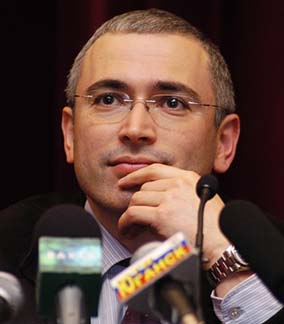
In mid-May a Moscow court will issue a verdict in the trial of Mikhail Khodorkovsky, the figure behind Yukos Oil, who was once known as Russia’s richest man. Khodorkovsky, who a few years ago was worth more than $15 billion, is on trial for fraud and tax evasion, much of it made possible through the use of offshore shell companies.
Khodorkovsky has been in prison since 2003, when he was charged with embezzlement and for rigging a privatization auction of the petrochemical company, Apatit. Some critics argue that Khodorkovsky is being held up as a symbol of Russia’s ruling class of exorbitantly wealthy businessmen, and that his trial is politically motivated. Senator John McCain – in a recent statement before the Senate – likened the charges against the young oligarch to the overthrow of a government saying, a creeping coup against the forces of democracy and market capitalism in Russia is threatening the foundation of the U.S.-Russia relationship.
In mid-May a Moscow court will issue a verdict in the trial of Mikhail Khodorkovsky, the figure behind Yukos Oil, who was once known as Russia’s richest man. Khodorkovsky, who a few years ago was worth more than $15 billion, is on trial for fraud and tax evasion, much of it made possible through the use of offshore shell companies.
Khodorkovsky has been in prison since 2003, when he was charged with embezzlement and for rigging a privatization auction of the petrochemical company, Apatit. Some critics argue that Khodorkovsky is being held up as a symbol of Russia’s ruling class of exorbitantly wealthy businessmen, and that his trial is politically motivated.
But Western corporations and, by extension, the Western media may in fact be equally motivated to obscure the facts and make Khodorkovsky into a capitalist martyr.
A new global movement is tracking the increasing number of offshore tax shelters and pressuring governments to make multinationals pay up.
As Americans fret over their personal income taxes, there is a movement afoot to reduce the tax burden on ordinary people by getting corporations and wealthy individuals to pay their fair share.
Last month, the Tax Justice Network (www.taxjustice.net/) issued a report based on publicly available statistics from the Bank of International Settlements and Merrill Lynch, the investment company. The data showed the following:
–Approximately $11.5 trillion of assets are held offshore by high net-worth individuals, or about a third of the total global GDP, the value of goods and services, which in 2003 was $36.2 trillion.
–The annual income that these assets might be expected to earn amounts to $860 billion annually.
–The tax not paid as a result of these funds being held offshore would exceed $255 billion a year.
In December of 2004, there was a horrific fire in a Buenos Aires disco called the Cromagnon Republic. Three rock fans shot off flares that set fire to the ceiling and engulfed the overcrowded discotheque in flames and smoke. In the rush to get out, 200 people were killed and 700 injured, most from trampling and smoke inhalation. The main entrance had been wired shut, and some of the emergency exits were locked, blocking escape.
In the days that followed, thousands of the victims’ parents and friends marched in the streets and demanded justice. A judge started proceedings for manslaughter and froze $20 million belonging to the owner, Omar Chaban. However, investigators soon discovered that Chaban appeared in no official disco documents; he was just the administrator. The legal owners of the property and the disco company were offshore shell corporations registered in the tax haven of Uruguay, the neighboring country. The listed owner of the enterprise was a Uruguayan straw man in his 70s who had no money.
It‘s a shimmering sunny morning in the Caribbean, a night‘s voyage out of Antigua, and we‘re lounging on the Lido deck of the elegant Sea Cloud II. First Mate Hendrik Carlsson is explaining how to set sails and navigate a square rigger. Tall ships have square sales and are therefore called square riggers. We‘ve been given diagrams and lists of the 24 sails so we can follow the drill as agile crewmen sprint up high poles. The real sailors among the guests and even neophytes love it!
The debate about cutting taxes for corporations and the wealthy is a false one. The issue is not whether transnational corporations and the very rich benefit from tax cuts, but that many of them walk away from all taxes. A General Accounting Office report found that between 1996 and 2000, 61 percent of all U.S. companies paid zero federal taxes. They accomplish this primarily through profit laundering, a phrase that ought to be on the lips of every social critic.
London has so many moods, so many façades, it could be dozens of different cities. I had recently stayed in the West End theater district and in trendy Kensington. Now I turned to investigate places that appealed to two very different kinds of visitors: business people and intellectuals.
For the first, I chose the Hilton at Green Park, a favorite for business travelers, and Threadneedles‘ Bonds Restaurant in the City of London financial center. For the second, I headed for Bloomsbury, site of the British Museum and the University of London, stomping grounds of the famed Bloomsbury literary group, where the Thistle Bloomsbury and the Imperial Hotel offer very different atmospheres.
How do you know you‘ve picked a trendy hotel? In San Juan, it‘s where the new governor of Puerto Rico, AnÃbal Acevedo Vilá, chooses to have his inauguration party! Just my good luck to arrive there on that festive day. Loud speakers drew me to a nearby park where the political movers and shakers of the island had gathered for the swearing-in.
Then people headed for the tall white Caribe Hilton a short walk away. They had picked my hotel!
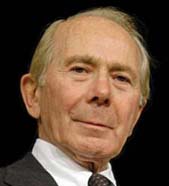
Maurice Hank Greenberg, one of the world‘s richest men, and head of AIG, one of the world‘s largest financial companies, was forced to resign this week as prosecutors closed in on him and the company.
Given his economic and political power, the fall of Maurice Hank Greenberg, the 59th richest man in America and CEO of the American International Group (AIG), the world’s second-largest financial conglomerate (after Citigroup), is stunning.
I attended a New York press conference sponsored by the French National Tourist Office. One of the speakers, Fabrice Morel, president of Rail Europe Group, told us that French trains were picking up so much speed that Marseilles and Bordeaux were now only three hours from Paris.
A comparison of the best: the Sennheiser and the Bose
Ready for a nice, relaxing airplane ride? You climb into your hard plush seat, fasten the safety belt, pull out a magazine or book and then, as you start the ascent into several hours locked in place, there comes a steady, all-encompassing roaaarrrr! And it won‘t go away. Not while the engines are turning, since that‘s the price of air travel. Or is it?
How insurance companies are aiding tax evasion by over-charging in America and shipping the money to offshore firms.
Terry Mills was working in Wilmington, DE, for J. Montgomery, one of the largest insurance agencies in the region, when in 1993 he was called in to get to the bottom of a messy insurance problem. Little did he know that he would uncover a story – as yet unreported – about tax evasion through offshore firms, but with a twist. The scheme Mills came across seemed to be taking place with the aid of AIG, a major U.S. insurance giant.
In October, New York Attorney General Eliot Spitzer filed suit against the world‘s largest insurance broker, Marsh, accusing it of rigging bids and receiving kickbacks in order to defraud clients such as other corporations, city governments, school districts and individuals of billions of dollars through inflated premiums.
“Greedy trial lawyers were the usual excuse for premium increases. Now we know that greedy corporations also have a starring role, Spitzer said, accusing several insurance companies as co-conspirators in making phony or inflated bids and paying kickbacks to the brokerage to get business.
Nov 2004 – Insurance giant AIG, run by powerful international financial player Maurice Hank Greenberg, has used offshore structures in Barbados and Bermuda to circumvent or violate U.S. state laws regarding reinsurance in a way that based on evidence about one crooked client, allows them to evade taxes.
As a senator, John Kerry was a tenacious investigator and exposed BCCI, an international criminal bank, and its murderous clients. The experience should serve him well in dealing with the international threats we face today.
When Phil Gramm came out of the Tavern on the Green one recent August morning, his disposition turned edgy. The former Texas Senator the long-time banking committee chair is now a vice chairman of the Swiss financial corporation UBS. He’d just passed some pleasant hours hobnobbing with comrades in the money trade, all lured to New York by the chance to make profitable connections during the Republican Convention. But Gramm wasn’t keen on talking to waiting journalists, certainly not to the CorpWatch team.
Robert Rubin seemed quite at ease sitting next to Teresa Heinz Kerry at the Fleet Center in Boston, home to the Democratic Convention in July. The Clinton Treasury Secretary, former senior partner at the investment company Goldman Sachs, is now chairman of the executive committee of Citigroup. There was no chance of journalists bearding him in the candidate’s box – at least none who would ask uncomfortable questions.
When none other than President George W. Bush announces that the real rich dodge taxes, is that an inadvertent flash of honesty about the shady secrets of offshore shell companies and tax shelters? The administration is tying itself up in knots to dodge the significance of his statement.
The real rich dodge taxes and small business owners pay the burden. Does that sound like a radical-liberal denunciation of privilege by candidate John Kerry?
Guess again. It‘s a pronouncement by President Bush.
If you are going to London, there‘s a very modern theater you should visit. It‘s not in the center of the city; it‘s in Hampstead in north London, the intellectual heart of town. Or at least that‘s the neighborhood where a lot of writers and theater people live. Giving honor to place, the theater is called the Hampstead Theatre, and its recent incarnation is the creation of Jenny Topper, artistic director from 1988 until 2003, the first woman to hold that post.



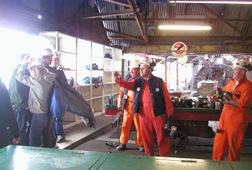 Our guide, a former miner, grinned and joked. We laughed nervously. If you want a memorable experience, visiting “The Big Pit,” an hour‘s drive north of Cardiff, is high on the agenda!