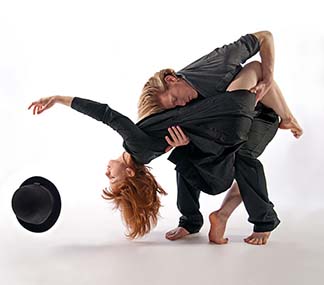
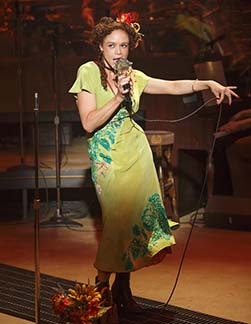
This is not a children‘s game. It is a riveting, compelling, inventive dissection of slavery, the underground railroad, the civil war and racism. In fact, “riveting, compelling, inventive” is a good description of Ars Nova, which presents this play and also created “The Great Comet of 1812” just opening on Broadway.
The Underground Railroad Game comes out of the experience of Scott Sheppard, one of the two creator/performers, who in the 5th grade participated in a unit about the civil war that divided students into Union and Confederate soldiers. But this is much more. And definitely not for 5th graders. If the underground railroad gives people the sense of, “at least there was a silver lining” to slavery, this production puts the real story out, with in-your-face realism. Taibi Magar‘s powerful direction is bereft of illusions.
The protagonists sometimes scowl, smirk, sneer, scream, run with branches to represent a forest, are pushed around on roller chairs, pass through moving doorways that reflect entrances and exits, and occasionally face inches away from first-row audiences to pull them into the plot. Not quite Bedlam but you get the very idea from this troupe that believes in “the immediacy of the relationship between the actor and the audience…collapsing aesthetic distance…[in] a kinetic experience of shared empathy.”
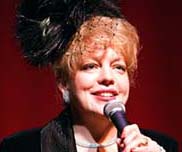
There were 70 singers telling stories to music, swinging to jazz beats, crooning emotion and trilling high notes at the annual Mabel Mercer Foundation Cabaret Convention. In four days at the Rose Theatre, dedicated by Lincoln Center to jazz, you could hear performers as young as 15 and as old as 88 present stunning new and veteran talents – in fact, the special thing about cabaret is that it has no age limits.
Peter Brook‘s “Battlefield” is an elegant, moving and sad parable about justice and war, life and death, going back in our sophisticated times to the simple way earlier societies said these truths. It is inspired by the “The Mahabarata,” a stylized ritualistic vision of war from the epic Sanskrit poem dating from 400 B.C. which director Peter Brook staged in a 9-hour performance in 1987.
Sept 29, 2016 – Tony Blair was in town for the opening of the United Nations, which draws heads of state, foreign ministers, and people who think they ought to travel in those circles. Former British Prime Minister Blair was one of the latter. One of the architects of the Iraq War, he came to attempt to reinvent himself as a humanitarian. He has set up the Tony Blair Faith Foundation to work with education programs to deal with extremism across the world. To help stop it. (Do you know the meaning of chutzpah?) He has also reinvented himself as a very rich guy, selling his services to various Gulf sheiks and the president-for-life of Kazakhstan.
Blair had the help of the Council on Foreign Relations, which helped his PR offensive by pairing him in a meeting with UNESCO head Irina Bokova to discuss “the role of education and civil society in preventing global extremism and raising awareness among governments.” It was a surreal event, not likely to change any
I hadn’t been to Lisbon for decades, not since a few years after the Revolution of the Carnations in 1974 when the military overthrew the dictator, Antonio Salazar. Happy people in the streets stuck those flowers in the muzzles of solders‘ rifles and on their uniforms, and so the revolution – which turned democratic — got its name. It was glorious to visit again, and experience Portugal‘s well-deserved reputation for charming, warm and friendly people. But for many American travelers, Portugal is not on their list. It should be.
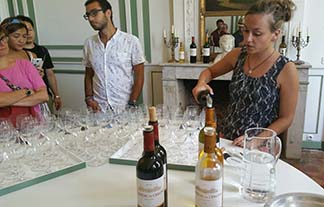
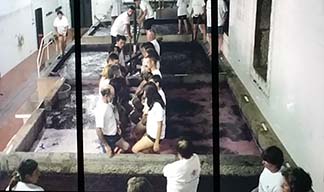
The oldest demarcated wine region in the world in not in France. It is in Portugal, in the Douro region near Porto, famous for port wine, and a necessary stop on any traveler‘s tour of the country. Though the vineyards are an hour-and-a-half distant and more, the cellars are in Vila Nova de Gaia, just across the river from Porto. There, port wine companies have set up tours and tastings, and we spent a happy few hours there under the tutelage of Taylor Port‘s Claire Aukett.
In a velvet ankle-length gown, white gloves and white fur stole, the signature gardenia over one ear, Bonita Brisker glitters like the rhinestones on her costume. “What a little moonlight will do…” she channels Billie Holiday, her songs, her life. “Greetings FBI” to the government thugs who harassed her. She reminds the audience that she “cut a man for putting hands on me wrong.” And Count Basie fired her. And then, “Them their eyes!” It‘s a masterful performance that brings Billie to life.
Of the plays I saw during six days in August at the Edinburgh Festival Fringe, these plays about justice stood out: “A Common Man: The Bridge that Tom Built,” “The Red Shed,” “Playing Maggie,” and “Undermined.”
The first play is about Thomas Paine, who fought for liberty in colonial America, was forced out for his politics, and spent time in London and also as a member of the Convention in revolutionary France, before having to flee. His story is not well enough known in America. The other three, addressing issues in the Paine tradition, deal a few centuries later with British politics and particularly the miners‘ strike of 1984-5, which still reverberates in Brits’ psyches.
I spent six days in August at the Edinburgh Festival Fringe, the world‘s largest arts festival. Out of the hundreds of plays presented, I sought out those about politics. I‘ve divided the best by their themes. Here are three about the people the system chews up: “Diary of a Madman,” “Trainspotting” and “A Streetcar Named Desire.”
The Fringe is not only about theater. There is also dance. Here are performances I found important. The classic Studies in Red, 3 girls 2 boys, twists, turns, high kicks and poses in excellent form was a highlight. This choreographers‘ showcase has been presented at the Fringe for 15 years, and it‘s a good chance to see an eclectic selection of creative dancers, ranging from traditional to minimal. In this case, the best were traditional!
I spent six days in August at the Edinburgh Festival Fringe, the world‘s largest arts festival. Out of the hundreds of plays presented, I sought out those about politics. I‘ve divided the best by their themes. Here are two about the system‘s corruption: “The Trial” and “Enron.” It’s quite fascinating to see surreal plays about systemic corruption a century apart. Franz Kafka was ahead of his time in describing the nature of the evil of modern society. His 1915 story “The Trial,” adapted in Edinburgh as a play, shows the evil of a government bureaucracy that grinds up a banker for no particular reason. Then look at Lucy Prebble‘s “Enron,” still surreal, where the bureaucrats are now corporate officials, but are still presented, like the Kafka play, as if this were a weird vaudeville.
I spent six days in August at the Edinburgh Festival Fringe, the world‘s largest arts festival. Out of the hundreds of plays presented, I sought out those about politics. I‘ve divided the best by their themes. Here are several about war and its fallout: Angel, Glasgow Girls and Hess.
The Americans had to be kept in the dark, out of the loop, not told anything about the secret Oslo talks between Israelis and Palestinians. Because the Americans’ big-power arrogance would derail them.
That is a provocative note in “Oslo,” J.T. Rogers‘ play about the back channel negotiations that led to a ground-breaking Israeli-PLO agreement signed at the Clinton White House in 1993. It would create the Palestinian Authority, with limited government over the West Bank and Gaza and agreement for both sides to continue negotiations.
Hades of course is hell. And singer-songwriter Anaïs Mitchell‘s script and music, directed by Rachel Chavkin, is based on the Greek myth of Orpheus, who journeys to Hades in order to find his love, the nymph Eurydice, who has been killed by a poisonous snake.
Here Orpheus is a minstrel. His wonderful music persuades the King of the Dead to let him take Eurydice home as long as he does not turn around to look at her until they reach the upper world. They have to trust each other. But….
It‘s charming but also hokey: the story of black producers and performers struggling in the early twenties to put a show on Broadway. It‘s 1920 and they are Noble Sissle and Eubie Blake, a comedy duo who meet at Fisk, the black college in Nashville.
Arthur Miller‘s brilliant parable of the Sen. Joseph McCarthy attack on American liberties, allowed by the U.S. Congress till it became too obscene for even cowardly politicians to stomach, is brilliantly staged by Ivo Van Hove, a Dutchman who understands and communicates Miller‘s political message (see also his “A View From the Bridge”) in a theatrical manner that makes politics into art. Using a metaphor of real events some 260 years earlier, it tells of accusations without evidence that were used to damn the innocent. They occurred during the Salem witch trials in the Massachusetts Bay Colony, 1692-93.
Laura Benanti is stunning and luminous as Amalia, a smart, assertive clerk in an upscale perfume shop in 1934 Budapest. Her trilling soprano shimmers.
The story itself is corny, schmaltzy. The slow start makes you think sit com, but it gets better. Its light fluff is underpinned by some serious commentary about the economic condition of workers and the way men treat women.
Think of Philip Ridley‘s play as a Gulliver‘s modest proposal for furnishing your home. Nothing like what Martha Stewart might recommend. It‘s a very smart macabre satirical over-the-top sci fi allegory, a modern deal with the devil, and in case you weren‘t sure about what counts, director David Mercatali opens the play with Madonna‘s “Material Girl” and the Beatles‘ “Money.”
This 1974 Alan Ayckbourn play, seen for the first time in the U.S., is a master class in how to use theatrical devices. In five one-act plays with the same superb ensemble cast, it uses absurd farce, irony and slapstick to show how people miscommunicate as their needs and desires collide.
From Jessica Lange‘s remarkable dissolution as the drug addicted Mary, reaching her nadir (and theatrical heights) in her mad scene, to Michael Shannon‘s stunning drunk, you are blown away by Jonathan Kent‘s staging of Eugene O‘Neill‘s “Long Day‘s Journey Into Night.” It is autobiographical. His father was a famous dramatic actor and O‘Neill as a youth traveled with his parents. The younger son, Edmund, stands in for O‘Neill.
If you like bluegrass and feminist stories, you will love this Steve Martin-Edie Brickell show, as I did. Carmen Cusack is a dulcet-toned charmer as the heroine. Martin and Brickell did the story and music together; Martin wrote the book and Brickell the lyrics.
The fascination of Florian Zeller‘s play about a man suffering from Alzheimer‘s is that it is told from the point of view of the sufferer. I noted early on a very beautiful French desk, and then not long after, it wasn‘t there. Hmm, I thought. What happened to the desk? Then other items of furniture in his apartment weren‘t there.
Or was it his apartment? It seems that his daughter was married and living in London. But no, he was living in her Paris flat, and she was married to someone else. Or was that the case?