Drawing on the crises of the Middle East, London playwright Henry Naylor has produced two powerful, insightful plays about women who struggle to defeat the machismo that incites Islamic militants. And which is hardly limited to the Islamic world. Naylor, 51, is a man with a strong feminist sensibility and a keen eye for drama. He shows in works that are political as well as theatrical how the domination and abuse of women is part of the psyche of political repression.
April 16, 2017 – The “Trump pay your taxes/tell us what you paid” protests around the country on Tax Day April 15th matter only if they are the beginning of a movement by the Berniecrats (since the Clintonites have finessed the issue) to deal with the institutionalized tax cheating effected by open scams such as the carried interest fraud which says that people who run hedge funds should pay a lower rate on their personal profits than anybody else. Why do they get that? Because they have paid off members of Congress to allow it. The Dems and Trump have said they are against it, but if you believe that, I have a bridge in Brooklyn I can sell you.
You might never see a more powerful, stunning production of Eugene O‘Neill‘s “The Hairy Ape” than this one directed by Richard Jones and starring Bobby Cannavale at the Park Avenue Armory. It‘s a very early O‘Neill work, first produced in 1922, a time of radical ferment in the U.S., and it is imbued with the young man‘s poetic and fierce attack on capitalist exploitation of workers and the inequality that engenders. Which makes it a very modern play as well.
March 24, 2017 – I just saw an important film, “The Pastor‘s Children,” in which I learned to some astonishment that during World War II, Protestant pastors in Germany collected iron church bells for Hitler so he could make bombs from them. After the war, 50,000 bells were left over, because there were so many, that the military production couldn‘t use them all. It illustrates dramatically how supportive the Protestant (as well as the Catholic) churches were of the Nazis.
March 20, 2017 – Robert Silvers, editor of the New York Review of Books, just died. You will read the expected hagiographies.
You won’t read how he censored comments on his neocon vision of Russia. He had run an article by Anne Applebaum replete with falsehoods about Russia. (She is a big fan of the corrupt Russian oligarch Mikhail Khodorkovsky.) After I talked about it with him, and he said to send my comments, I did. He refused to print them in the magazine but agreed to post them on line! Instead, he ran a comment saying people could find my views on my website — without even a link! So what does that mean? Either my comments were valid or not. Pretty tacky of him, I thought. Even sneaky. Lacking integrity.
This play is a charmer. I didn‘t expect to say that. I thought a story about the passengers who force-landed in Gander, Newfoundland, because airspace in the U.S. was closed on 9/11 and who were welcomed by the locals, would be hokey and sentimental. It is not.
Though most of your Key West time will be outside, here are two museums you should visit even when it‘s typically delicious outside. And certainly if it‘s cool or rainy, as alas, it has been known to be.
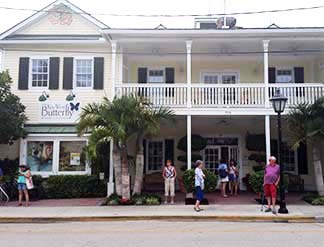
The Butterfly Conservancy is almost hidden away in a white conch style building near the southernmost point of the island (and of the U.S.!) It‘s like being inside an enclosed glass case (except it‘s not), as the butterflies fly freely around you.
The best food in Key West is at the Latitudes restaurant on Sunset Key. There is a magical feel to this exceptional place which is on a small island you reach via a 6-minute launch ride from a pier at the north of Key West. It is the showpiece of Sunset Key, a resort with bungalows, pool, tennis courts and quiet inviting beach.
Sunset cruises are special at Key West. Among all the fun things you do, you will remember them most. I generally like the catamarans, as you can walk about them steadily. No lurching from side to side. More about that later.
At this New York French bistro, game ” often venison and quail ” comes from Texas all through the year, but there‘s an annual festival featuring game till mid-March. I went to a press dinner featuring some of those specialties.
Glenn Close is masterful in Norma Desmond‘s final mad scene. Suddenly camp becomes real drama, tragedy of the Shakespearean sort. Till then the has-been silent film star, the grande dame who flounces around in glittery gold and silver sweeping gowns and capes, is hard to take too seriously. The camp is exaggerated by butler/major-domo Max (Fred Johanson), whose dark mood and piercing eyes could have come out of a Mel Brooks Frankenstein spoof. “Goulish” is a word to describe them both, and the haunted house they live in.
Macabre and whimsical, dark and comic at the same time, a clever satiric pen pointed at self-absorbed aristocrats of the early 1900s, Katherine Rundell‘s “Life According to Saki” is a delicious evening of theater.
You can feel the humanity pulsating and striving through the drab surroundings of the car service office in “Jitney” by the great American playwright August Wilson, who died in 2005. The protagonists, moving in an orbit around the solid Becker (a resolute, moving John Douglas Thompson), who set up the cooperative 18 years ago, are working class guys with jobs, if you want to include the numbers guy, Shealy (Harvy Blanks).
It‘s a knock off of “West Side Story,” here Italians vs blacks, and very hokey, but “A Bronx Tale” has a certain charm and pizazz nonetheless. The place is Bedford Avenue, tenements with fire escapes and pushcarts. And kids singing doo-wop. They are working class Italians, circa 1960.
This immersive, hokey, utterly engaging production is one of the memorable plays to see this season. In fact, it almost feels as if you don‘t just see it, you are in it. The audience is dispersed around a gorgeous set, seated at rows and tables, some on the stage, backed by red drapes and paintings, as actors move through the aisles and on risers. Sometimes lighted chandeliers descend or disco lights flash. Everything seems red, white and black.
Nathan Lane is superb as the over-the-top newspaper editor Walter Burns in this near 90-year-old noirish comedy that has some political nuggets hidden in its hokey scenario. It‘s given a fine, only slightly tongue in cheek, reprise by director Jack O‘Brien. Playwrights Ben Hecht and Charles MacArthur had been Chicago reporters, and the action takes place in the press room of Chicago’s Criminal Courts Building. The courts building shares the gallows courtyard with the county jail. Then anarchist Earl Williams (John Magaro), who is accused of killing a policeman and is going to be hanged, escapes.
An Egyptian police band, the grandly named Alexandria Ceremonial Police Orchestra, in 1996 is supposed to play at an Arab cultural center in Israel, but gets the town‘s name wrong at the bus station and ends up in an Israeli backwater.
Haled (Ari‘el Stachel), a trumpet player who loves Chet Baker, sings “My funny valentine” to female soldiers at the bus station. But the diversion plus imperfect English turns Petah Tikva, the city with the Arab cultural center, into Bet Hatikva. And so hangs the tale, and a charming, moving, slightly sentimental gem of a play.
I seem to be using the word a lot lately: hokey. Chandeliers with lit candles descend to sounds of operatic “ah ah” and pretentious violins. The story is based on a French epistolary novel written in 1782, and meant as a satire. But with the direction by Josie Rourke, you get the feeling that audiences are invited to enjoy the sex stuff. It‘s basically about a guy putting notches on his bedpost. (“Sex in the 18th-century French City”?)
The anti-hero Valmont (Lev Schreiber) is conspicuously charming. His former lover the Marquise, played by a take-no-prisoners Janet McTeer, wants revenge against her former lover Jacour, who has announced that he is going to marry a rich young girl. And Valmont wants to seduce married women known for their high morals.
It‘s light fluff, but if you love 40s music, as I do, just forget the silly plot. Besides, the production and the actors are charming. And there is 40s scat. Also jazzy music, dance kicks, swing and tap. The show is based on a 1942 movie, but a lot of the songs have been added.
Simon McBurney, founder and artistic director of the British theater company Complicite (a French word here pretentiously spelled without the acute accent on the e) has produced a hokey often loopy and generally pompous conceit under the pretext of an anthropological mission to the Amazon.
He pretends to be the photographer Loren McIntyre in 1969. But the visual, as it would appear to an audience viewing the stage, is not enough. You get earphones to enjoy surround sound and sense that you are partaking of McIntyre‘s adventures and dangers. Something blows in your ear, a noise comes from behind and you want to turn. You hear the crashes and echoes of the jungle. Think radio show sound effects.
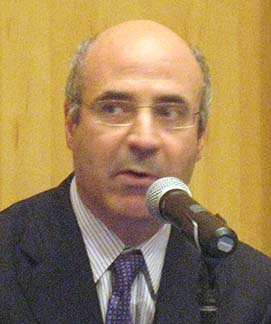
Dec 2, 2016 – Today, the Institute for Advanced Studies in Princeton banned me from attending a talk by William Browder, a controversial American-born investor whose undocumented stories about the theft of several of his Russian companies and the death of his accountant have led to a ban in the U.S. (2012) against people he has accused — again without proven evidence — of human rights abuses and the theft of those companies. The result has been to damage relations between Russia and the U.S.
When can it be more relevant to look at the politics of theater? In this year of bizarre reaction, “Fiddler” continues to be the quintessential representation of popular struggle. This is a brilliant production by Bartlett Sherr. Lucky to see it with Danny Bernstein and Jessica Hecht, major actors of our time. They are supported by an excellent ensemble cast. In Russia of the early 1900s, a Jewish community in Russia is confronting the challenges of social modernization and the political threat of the Czar.
Nov 20, 2016 – My neighborhood: Sunday night, and the meeting room of a community center on West 13th Street in the Village was jammed with hundreds of people, standing room only, all quite passionately opposed to what President-elect Donald Trump threatens to do to the country – especially hurting various identity groups and entrenching extremists in a space for the newly powerful to which (nobody mentioned it) the Clintons and Obama had opened the door, put in plush rugs, etc.
Is David Hare‘s play “Plenty” about the personal or the political? A confusing muddle.
We first see our heroine Susan (the very fine Rachel Weisz) at 17 in occupied France where her job is to work with other resistance fighters to divert Germans from the front. In a black cap and trench coat, she is waiting for a drop. But an unexpected “drop” is Codename Lazar (Ken Barnett), a British pilot who has bailed out. She weeps to him about how she is replacing an agent who was captured and taken to Buchenwald. Then the war ends.