Workers solidarity, a labor union, caring about each other may appear a bit old fashioned in this neoliberal era, but Dominique Morisseau shows vividly how that is a lifeline for four people facing the loss of the jobs at a Detroit auto plant in 2008. At a time when the corporate 1% thinks nothing of what closing factories does to workers.
That of course was the year that bankster fraud almost brought down the world financial system and caused business failures that threw millions of people out of work.
Danai Gurira‘s stunning, naturalistic play is about the horror of war with no horror shown, only talked about. It takes place in Liberia during the civil war of the 1990s and 2000s. There is something surreal there. Three women who have been taken as sex slaves by a military commanding officer are so dehumanized, they have no names. They call each other Wife #1, Wife #2, Wife #3, as their only identities.
Yet, there is some solidarity. The older one (Saycon Sengbloh) there 25 years – since she was 12 or 13 — seems beyond outrage; she cares for other girls. Wife #2 (Zainab Jah), about 19, escapes to get a gun and join the army so she can kill men who attack her. She declares, “With a gun, no man can touch you.” Wife #3 (Pascale Armand) is pregnant, naïve, cried at the rape, but sees no way out.
Surprise that a play about a famous homosexual starts with a man and woman cavorting in bed. We see them waist up, she is nude. But we discover that they are just hotel servants, not the main attraction, who is gay and upper class in his tastes. That‘s Oscar Wilde, the playwright whose sense of entitlement probably helped blind him to the dangers of challenging the British upper class hypocrisy that, riven with homosexuality itself, just didn‘t like it displayed so openly. Not in 1895. So, in some ways, David Hare‘s very strong play is as much about class as about sexual choice. Class, of course, plays a role in other Hare plays.
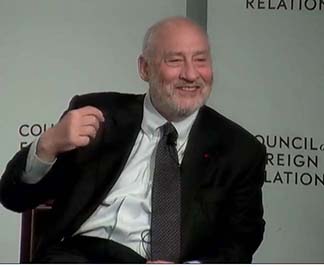
June 3, 2016 – Joseph Stiglitz, Nobel prize-winning former chief economist of the World Bank, says that the way to solve corruption and money-laundering facilitated by offshore banks that run secret accounts is to “shut them down.” And the way to do that is to ban non-transparent banks from US correspondent accounts. He spoke at a Council on Foreign Relations meeting today.
At the breakfast on “Is U.S. Finance Hurting Growth?”, he addressed an aspect of banking that was not on the agenda, asking, “Why do we have offshore banking?
The American Interest, May 26, 2016 – It will indeed, unless something changes, according to a member of a European Union delegation to the United States investigating shell companies.
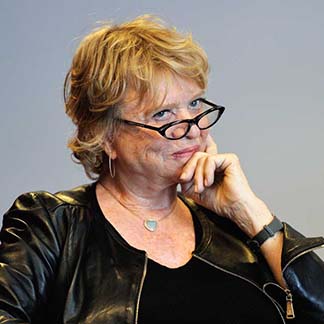
An international agency could label the United States a tax haven as the result of America‘s refusal to require the names of beneficial owners of companies registered in the U.S. So said European MP Eva Joly, a member of the European parliamentary delegation to the U.S. that met last week with government officials and Congressmen on the issue of America‘s clandestine shell companies.
This is one of those emotionally riveting plays that suddenly flips you over as you realize that everything you took for granted is not so. You are quite sure that David Harrower‘s story fits in with your beliefs about men‘s sexual abuse of young girl, until maybe it doesn‘t. Strongly acted by Michelle Williams and Jeff Daniels. (Williams is so much better than her bland performance in “Cabaret,” that you don‘t think it‘s the same person.)
In Richard Bean‘s affecting “Toast,” workers in a British bread factory stick together to combat fatigue, danger, insecurity. Bean wrote the play out of his experiences working at a bread factory in Yorkshire when he was 18.
The men work with old machinery that might break down and cause the owner, who is doing no maintenance, to shift production elsewhere. Yet, they endure stoically the danger of getting hurt – someone‘s arm got crushed — because they need the work. We come to see that they also need each other.
The American Interest, May 12, 2016 – Solving the offshore money-laundering and tax evasion system is easy, but the Obama Administration‘s proposal isn‘t the way to do it.
Stung by the Panama Papers revelations of worldwide tax evasion by the rich and powerful, President Obama has seized the moment to propose a solution guaranteed to gather headlines”and then fail. But if he wanted to, he could, through the Treasury Department, end the system of offshore tax havens with a stroke of the pen.
First, let‘s look at the solution and, then, at what‘s wrong with the President‘s proposal.
The Obama proposal acknowledges the threat offshoring poses to our national security. Treasury estimates that $300 billion in illicit proceeds are generated annually in the United States due to financial crimes. But it then essentially ignores the powerful weapon it can wield against that threat.
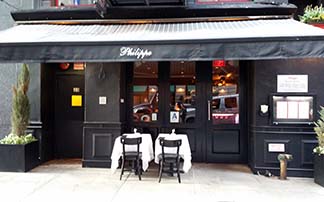
Philippe Chow‘s cuisine is delicate, subtle, an infusion of Chinese flavors into an American sensibility. One of the waiters told me, “It‘s Americanized food. It‘s Beijing style, but you won‘t find this in Beijing.” It‘s a sophisticated take on Beijing cuisine.
“Echoes” is a powerful and intense play that explores the imperialist mindset as it compares the experiences of two women who lived 175 years apart in Ipswich, England, and were each swept up in the murderous rampage of godly imperialist killers. It won a Spirit of the Fringe award in Edinburgh last year and transferred to London.
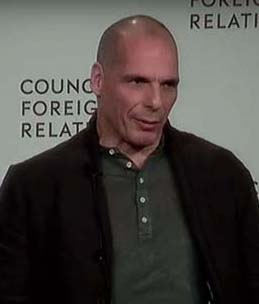
April 26, 2016 – A drumbeat of the Troika that ended Greek sovereignty last year was that the government wasn‘t collecting taxes. The Troika was the European Commission (EC), the International Monetary Fund, and the European Central Bank. That charge came from a collection of states that includes some of the world’s worst tax evasion enablers, including the Luxembourg of EC President Jean-Claude Junker, whose country is a world class tax haven. Former Greek Finance Minister Yanis Varoufakis revealed for the first time how days after he resigned, the Troika effectively abolished a unit he had set up to combat tax evasion.
A little weird, but Sherlock Holmes stories always are. A guy who wants a young employee to cut her hair. And to wear blue. He lives in a castle, of course. Maybe his wife is a lunatic. So the plot thickens. It‘s “The Adventure of the Copper Beeches.”
April 14, 2016 – Bernie Sanders supporters came to my Greenwich Village neighborhood April 13th, filling Washington Square Park for a rally that raised the issues he has made the focus of his campaign – how the super-rich have taken over the country‘s politics in their interests.
April 7, 2016 – Secretary of Commerce Penny Pritzker appeared at the Council on Foreign Relations a few days ago and treated the members to misinformation about the proposed Trans Pacific Partnership, which is being promoted by President Obama and corporate America as a free trade benefit. Opposition to TPP has swelled as the public found out the details of the treaty which was negotiated in secret, with input only from corporate representatives, and not even made available to members of Congress. Much of it was revealed by Wikileaks. Pritzker said in her remarks at the April 4th event that critics were “not telling an accurate story or telling part of the story and blaming trade for something that‘s larger.” So, in a question, I pointed out that “I heard a lot of facts that I thought were misstated from your presentation.”
Alfred Uhry‘s 1995 play “The Robber Bridegroom” is a hokey, campy amusing fantasy complete with an evil stepmother, a naïve father, and a two-faced hero/villain, Jamie Lockhart (Steven Pasquale) who has, we must believe, a different face when he wears a small marker that indicates a berry stain. All done to the fine and lively sounds of invigorating country music. (Music by Robert Waldman.) And Connor Gallagher‘s very good down-home choreography.
George Bernard Shaw‘s first play, given a first rate performance by The Actors Company Theatre directed by David Staller, establishes the theme of personal morality vs business corruption that would be a signature of his works through the years. He wrote it in 1892. Shaw from the start liked to skewer snobbery. Harry Trench (a naïve but likable Jeremy Beck) and Billy, more formally William De Burgh Cokane, (the unctuous Jonathan Hadley) are British tourists at a hotel on the Rhine. Pretentious Billy flavors his speech with French, and we enjoy the fact that his accent and grammar are dreadful.
In the canon of arts that are little known because they weren‘t created by white men, add an 18th century baroque opera composed by Joseph Bologne, born 1745 in Guadeloupe, the son of a French plantation owner and a slave.
It‘s a charming confection that was designed as a chamber piece, to be performed privately, because the Paris Opera would not accept “a mulatto.”
His father brought him to France at 7 years old to be educated. He was brilliant. And an accomplished fencer, which made him at 16 a chevalier and eased his way into society. At 17 he read in Rousseau‘s “Social Contract” that “Man is born free and everywhere he is in chains,” which challenged the existence of slavery.
Think of Jonathan Swift‘s “A Modest Proposal” as if it were designed by corporate consultants figuring out how to dispose of large numbers of people unlucky enough to have contracted a very deadly virus about to go global. Then move to Aaron Loeb’s engrossing bizarre, dark play which posits a related idea that couldn’t be real. Or could it, in principle? Or the lack of it.
For secret project Senna, the major rules would be 1. No power point, 2. Assume the worst, and 3. No N-word. No, it‘s not that N-word, it‘s the other N-word. Consider the system diagram for Collection, Containment, Liquidation and Disposal.
This play is a period piece. The time is close enough to the present that it‘s fascinating but also a little irritating for a feminist. It was written by Hazel Ellis, an Irish actress and playwright in the 1930s. She performed at the Gate Theatre in Dublin and had success with several plays there.
A smart but rebellious kid gets suspended from a Catholic high school in New York City for saying he doesn‘t believe in God. He ends up at the Thomas Moore Preparatory School in Keene, NH, a small boarding school where he will continue to argue about ideas and also still get into fights and scrapes. John Patrick Shanley, the author of this engaging autobiographical play, presents a charming, vivid look back at how a precocious youth, who would become a major playwright, had to navigate the shoals of rigid school thinking and a run-in with a closeted gay teacher who came on to him. (There‘s also a mystery about a student who tried to kill himself.)
Salon, Feb 24, 2016 – Betty Friedan would vote for Bernie Sanders. I say that having known Betty near the start of the women‘s movement in the late ˜60s and at the end of her life. As a feminist, she was also a progressive committed to Bernie‘s vision of economic justice. But I have another reason.
I knew Betty from 1969 when she brought me into the feminist movement, asking me to communicate to the media the message of feminism and of the National Organization for Women, of which she was founding president. Not an easy job in those days! From ridicule to don‘t take too seriously to, well, there‘s something significant happening. Rather like what Bernie has faced.
Feb 4, 2016 – Art as politics reaches new intensities in the Whitney Museum‘s disturbing and powerful new exhibit of film maker Laura Poitras‘ selection of videos and documents to define the U.S. government‘s threats to liberty after 9/11. The exhibit opens in New York Feb 5 and continues till May 1, 2016.
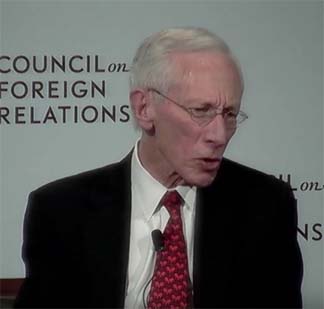
Feb 2, 2016 – At the Council on Foreign Relations yesterday, I pointed out to Stanley Fischer, Vice Chairman, Board of Governors of the Federal Reserve, that the current low unemployment rate he cited in his talk doesn‘t mean what it did when workers had good manufacturing jobs – when now the employed are often working for the minimum wage and need government aid. Shouldn’t the Fed put out those numbers? He avoided answering the question.
The title suggests this play by David Mamet is about a woman, but it‘s really about politics and corruption. And the trendy topic of tax evasion. Al Pacino is in top form in a slightly over-the-top caricature of a character, a portrayal which in this case is warranted. His Mickey Ross is a heavy-New-York-accented probably Jewish character who made big bucks in ways that probably skirted or shattered legality. At least it‘s clear he doesn‘t care much about the law.
Bobby Nesbitt‘s tribute to the cabaret greats of Las Vegas is much richer than any medley of songs from the star singers of the time. His performance at the Tennessee Williams Theatre reprises the iconic tunes of Frank Sinatra, Dean Martin, Sammy Davis Jr. and more. But he also offers some social history that sets “the Rat Pack” – the name given by actress Lauren Bacall –in an American context. (She said, “You look like a goddam rat pack.”)